

How Baseball Ground-Rule Doubles Work Explainer
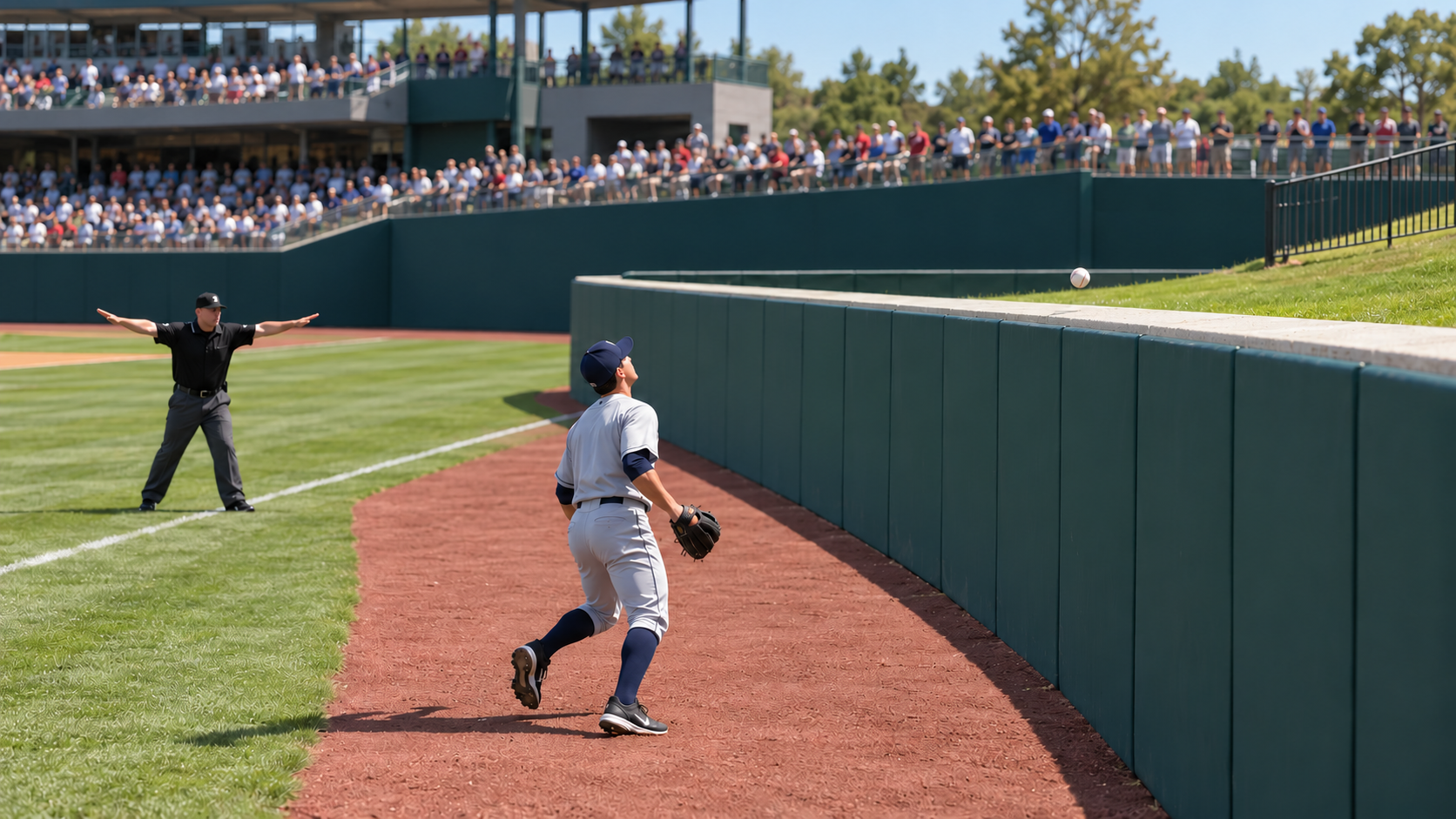
A ground-rule double occurs when a fair batted ball leaves the field in a way covered by the rules, most commonly by bouncing over an outfield fence. The ball becomes dead, the batter is awarded second base, and every runner advances two bases from the base occupied at the time of the pitch.
That automatic award differs from an ordinary double, in which the ball remains live and runners may advance as far as the play allows. A fast runner from first can score on a normal double, but on a ground-rule double that runner ordinarily stops at third because the award is fixed.
The term also covers park-specific ground rules. A fair ball lodged in padding, fencing, vegetation, or another designated feature can produce the same two-base award. Before a series, umpires and teams review unusual boundaries so everyone knows which local conditions apply.
Fans sometimes assume the umpire estimates where runners would have reached, but the standard award does not use that judgment. Once the ball is ruled dead under the two-base provision, placement follows the rule. The outfield bounce and the umpire’s dead-ball signal are the clearest clues.
The batter and all runners receive two bases from the bases they occupied at the time of the pitch.
Not on the standard two-base award; that runner is placed at third even if the runner might have scored on a live ball.
Parks have unique fences and fixed objects, so approved ground rules define when a lodged or deflected fair ball becomes dead.
Explore more "Explainers"
Discover additional explainers across politics, science, business, technology, and other fields. Each explainer breaks down a complex idea into clear, everyday language—helping you better understand how major concepts, systems, and debates shape the world around us.