

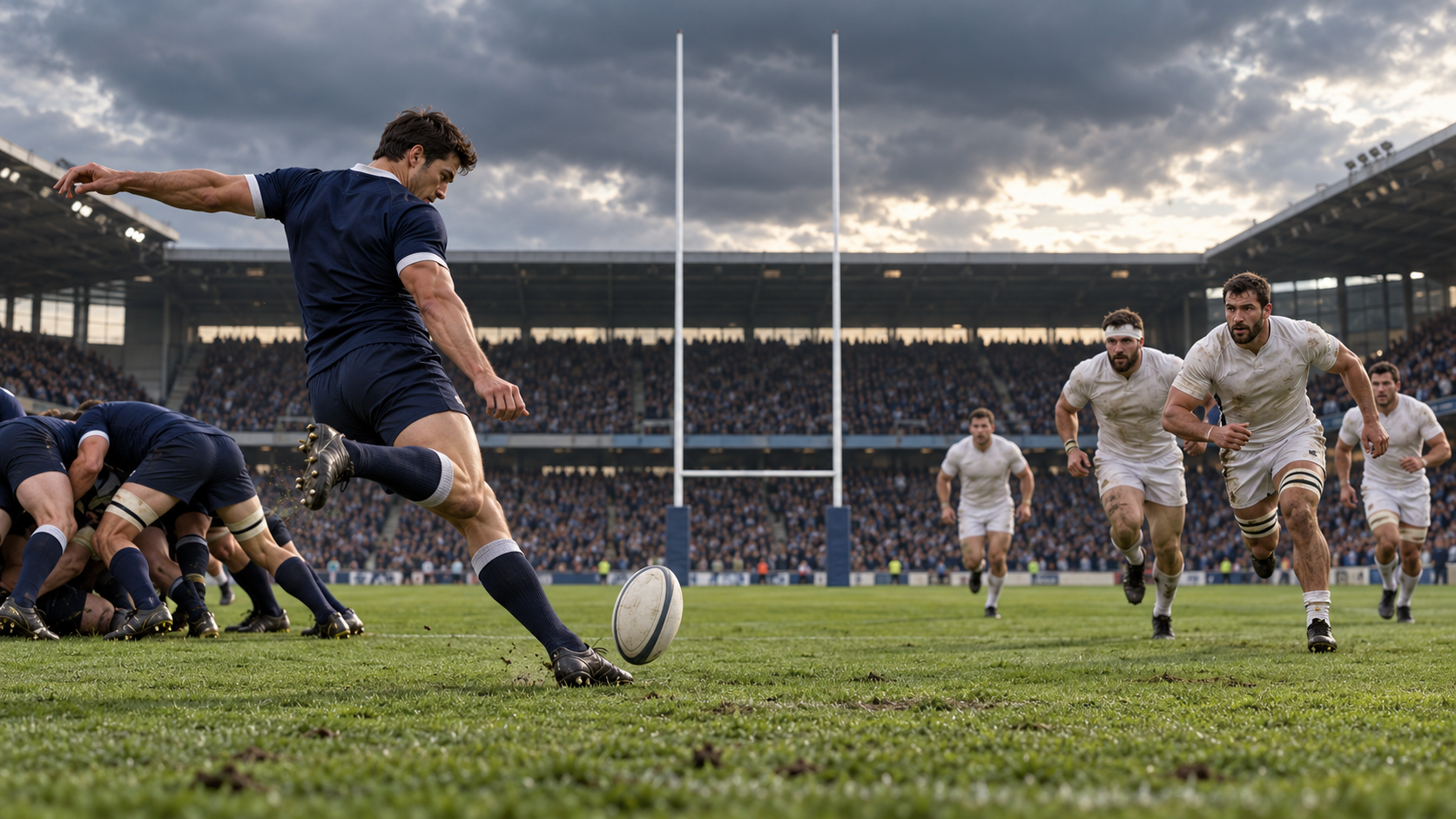
How Rugby Drop Goals Work Explainer
A drop goal scores three points in rugby union when a player drop-kicks the ball over the opponents’ crossbar and between the posts during open play. The ball must touch the ground and be kicked immediately as it rises, distinguishing the technique from a punt or a placed penalty kick.
Any player may attempt one, but fly-halves commonly take the responsibility because their position gives them space and a clear view. Teammates often build a stable ruck near the posts, then pass the ball backward so the kicker has time to set the drop and strike.
The ball remains live before the kick, so defenders can charge, tackle, or attempt to block it legally. A missed attempt may give the defending team a restart or allow play to continue depending on how the ball becomes dead and the applicable law.
Three points can be decisive late in a close match, but a drop goal is difficult and usually worth less than creating a converted try. Teams choose it when field position is favorable, the defense is compact, or the scoreboard makes a quick scoring attempt valuable.
A successful drop goal in rugby union is worth three points.
The player releases the ball, lets it touch the ground, and kicks it immediately on the rise.
Yes. The ball is live, so defenders may rush and block or tackle within the laws.
Explore more "Explainers"
Discover additional explainers across politics, science, business, technology, and other fields. Each explainer breaks down a complex idea into clear, everyday language—helping you better understand how major concepts, systems, and debates shape the world around us.