

Voice Acting Explainer
Voice acting is performance created primarily for the microphone rather than the camera. It includes animation, video games, commercials, audiobooks, narration, dubbing, automated dialogue replacement, podcasts, and other forms with different demands. The work is not simply reading words clearly or making unusual sounds. A voice actor interprets character, intention, rhythm, and relationship while supplying enough physical energy for listeners to imagine action they cannot see. Because the face may be absent from the final product, small changes in breath, timing, pitch, emphasis, and vocal texture carry information that an on-camera performance might communicate through expression or posture.
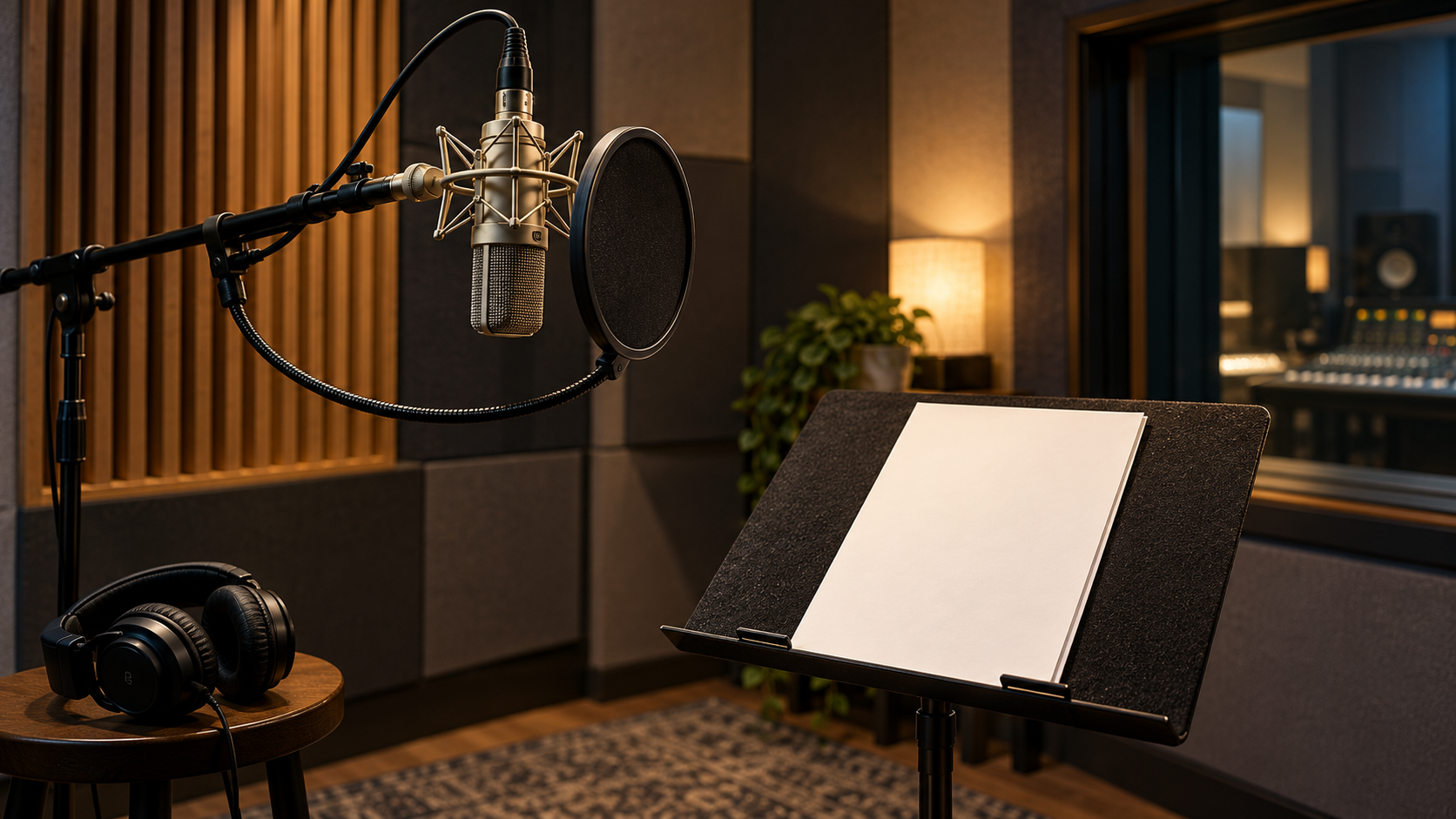
Recording sessions vary by medium. Animation performers may record together, but they often work separately with a voice director who provides context and adjusts tone. Video games can require branching lines, repeated combat efforts, and scenes recorded long before the finished visuals exist. Audiobook narration demands continuity across many hours and clear distinctions among speakers without turning every character into a caricature. Commercial sessions may pursue several readings of a short script. Across these settings, microphone distance, plosives, mouth noise, headphone balance, and consistent position are practical parts of the performance because the recording captures details that would disappear in a theater.
Dubbing adds synchronization. A performer works to picture and delivers an adapted translation that must fit timing, emotion, and visible mouth movement closely enough to feel connected to the screen. Automated dialogue replacement, or looping, may instead have the original actor replace production dialogue damaged by noise or revise a line after filming. Group performers can create background voices called walla. These tasks use related skills but solve different problems. Dubbing recreates a performance in another language, ADR repairs or changes dialogue for an existing production, and original voice acting may establish the character before animation is complete.
Vocal range is useful, but a sustainable career depends on more than the number of voices an actor can imitate. Casting may seek a natural conversational sound, a precise age and attitude, or reliable acting choices across hundreds of lines. Physical movement in the booth can help generate energy, yet performers must avoid creating noise or drifting off microphone. Strenuous efforts such as screams and creature sounds require careful scheduling, warmups, breaks, and contract protections because vocal injury is a workplace risk. Remote home studios expanded access and flexibility, while also making acoustic treatment, recording quality, file handling, and self-direction part of many performers' routine. A character voice is still an acting performance created through human choices. Technology can alter pitch, timing, or texture, and current contracts increasingly address consent and compensation when recordings are used to create digital replicas or synthetic voices. Those questions make accurate records and clearly defined uses especially important. The common myth that voice work is easier because scripts can remain on a stand ignores the precision of making text sound spontaneous while matching direction and technical constraints. Strong voice acting disappears into the story: the audience hears a mind responding in the moment, even though the performance may have been recorded alone, out of order, and months before the image was finished. A practical way to read or discuss Voice Acting is to separate the basic definition from the choices made in a particular example. Voiceover work includes animation, games, commercials, audiobooks, narration, ADR, looping, and dubbing. Then identify who sets the relevant rules, which parts are creative decisions, and which parts follow from law, contracts, technology, or production limits. Examples that look similar on the surface can operate differently because their purpose, audience, timing, and surrounding agreements are different. Dubbing synchronizes an adapted performance to picture; ADR usually replaces or changes dialogue for the original production. It is also useful to check whether a source is describing a formal industry category, an informal critical label, or one organization's current practice. Those distinctions prevent a memorable anecdote from becoming a false universal rule. Finally, compare the visible result with the less visible work that produced it. Home studios increase flexibility but add responsibilities for acoustics, recording quality, file delivery, and technical consistency. That approach keeps the explanation grounded while leaving room for reasonable disagreement about borderline cases.
Voiceover work includes animation, games, commercials, audiobooks, narration, ADR, looping, and dubbing.
Breath, timing, emphasis, vocal texture, and microphone position communicate information that visible expression might otherwise supply.
Voice directors provide scene context and guide performances, especially when actors record alone or before final visuals exist.
Dubbing synchronizes an adapted performance to picture; ADR usually replaces or changes dialogue for the original production.
Screams and creature efforts can strain the voice, making warmups, breaks, scheduling, and workplace protections important.
Home studios increase flexibility but add responsibilities for acoustics, recording quality, file delivery, and technical consistency.
Explore more "Explainers"
Discover additional explainers across politics, science, business, technology, and other fields. Each explainer breaks down a complex idea into clear, everyday language—helping you better understand how major concepts, systems, and debates shape the world around us.