

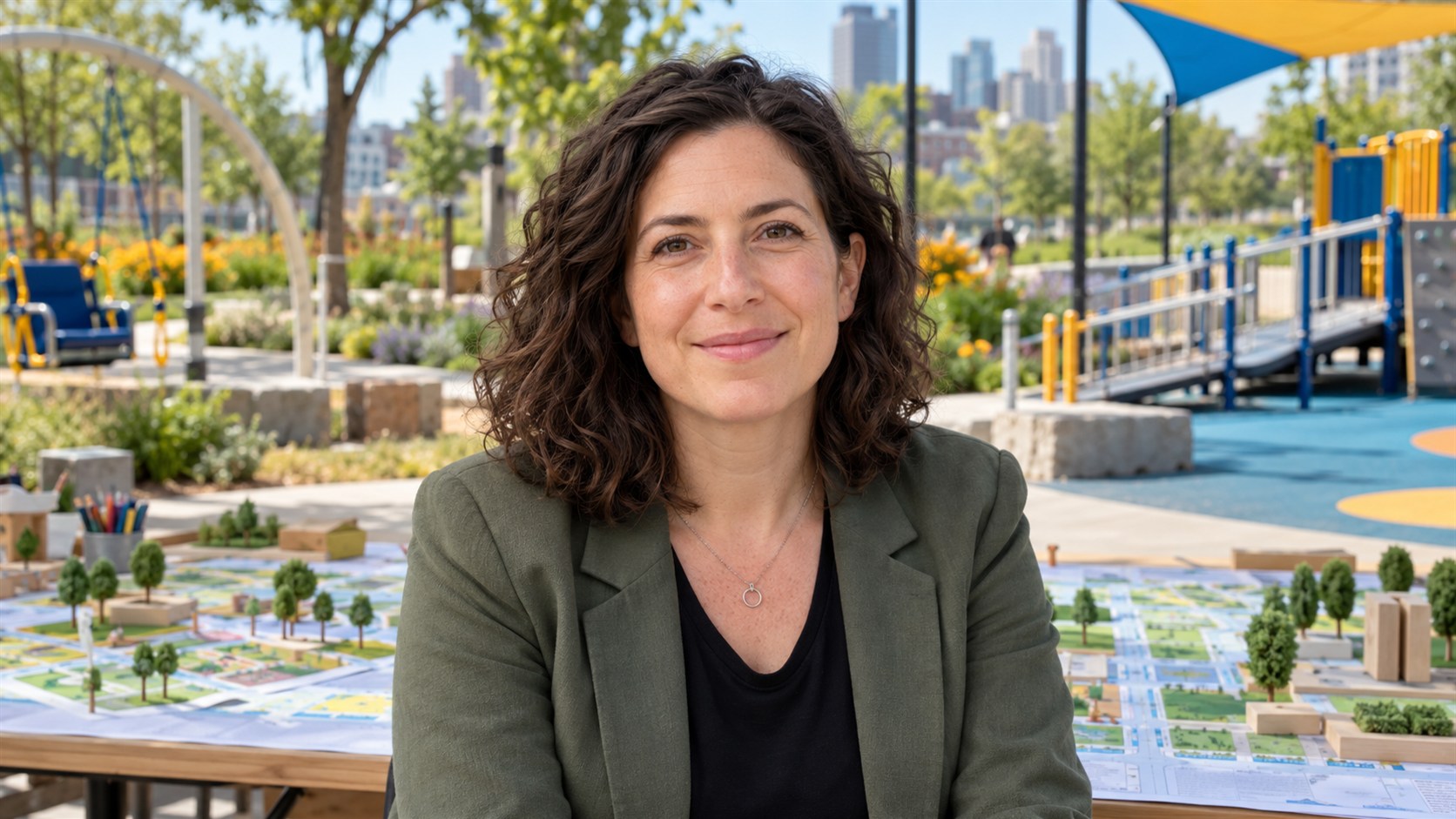
“If we aren’t including children in our planning, who else aren’t we including?”
Mara Mintzer delivered “If we aren’t including children in our planning, who else aren’t we including?” in How Kids Can Help Design Cities (2017). The source describes inviting children into the design of a Boulder park and discovering ideas that challenged adult assumptions about public space. Mintzer uses children as a diagnostic for democracy: a process that cannot hear them may also be filtering out many quieter forms of knowledge. The record keeps Mara Mintzer beside this reasoning, rather than detaching “If we aren’t including children in our planning, who else aren’t we including?” from How Kids Can Help Design Cities. August 29 marks this slot for Mara Mintzer; 2017 dates the documented address. That separation preserves a traceable source for the quotation.
Exclusion often hides inside routine consultation methods, so listening to children can reveal needs missed by planners accustomed to adult users. For Mara Mintzer, “If we aren’t including children in our planning, who else aren’t we including?” serves as a lens. Using How Kids Can Help Design Cities responsibly requires considering that participation must influence real decisions rather than decorate them, and one group of children cannot represent every age, disability, neighborhood, or culture. Readers can test the idea with one small action: For one shared-space decision, invite a missing user group early, show the constraints clearly, and document what changed because they participated. The original setting still matters because the source describes inviting children into the design of a Boulder park and discovering ideas that challenged adult assumptions about public space. Together, those details move “If we aren’t including children in our planning, who else aren’t we including?” from decoration into judgment while leaving room for evidence that Mara Mintzer did not address directly.
Participation must influence real decisions rather than decorate them, and one group of children cannot represent every age, disability, neighborhood, or culture. That limit shapes Mara Mintzer’s meaning because cities make long-lived investments while many residents most affected by those spaces have little formal voice in the planning process. Around the quotation, health, power, culture, safety, and responsibility alter practical meaning. Mara Mintzer can illuminate one choice without deciding every case. The stronger question asks where “If we aren’t including children in our planning, who else aren’t we including?” clarifies duty, where cities make long-lived investments while many residents most affected by those spaces have little formal voice in the planning process, and whose experience will bear the result.
Cities make long-lived investments while many residents most affected by those spaces have little formal voice in the planning process. For August 29, one observable response is this: For one shared-space decision, invite a missing user group early, show the constraints clearly, and document what changed because they participated. This gives Mara Mintzer a practical scale for review. Ask whether “If we aren’t including children in our planning, who else aren’t we including?” increased clarity, dignity, connection, access, or agency. If the outcome disappoints, revise the method. Mintzer uses children as a diagnostic for democracy: a process that cannot hear them may also be filtering out many quieter forms of knowledge. August 29 keeps Mara Mintzer’s words active through specific action, honest revision, and attention to consequence.
Mara Mintzer used the line in How Kids Can Help Design Cities, associated with 2017. The source describes inviting children into the design of a Boulder park and discovering ideas that challenged adult assumptions about public space.
Mintzer uses children as a diagnostic for democracy: a process that cannot hear them may also be filtering out many quieter forms of knowledge. August 29 is only this series placement; it is not presented as the date when the words were first delivered.
Exclusion often hides inside routine consultation methods, so listening to children can reveal needs missed by planners accustomed to adult users.
Participation must influence real decisions rather than decorate them, and one group of children cannot represent every age, disability, neighborhood, or culture.
Cities make long-lived investments while many residents most affected by those spaces have little formal voice in the planning process.
A measured way to act on the idea is this: For one shared-space decision, invite a missing user group early, show the constraints clearly, and document what changed because they participated.
Explore more "Quotes of The Day"
Continue exploring how writers, thinkers, artists, and advocates have described the choices that shape an everyday life.