

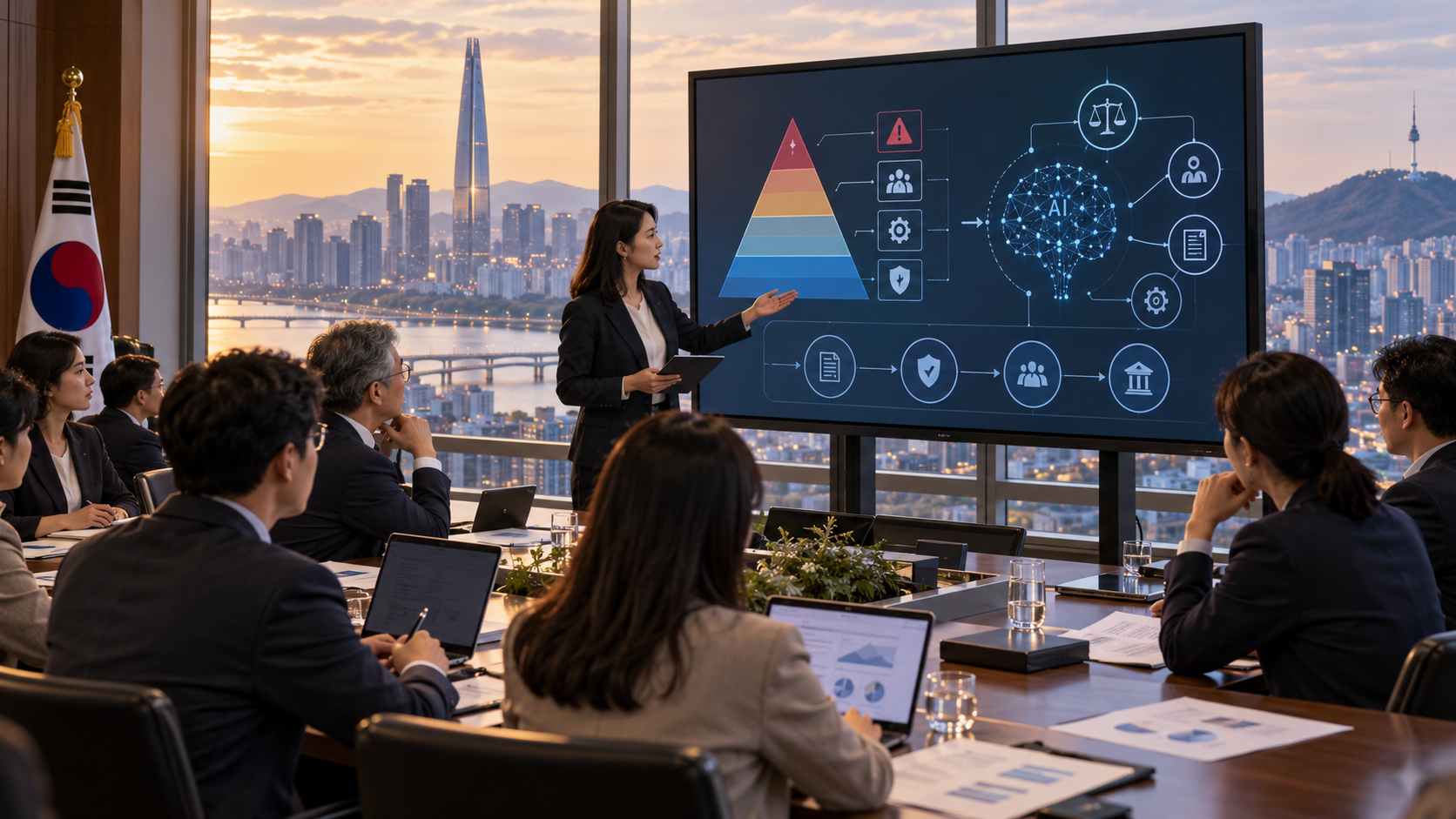
On This Day in AI: January 22, 2026
On January 22, 2026, South Korea’s Act on the Development of Artificial Intelligence and Establishment of a Foundation for Trustworthiness, commonly called the AI Basic Act, took effect nationwide. The National Assembly had passed the law in December 2024, giving government, industry, and researchers a year to prepare. The statute created a broad legal framework for promoting AI development while imposing duties on providers of high-impact and generative systems. South Korea’s Ministry of Science and ICT led implementation, including subordinate rules, guidance, and support for companies. The effective date made South Korea one of the first major economies to operate a comprehensive national AI law.
The act required transparency when users interact with certain generative services and when synthetic output could be mistaken for real content. Providers of high-impact AI were expected to manage risks, protect users, and explain important decisions in fields such as healthcare, transportation, energy, employment, credit, and public services. Large models above a designated computing threshold faced additional safety obligations. Foreign companies meeting business or user thresholds could be required to appoint a domestic representative. At the same time, the law directed the government to support research, data centers, training, and smaller companies, reflecting a policy that paired safeguards with industrial growth.
January 22 did not instantly settle how every system would be classified or how regulators would interpret every obligation. Detailed enforcement depended on decrees, notices, and continuing consultation, and the government described an initial period focused on guidance rather than punishment. Critics argued that broad definitions might burden startups or leave important rights protections unclear, while industry groups sought consistency with rules in the European Union and other markets. The act nevertheless marked a significant change from voluntary principles to enforceable national governance. It placed disclosure, risk management, and institutional responsibility around AI systems used in consequential settings. Its longer importance lies in the model South Korea chose: regulate the most sensitive uses, require notice for synthetic content, and simultaneously invest in domestic capability. As countries compared approaches, the Korean framework became an important test of whether innovation policy and public safeguards could operate inside one coordinated law.
The law also had international consequences because Korean developers sold products abroad and foreign providers served Korean users. Companies had to compare its categories and notices with the European Union’s AI Act and rules emerging elsewhere. Similar goals did not always produce identical definitions or documentation. Compliance therefore became a design task across markets, encouraging providers to build governance systems flexible enough to track models, data, risks, and user notices under several legal frameworks at once.
The framework addressed high-impact systems, generative AI, very large models, foreign providers, safety obligations, and government support for the domestic industry.
Consequential fields included healthcare, transport, energy, employment, credit, and public services, where automated decisions could directly affect people's lives.
Users were to receive notice when they interacted with covered generative systems or encountered synthetic output that could be mistaken for reality.
High-impact providers faced risk-management and explanation duties, while the exact application of broad definitions depended on later guidance and enforcement practice.
South Korea paired legal safeguards with support for research, infrastructure, talent, and smaller companies rather than treating regulation and growth as separate agendas.
The framework became an early test of whether a comprehensive AI law could protect users while keeping a highly competitive technology sector moving quickly.
Explore more of "On This Day ..."
Discover more events from the same date across news, politics, technology, sports, and other fields. Each link highlights significant moments that shaped history on different fronts.