

On This Day in AI: January 30, 2025
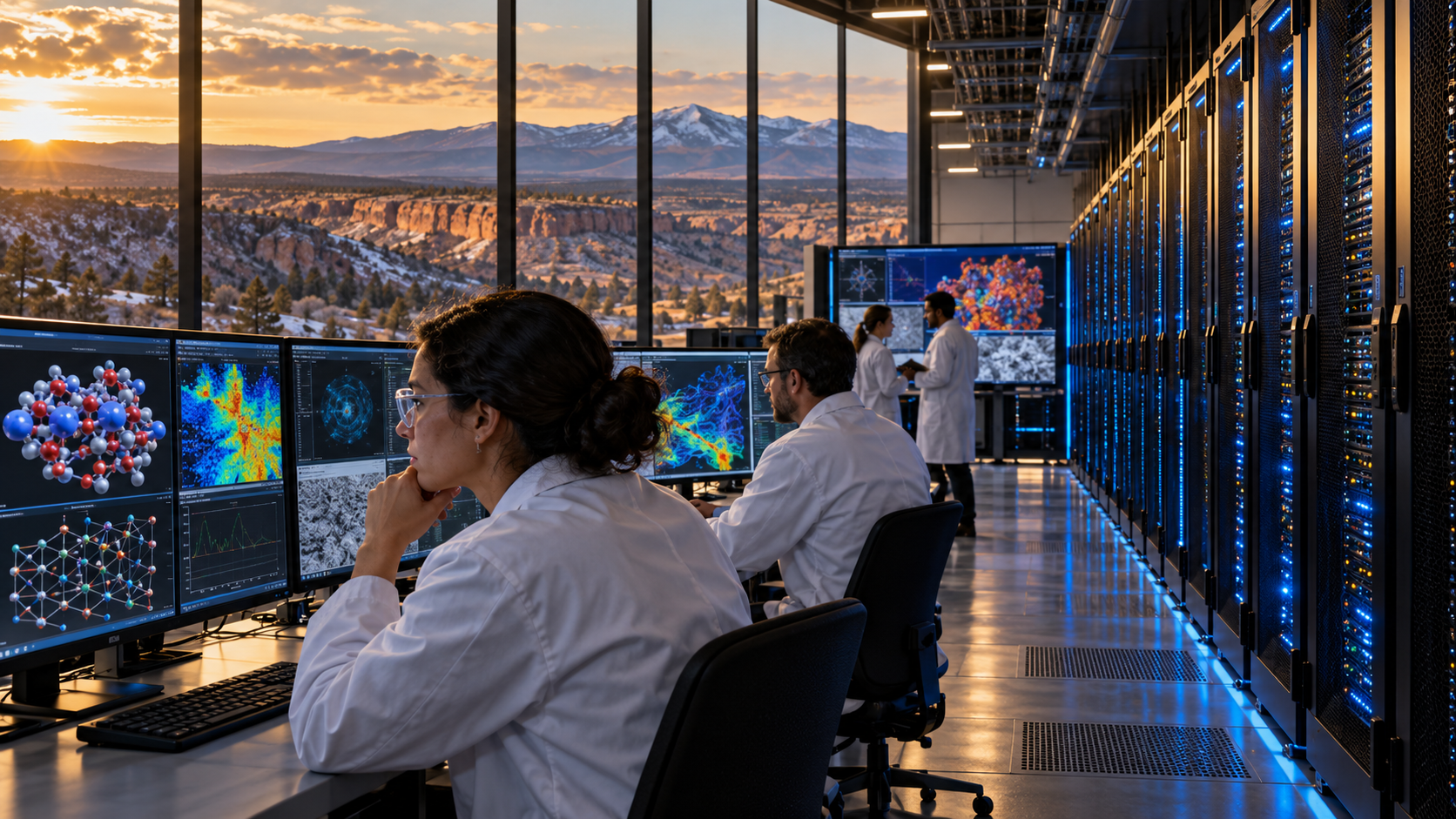
On January 30, 2025, OpenAI announced a partnership with the United States National Laboratories to apply advanced reasoning models to scientific and national-security research. The company said up to 15,000 scientists working across the laboratory system could gain access to its technology through Venado, a supercomputer at Los Alamos National Laboratory built with Nvidia and Hewlett Packard Enterprise. Los Alamos would share the resource with Lawrence Livermore and Sandia national laboratories. Proposed work included materials science, renewable energy, astrophysics, disease research, mathematics, cybersecurity, and support for the security of nuclear weapons under human supervision.
The national laboratories manage some of the world’s largest scientific computing facilities and datasets. Their researchers use simulations and experiments to study problems that can take years of specialist effort. Reasoning models offered a possible way to help scientists write code, search literature, design experiments, and connect evidence across fields. Deploying the models on Venado allowed work to remain inside a controlled government computing environment rather than relying solely on a public service. OpenAI also said employees with security clearances would support carefully reviewed national-security applications, while the Energy Department and laboratories retained authority over sensitive work.
The January 30 announcement established access and research plans, not evidence that an AI system had independently made a scientific discovery or performed a defense mission. Models could generate incorrect code, invent citations, or miss physical constraints, making expert validation essential. Sensitive applications also required strict controls on data, users, and outputs. The partnership nevertheless marked an important expansion of generative AI into the public scientific infrastructure of the United States. It placed frontier models beside supercomputers and specialist teams rather than treating them only as consumer assistants. The arrangement also highlighted a two-way relationship: national laboratories could use AI for research, while their evaluation expertise could expose model weaknesses on difficult technical problems. Its broader significance lies in the emerging role of reasoning systems as scientific instruments – tools that may accelerate parts of discovery, but whose results must remain testable, reproducible, and accountable to human experts.
The collaboration also offered a demanding evaluation environment. National-lab researchers could test models against problems whose answers were constrained by mathematics, experiments, and physical law rather than by writing style alone. Failures would provide useful evidence about where reasoning systems needed better tools or domain grounding. At the same time, scientific prestige could not substitute for transparent methods. Any claimed acceleration still had to be demonstrated through reproducible results and comparison with established research practice.
The Los Alamos supercomputer offered large-scale computing inside a controlled government environment and could be shared with Livermore and Sandia researchers.
That setting was better suited to sensitive scientific data and strict access rules than an ordinary public chatbot service.
Potential projects included materials, energy, astrophysics, medicine, mathematics, cybersecurity, and work supporting the safety of the nuclear stockpile.
The announcement described possible assistance and access, not autonomous scientific discoveries or unsupervised defense decisions.
Reasoning models might help with code, literature, experiments, and connections across large technical datasets when paired with domain experts.
Reliable use still required reproducible evidence, secure operations, expert review, and tests that exposed fabricated facts or invalid physical assumptions.
Explore more of "On This Day ..."
Discover more events from the same date across news, politics, technology, sports, and other fields. Each link highlights significant moments that shaped history on different fronts.