

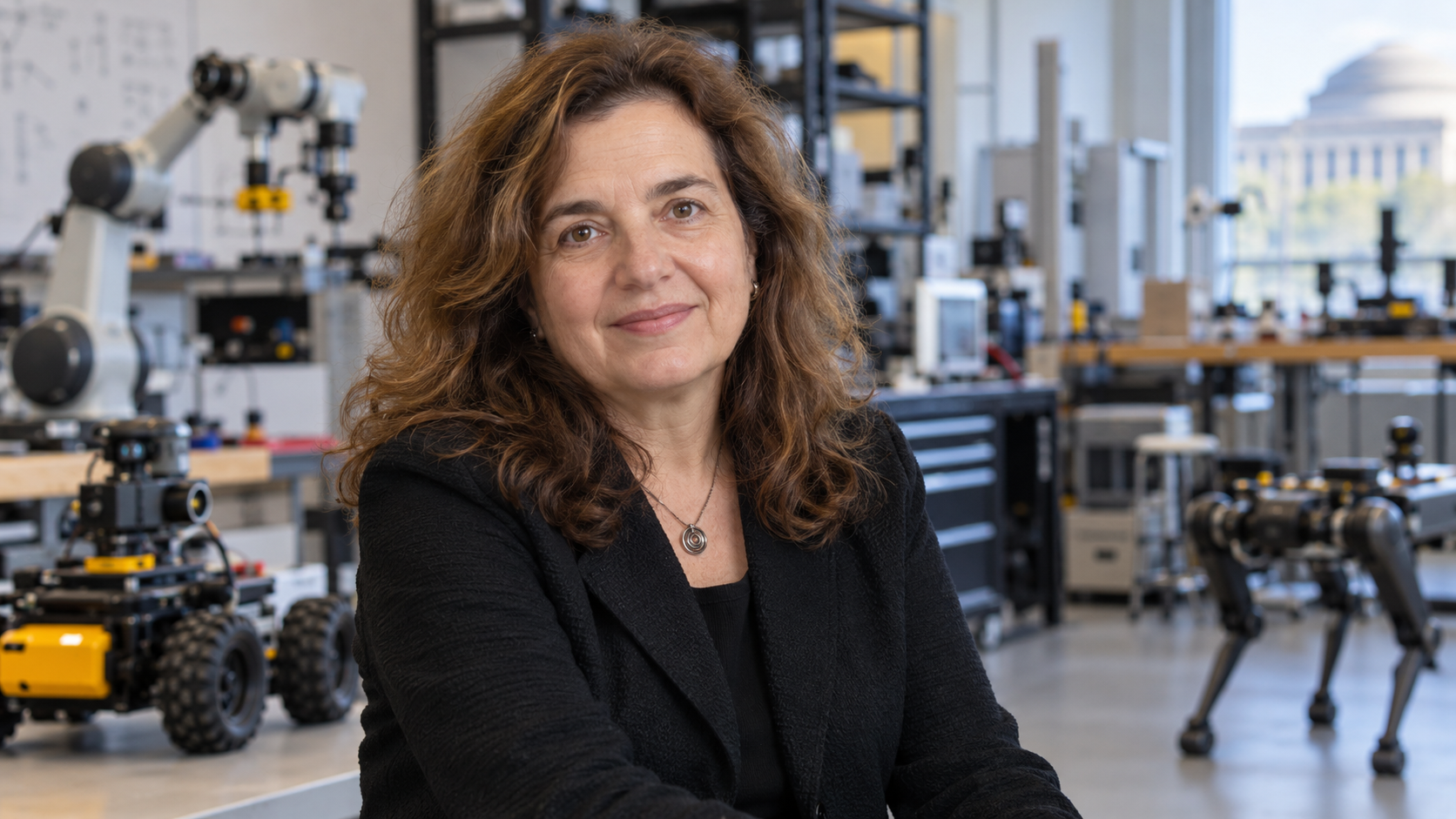
“On an individual level, AI will offer opportunities to make our lives safer, more convenient, and more satisfying.”
MIT roboticist Daniela Rus offered this view in 2017 while describing a future in which intelligence is embedded across the physical and digital world. Her wording makes the promise personal. Rather than defining success as a machine surpassing a benchmark, she names outcomes people can experience: fewer dangerous tasks, services that require less friction, and tools that make work or daily life more fulfilling. The quote reflects an engineer’s interest in practical systems, including robots that can navigate, manufacture, assist, and adapt outside a controlled demonstration.
Safety can come from distance and perception. Robots may inspect unstable structures, handle hazardous materials, or support rescue teams where sending a person would be risky. Decision-support systems can watch for equipment failures or help professionals notice a signal hidden in complex data. Convenience appears when technology handles repetitive coordination, translates information, or brings services to people with limited mobility. Satisfaction is subtler. It may mean giving workers better tools, expanding creative options, or returning time for activities that require human attention and care.
These benefits are not automatic properties of AI. A system intended to improve safety can introduce new failure modes if its sensors, data, or operating assumptions do not match the environment. Convenience can depend on pervasive surveillance or transfer uncompensated work to customers. A productivity tool can make a job less satisfying when workers are monitored by opaque metrics or denied discretion. Each promise therefore needs a concrete measure and a clear account of tradeoffs. The people who live with the technology should help define what improvement means.
Robotics makes this responsibility especially visible because software decisions can produce physical motion. Designers need conservative limits, testing under unusual conditions, clear status signals, and controls that humans can understand under pressure. Institutions need training, maintenance, incident reporting, and plans for unequal access. Rus’s sentence invites ambition, but it also supplies a standard for rejecting novelty without value. The strongest innovation is not the system that appears most autonomous. It is the one that reliably improves human life while remaining governable when the world surprises it. Rus’s optimistic formulation is most persuasive as a design brief. Build for measurable human benefit, test in real conditions, include those most affected, and ensure convenience never becomes a reason to weaken safety, privacy, or choice. Practical success also demands maintenance, accessible training, and a plan for failures after launch. Benefits must persist over time afterward.
AI and robotics can reduce exposure to dangerous environments and help people detect failures earlier.
The benefit depends on real-world testing, conservative operating limits, maintenance, and clear human control.
Automation can remove friction, improve access, and coordinate complex services for everyday users.
Designers must still account for surveillance, transferred labor, lock-in, and people who cannot use the default interface.
Technology can support creativity and make work more meaningful when it expands choices and competence.
It can do the opposite when opaque metrics narrow discretion or treat people as components of an automated process.
Explore more "Quotes of The Day"
Continue exploring how writers, thinkers, artists, and advocates have described the choices that shape an everyday life.