

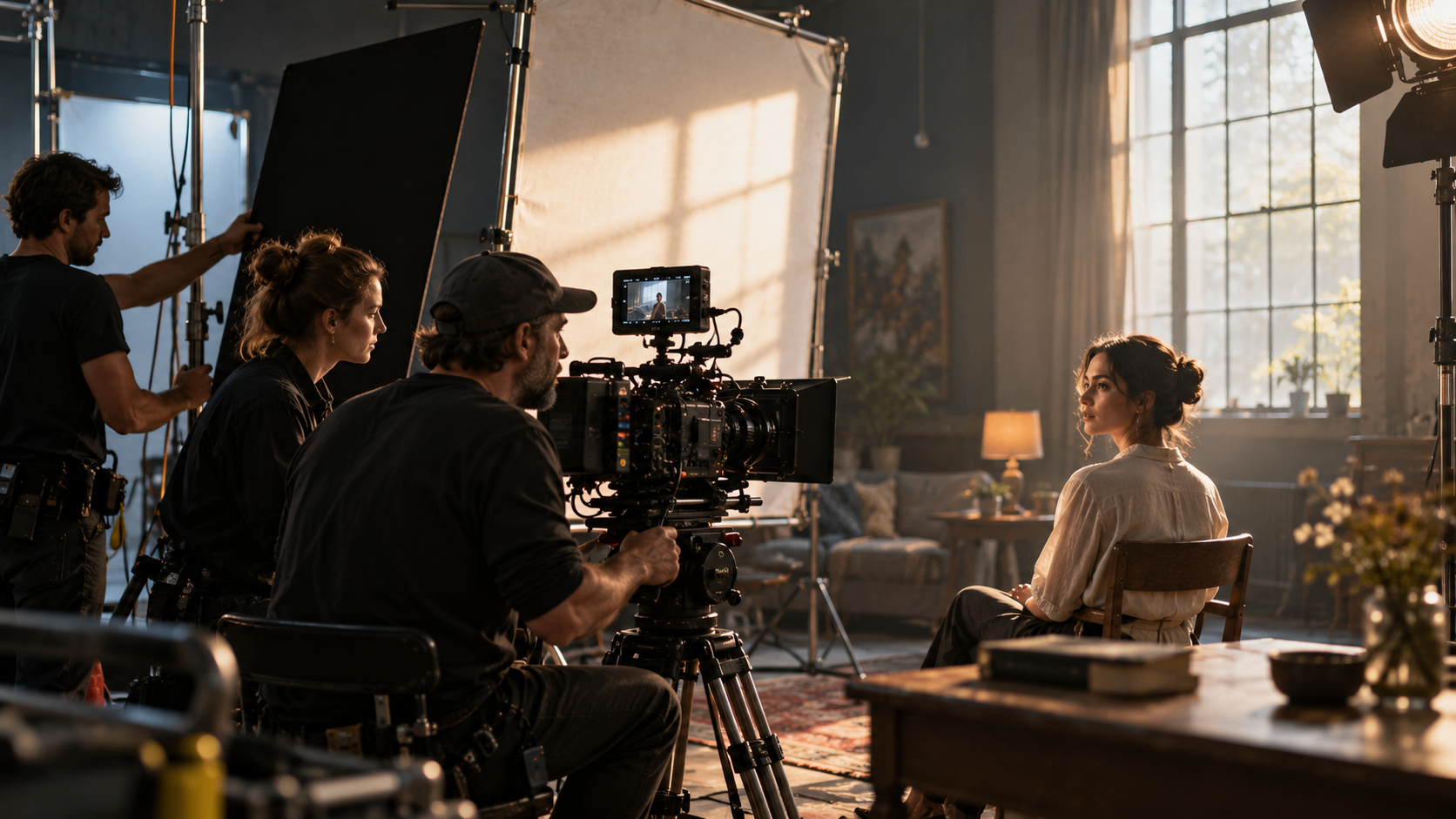
Cinematography Explainer
Cinematography is the craft of designing and recording the moving images in a film or television production. The cinematographer, often called the director of photography or DP, works with the director to translate story and performance into choices about light, framing, lens, camera position, movement, exposure, color, and visual continuity. The job is not simply to make every shot attractive. A harsh overhead light, a distant composition, or a restrained camera can be exactly right when it supports the scene's meaning and the production's overall point of view.
Preparation begins with the screenplay and conversations about tone. The director and cinematographer may assemble visual references, scout locations, test cameras and lenses, plan aspect ratio, and decide how naturalistic or stylized the photography should feel. Shot lists and storyboards can guide complicated sequences, but many decisions remain responsive to actors, weather, set design, and available time. The DP leads the camera and lighting teams while coordinating with production design, costume, makeup, visual effects, and locations so colors, textures, reflective surfaces, and practical lights behave as one visual system.
A lens changes more than magnification. Focal length, camera distance, aperture, focus, filtration, and sensor or film characteristics influence spatial relationships, depth, texture, and the viewer's attention. Lighting creates direction, contrast, color, and shape, while camera movement can reveal information or change emotional proximity. Exposure choices preserve or sacrifice detail in highlights and shadows. These variables interact, so a look rarely comes from one piece of equipment. The same camera can produce radically different images when the crew changes placement, light, lensing, movement, and finishing.
Cinematography continues after principal photography. The DP commonly reviews footage, communicates with the editor and visual-effects team, and works with a colorist during grading so shots match and the planned palette survives delivery. Digital tools offer precise control, but they do not remove the need for decisions on set: direction and quality of light, performance blocking, lens perspective, and camera height are embedded in the captured material. A production may also create separate versions for different display formats while preserving the intended relationships among shots. Authorship is collaborative. Directors determine dramatic emphasis, designers create the physical world, actors shape movement, gaffers and grips execute lighting and camera support, operators frame, and colorists refine the recorded image. The cinematographer coordinates many of those contributions into a coherent photographic approach. Viewers can read the craft by asking where the light appears to come from, what the frame includes or withholds, how close the camera feels to the characters, and whether the visual strategy changes when the story changes. Those questions reveal purpose more reliably than judging sharpness or brightness alone. A practical way to read or discuss Cinematography is to begin with the basic definition and then identify the choices made in a particular example. Cinematography is the planned use of camera and light to express story, space, time, mood, and point of view in moving images. Next, ask who sets the relevant rules, who performs the work, and which results follow from creative judgment, law, contracts, technology, budget, or production limits. Similar-looking examples can operate differently because their audience, market, format, timing, and agreements are different. The camera, lighting, grip, production-design, costume, makeup, locations, and visual-effects departments coordinate because their work appears in the same frame. It also helps to distinguish a formal industry category from an informal critical label or one organization's current practice. That separation keeps a memorable anecdote from becoming a false universal rule. Dates and territories matter: tools, distribution systems, audience behavior, and standard agreements change, while older examples can preserve assumptions that no longer apply everywhere. When a claim sounds absolute, compare it with a second kind of source and look for the conditions under which the claim is true. Then trace the process from the visible result back through the less visible decisions, handoffs, and quality checks that produced it. A useful analysis connects visual choices to a scene's dramatic function instead of treating every beautiful or unusual image as successful by itself. Finally, compare the example with a contrasting case and note which part of the definition still holds. This method keeps the explanation grounded, highlights the people and systems behind the outcome, and leaves room for reasonable disagreement about hybrid or borderline cases.
Cinematography is the planned use of camera and light to express story, space, time, mood, and point of view in moving images.
The director and cinematographer establish an approach before shooting, then adapt it to performances, locations, weather, schedules, and budget.
Lens choice works with camera distance, aperture, focus, and framing; no single focal length automatically creates a particular emotion.
The camera, lighting, grip, production-design, costume, makeup, locations, and visual-effects departments coordinate because their work appears in the same frame.
Color grading can balance and refine photographed material, but it cannot fully replace choices about lighting, perspective, blocking, and exposure made during production.
A useful analysis connects visual choices to a scene's dramatic function instead of treating every beautiful or unusual image as successful by itself.
Explore more "Explainers"
Discover additional explainers across politics, science, business, technology, and other fields. Each explainer breaks down a complex idea into clear, everyday language—helping you better understand how major concepts, systems, and debates shape the world around us.