

Fashion Trend Cycles Explainer
A fashion trend is a pattern of dress, styling, color, silhouette, material, or presentation that gains visible adoption over a period. Trend cycles describe how that pattern emerges, spreads, reaches broad recognition, fragments, declines, or returns. The process is not a single clock that governs every look. Luxury collections, subcultures, workwear, street style, social platforms, music scenes, retailers, celebrities, climate, technology, and economic conditions can all influence adoption at different speeds.
Older models often described fashion as trickling down from elites, rising from street or youth cultures, or moving horizontally among peer groups. Contemporary circulation can combine all three. An archive reference appears on a runway, a community restyles it online, a celebrity accelerates visibility, and retailers translate it for different prices. Credit and power matter because the people who popularize a look may not be the community that originated it. Documentation helps distinguish inspiration, exchange, and appropriation.
A trend gathers momentum when it is recognizable yet adaptable. Early adopters demonstrate possibilities, media names the pattern, and repeated images make it legible to a wider audience. Retail availability then affects who can participate. At saturation, the look becomes common enough to lose novelty, but it may split into subtrends rather than vanish. Some consumers reject it, others personalize it, and practical garments can persist after the fashion narrative moves on.
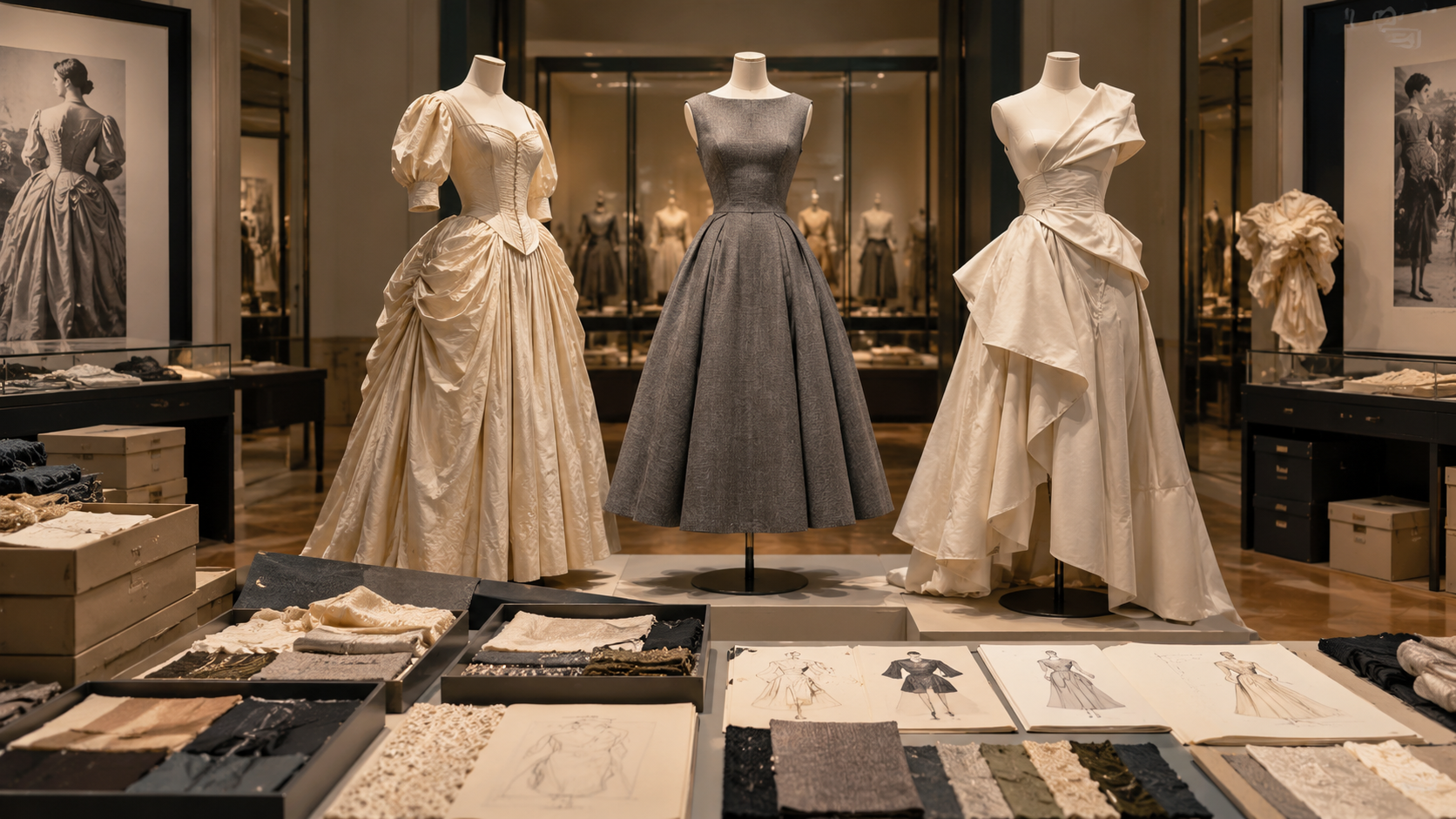
Revival does not mean exact repetition. Designers and wearers select features from an earlier period, combine them with current bodies, materials, values, and technologies, and often compress several years into one nostalgic image. Museums and archives show that supposedly new trends frequently have precedents, while the social meaning of a silhouette changes. A garment associated with rebellion in one era can become formal, ironic, or mainstream in another. Online platforms accelerate visibility, but they also fragment attention into many simultaneous microtrends. Search data and sales can show interest, while neither alone proves lasting adoption. Sustainability complicates rapid cycles because short-lived demand can encourage overproduction and disposal. A useful reading of a trend asks where it originated, who amplified it, how it changed across communities and price levels, and whether its materials and uses outlasted the label attached to it. A practical way to read or discuss Fashion Trend Cycles is to begin with the basic definition and then identify the choices made in a particular example. A trend cycle describes the changing adoption and meaning of a fashion feature, not a fixed calendar with universal stages. Next, ask who sets the relevant rules, who performs the work, and which results follow from creative judgment, law, contracts, technology, budget, or production limits. Similar-looking examples can operate differently because their audience, market, format, timing, and agreements are different. Saturation can produce decline, personalization, or fragmentation into smaller variations rather than immediate disappearance. It also helps to distinguish a formal industry category from an informal critical label or one organization's current practice. That separation keeps a memorable anecdote from becoming a false universal rule. Dates and territories matter: tools, distribution systems, audience behavior, and standard agreements change, while older examples can preserve assumptions that no longer apply everywhere. When a claim sounds absolute, compare it with a second kind of source and look for the conditions under which the claim is true. Then trace the process from the visible result back through the less visible decisions, handoffs, and quality checks that produced it. Fast online visibility may produce a microtrend without durable use, broad sales, or long-term cultural significance. Finally, compare the example with a contrasting case and note which part of the definition still holds. This method keeps the explanation grounded, highlights the people and systems behind the outcome, and leaves room for reasonable disagreement about hybrid or borderline cases.
A trend cycle describes the changing adoption and meaning of a fashion feature, not a fixed calendar with universal stages.
Ideas can move from designers, communities, workplaces, archives, celebrities, retail, and peer groups in several directions at once.
Naming and repeated visibility make a pattern legible, while manufacturing and retail determine how widely it can be adopted.
Saturation can produce decline, personalization, or fragmentation into smaller variations rather than immediate disappearance.
Revival recombines historical references with current materials, bodies, politics, technology, and styling conventions.
Fast online visibility may produce a microtrend without durable use, broad sales, or long-term cultural significance.
Explore more "Explainers"
Discover additional explainers across politics, science, business, technology, and other fields. Each explainer breaks down a complex idea into clear, everyday language—helping you better understand how major concepts, systems, and debates shape the world around us.