

On This Day in Pop: February 14, 1931
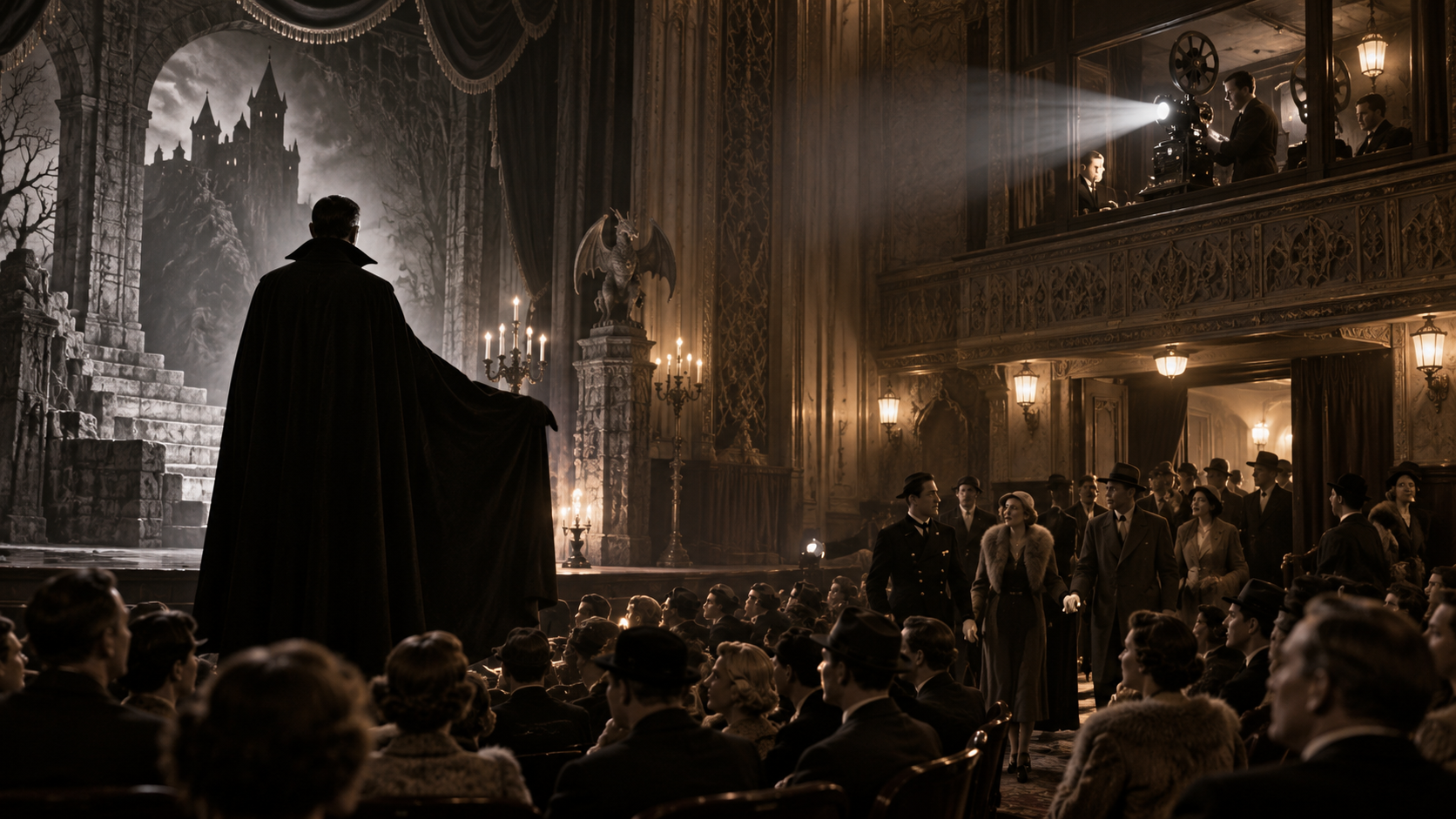
On February 14, 1931, Universal Pictures sent Dracula into general American release after a New York premiere earlier that week. Directed by Tod Browning, the film starred Bela Lugosi as Count Dracula, a role he had already played onstage. The production drew from Bram Stoker’s novel through its theatrical adaptation, concentrating much of the action in interiors where entrances, pauses, glances and silence could generate unease. Lugosi’s measured delivery and elegant posture made menace inseparable from social polish. Viewed in its own time, the occasion was more than a neat calendar marker. It sat where entertainment, technology, publicity and public appetite met, and each of those forces helped determine who encountered it and what they made of it. Remembering the setting keeps the story grounded in decisions made by artists, producers, distributors and audiences rather than turning a complicated cultural shift into a single flash of inevitability.
Dracula arrived near the beginning of Hollywood’s sound era, and its atmosphere reflects filmmakers learning how speech, effects and quiet could reorganize suspense. Karl Freund’s cinematography gives the castle vast shadows and drifting movement, while the relative absence of a continuous musical score leaves viewers alert to voices and small noises. A Spanish-language version, directed by George Melford with a different cast, was filmed on the same sets at night, offering a valuable parallel example of studio production for multiple audiences. The response also shows how popular culture accumulates momentum. A performance, release or institutional choice can feel self-contained on the day it happens, yet its meaning expands through reviews, broadcasts, sales, conversation and imitation. Those channels do not affect every person in the same way, but together they can turn a dated event into a shared reference point, one that later work either follows, revises or pushes against.
The film’s commercial success helped launch Universal’s cycle of horror classics and fixed elements that later vampire stories would copy, parody or reject: the cape, the accent, the hypnotic stare and the aristocratic stranger entering modern society. Some techniques now appear stage-bound, and the story carries assumptions of its period, but the performance’s authority remains striking. Dracula demonstrates how an adaptation can eclipse its immediate sources in public memory. For many people, the idea of a vampire still arrives wearing details assembled by this particular movie. That longer view is why the date remains useful. It provides a precise doorway into changes that unfolded unevenly and involved many contributors, including people whose labor was less visible than the headline names. The surviving recordings, films, photographs and documents let new audiences reconsider both the achievement and its limits. Pop history is strongest when celebration is paired with context, and this anniversary offers room for both.
Universal’s Dracula entered general release on February 14, 1931, after its New York premiere two days earlier.
The setting and sequence matter because they show how the general release of Universal’s Dracula reached the public on this particular date.
Bela Lugosi’s controlled voice, gaze and formal bearing gave American moviegoers a defining screen interpretation of Count Dracula.
The first response came through the era’s available channels, from press and broadcast coverage to ticket buyers, listeners or viewers.
The film helped establish Universal horror and shaped the visual language of vampires in cinema, advertising and popular imagination.
Its reputation has continued to develop through preservation, scholarship, revival and the interpretations of later audiences.
Explore more of "On This Day ..."
Discover more events from the same date across news, politics, technology, sports, and other fields. Each link highlights significant moments that shaped history on different fronts.