

On This Day in Pop: February 19, 1968
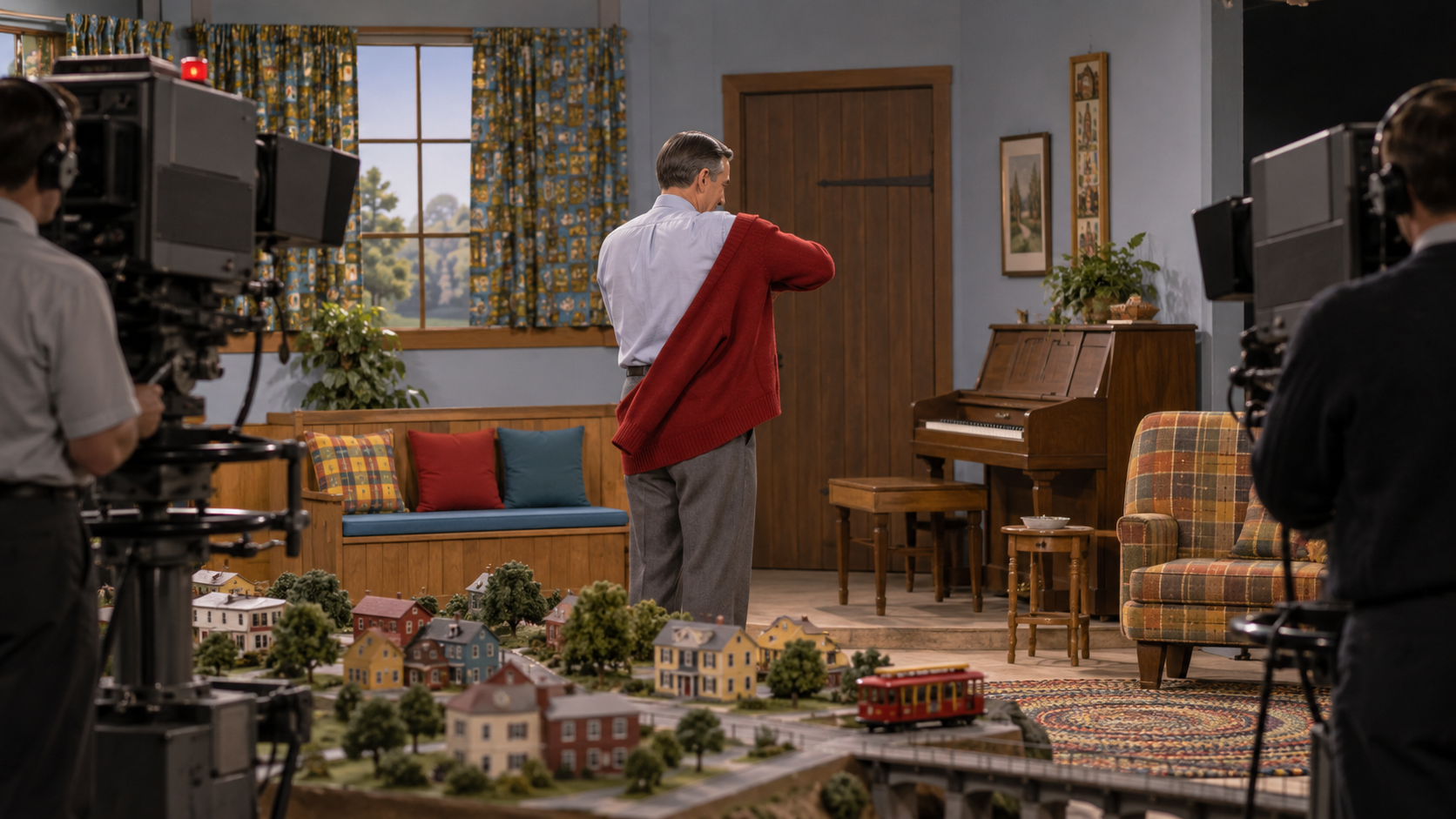
On February 19, 1968, Mister Rogers’ Neighborhood began its national run on educational television. Fred Rogers entered a modest room, changed into a cardigan and sneakers, and spoke to the camera as though addressing one child. That deliberate intimacy distinguished the program from louder children’s entertainment. Songs, simple visits, hand puppets and the make-believe trolley created reliable rhythms, while Rogers used those routines to discuss anger, fear, jealousy, separation, disability, death and the ordinary work of understanding other people. Viewed in its own time, the occasion was more than a neat calendar marker. It sat where entertainment, technology, publicity and public appetite met, and each of those forces helped determine who encountered it and what they made of it. Remembering the setting keeps the story grounded in decisions made by artists, producers, distributors and audiences rather than turning a complicated cultural shift into a single flash of inevitability.
The national series grew from years of local television, including Rogers’s work in Pittsburgh and Canada. Its apparent simplicity rested on careful writing, music, production and consultation about child development. The Neighborhood of Make-Believe allowed emotional conflicts to take symbolic form, while documentary visits showed how objects were made and how people performed their jobs. Rogers did not pretend television could replace parents or teachers. Instead, he used the medium’s closeness to model patient attention and to give children language for experiences adults sometimes avoided. The response also shows how popular culture accumulates momentum. A performance, release or institutional choice can feel self-contained on the day it happens, yet its meaning expands through reviews, broadcasts, sales, conversation and imitation. Those channels do not affect every person in the same way, but together they can turn a dated event into a shared reference point, one that later work either follows, revises or pushes against.
Across more than three decades, the program responded to changing public life without abandoning its measured pace. Memorable episodes addressed racial inclusion, assassination, divorce and conflict alongside everyday questions. The show’s calmness was not passivity; it was a conviction that children deserved truthful explanations scaled to their understanding. Archival clips, documentaries and continued educational work have kept that approach visible. In a media environment increasingly organized around speed and stimulation, the 1968 national debut still represents a radical proposition: that sustained kindness, precise words and respectful silence can hold an audience. That longer view is why the date remains useful. It provides a precise doorway into changes that unfolded unevenly and involved many contributors, including people whose labor was less visible than the headline names. The surviving recordings, films, photographs and documents let new audiences reconsider both the achievement and its limits. Pop history is strongest when celebration is paired with context, and this anniversary offers room for both.
Mister Rogers’ Neighborhood began its national educational-television run on February 19, 1968.
The setting and sequence matter because they show how the national debut of Mister Rogers’ Neighborhood reached the public on this particular date.
Fred Rogers addressed children directly in a quiet format that treated feelings, fears, routines and difficult public events with unusual respect.
The first response came through the era’s available channels, from press and broadcast coverage to ticket buyers, listeners or viewers.
The program’s decades of episodes helped establish emotional literacy and trust as essential goals of children’s television.
Its reputation has continued to develop through preservation, scholarship, revival and the interpretations of later audiences.
Explore more of "On This Day ..."
Discover more events from the same date across news, politics, technology, sports, and other fields. Each link highlights significant moments that shaped history on different fronts.