

How Tennis Hindrance Calls Work Explainer
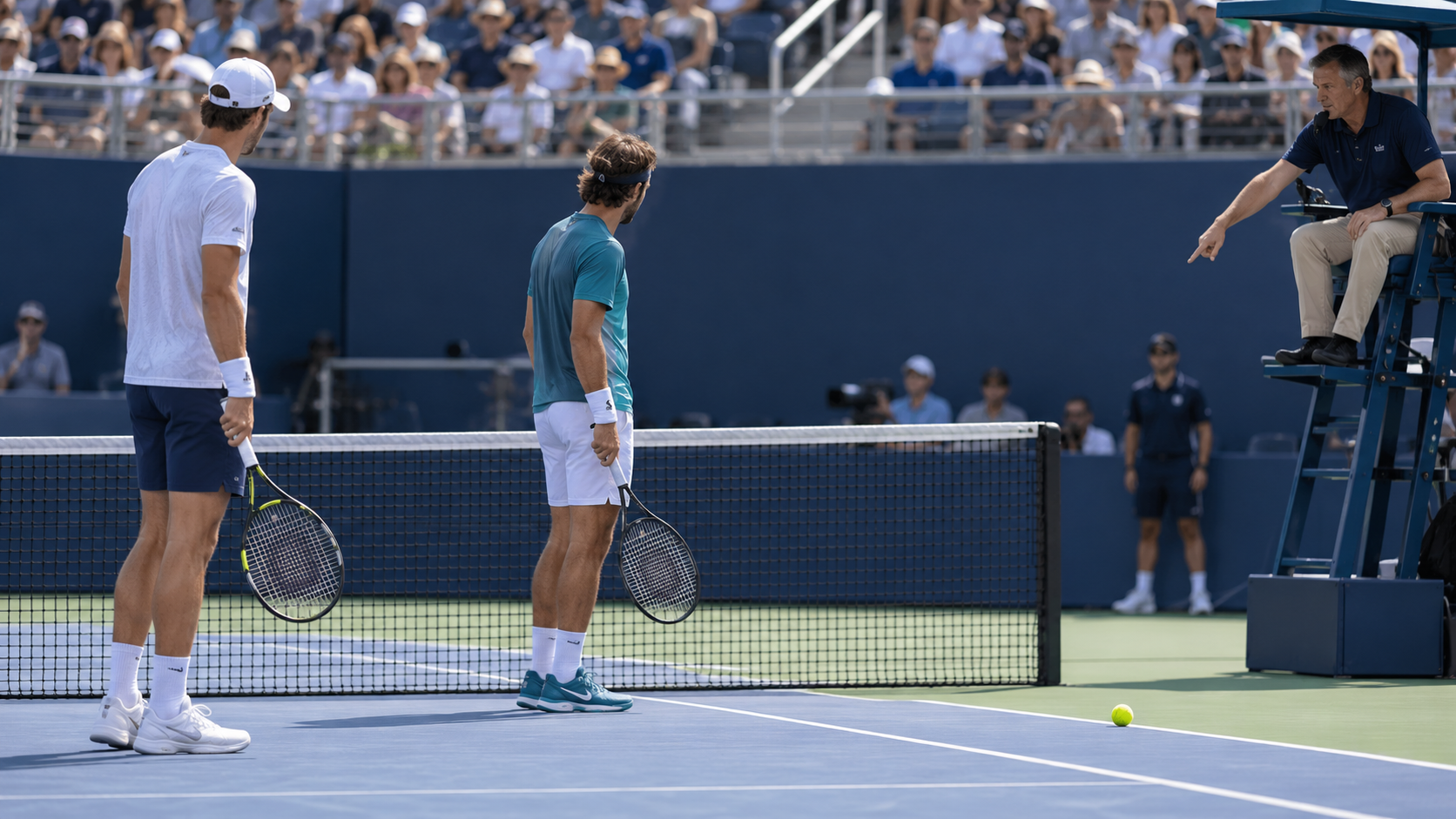
A hindrance occurs when something disrupts a player's ability to play the point. The result depends on the cause: an outside event that neither player controls usually leads to a let, while a deliberate act by an opponent can award the point to the hindered player.
Unintentional hindrance caused by a player, such as a ball falling from a pocket, is commonly handled with a let the first time. If the same player causes it again, officials may treat the repeated act as deliberate and award the point under the applicable procedure.
Normal match sounds and actions are not automatically hindrances. Players may grunt, shoes may squeak, and doubles partners may communicate when the ball is traveling toward them. Calling out while the ball moves toward the opponent can be judged differently if it distracts play.
The chair umpire decides whether the disruption actually affected the point and whether it was deliberate. Players should stop only when an official calls a let or when continuing would be unsafe. Self-stopping on a disputed distraction risks losing the point.
The point is normally replayed as a let when neither player caused the problem.
The hindered player may be awarded the point.
Usually no. The player should continue unless the official stops play or safety requires an immediate halt.
Explore more "Explainers"
Discover additional explainers across politics, science, business, technology, and other fields. Each explainer breaks down a complex idea into clear, everyday language—helping you better understand how major concepts, systems, and debates shape the world around us.