

How Cricket Wides Work Explainer
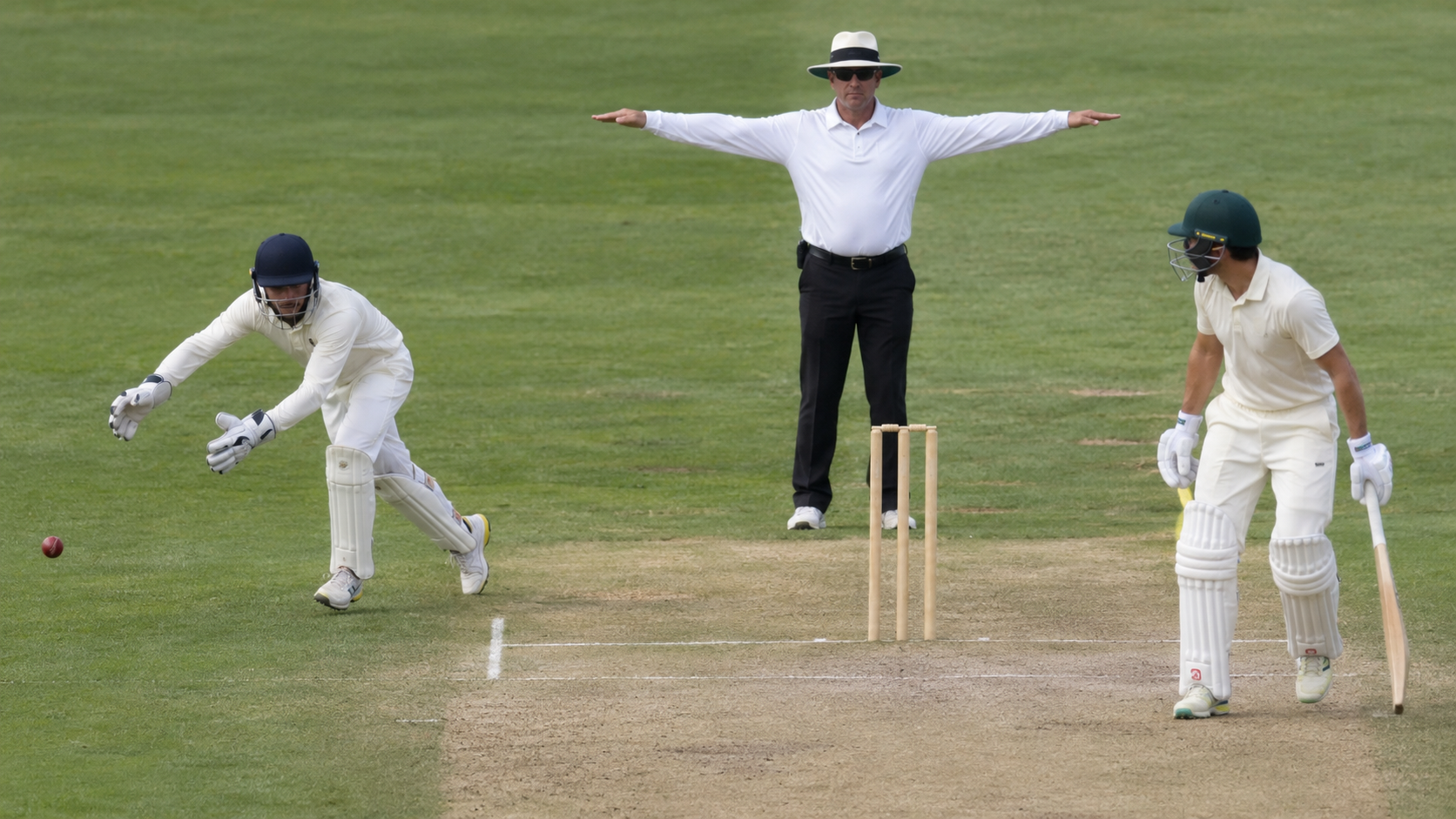
A wide is called when a delivery passes too far from the striker to be hit with a normal cricket stroke from the position the batter has taken or would normally take. Umpires judge reach, movement, and competition playing conditions rather than using one universal painted channel.
The batting side receives one wide run, and the delivery does not count as one of the six legal balls in the over. If the ball reaches the boundary or the batters run, those additional wide runs are added to the total and charged to the bowler.
A ball cannot be both a no-ball and a wide; the no-ball call takes priority. A delivery that touches the batter or bat is not scored wide. The striker can still be dismissed in limited ways, including stumped or run out, because the ball remains live.
The umpire signals by extending both arms horizontally. The striker's movement matters: stepping far across the crease can make a ball reachable that otherwise looked wide. Viewers should watch the batter's position at release and the umpire's immediate signal.
No. The bowler must deliver another legal ball.
At least one, with extra wide runs added if the ball reaches the boundary or the batters complete runs.
Yes, through the limited methods still available, such as stumped or run out.
Explore more "Explainers"
Discover additional explainers across politics, science, business, technology, and other fields. Each explainer breaks down a complex idea into clear, everyday language—helping you better understand how major concepts, systems, and debates shape the world around us.