

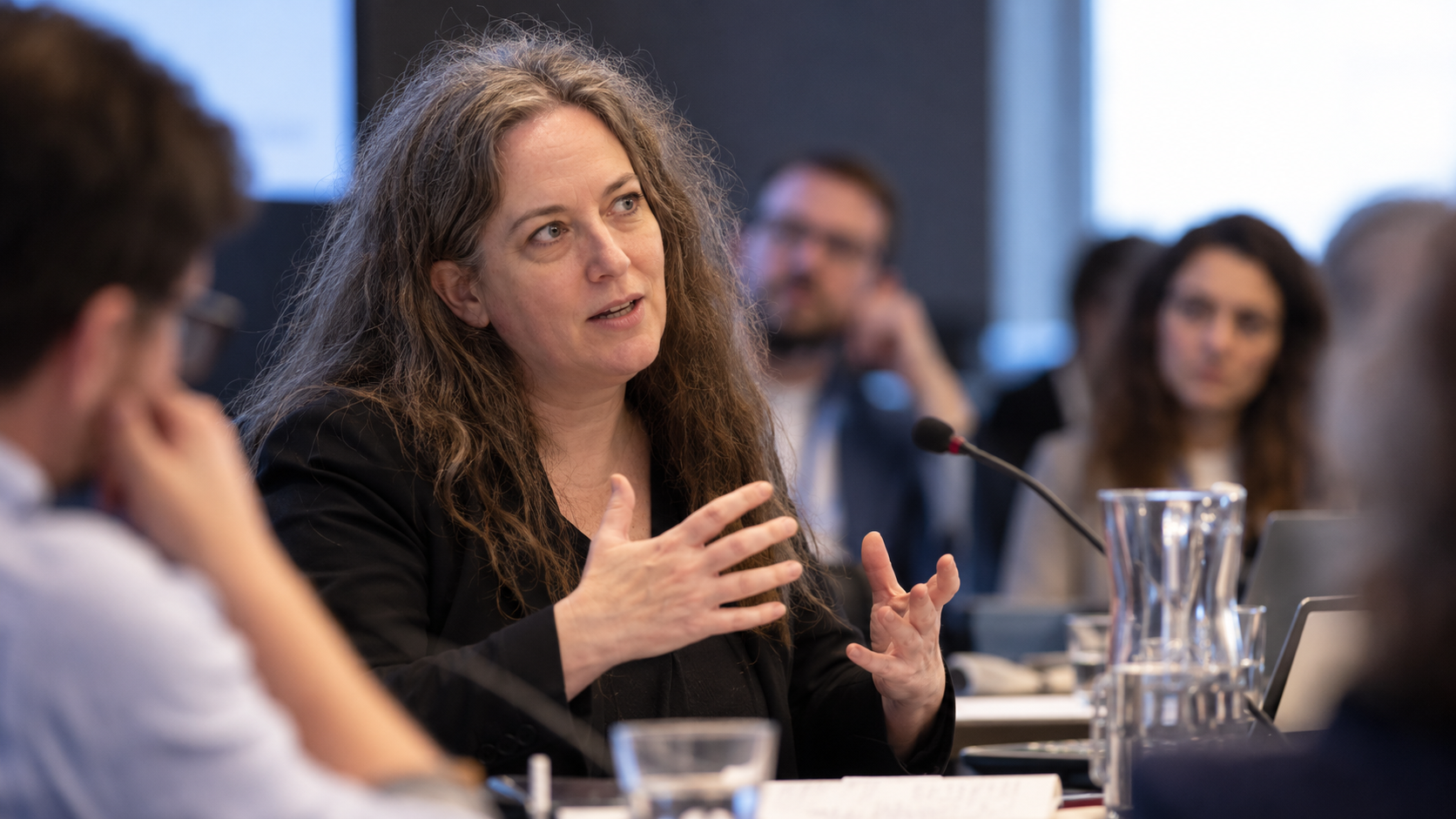
“Both AI and ethics are artefacts, so there is no necessary position for AI artefacts in society.”
Joanna Bryson’s artifact perspective rejects the claim that advanced AI arrives with a predetermined social role. People design systems, companies position them, lawmakers assign rights and duties, and users develop practices around them. Ethics is also constructed through human institutions and debate. Society therefore has choices about what to build, which behavior to reward, and how technology should be treated. Read in its original setting, the sentence is less a slogan than a marker of what the work established and what still had to be tested.
Calling AI an artifact does not mean it is simple or harmless. It means responsibility cannot be transferred to the object as though it independently created the conditions of its use. Anthropomorphic language may encourage people to assign intention, blame, or moral status where accountability should remain with designers and operators. Clear categories help preserve the distinction between sophisticated behavior and membership in a human community of rights and obligations. The underlying idea is therefore practical as well as intellectual. It gives teams a way to ask which evidence supports a claim and which conclusions still require human judgment.
The view has practical implications for autonomous systems, conversational agents, and proposals for legal personhood. Contracts, product liability, labor rules, and governance should identify responsible human and organizational actors. Interfaces can be engaging without misleading users into believing a system has feelings, needs, or authority it does not possess. Disclosure and careful design are especially important for children and vulnerable users. In practice, usefulness should be measured after deployment as well as before it. Teams need to watch for distribution shifts, workarounds, unequal effects, and costs that a laboratory metric cannot reveal.
Treating AI as an artifact should not excuse poor treatment of people who interact with it or provide the labor and data behind it. Nor should it prevent future ethical debate if evidence changes. The immediate priority is to avoid using machine personhood as a shield for corporate or government responsibility. Powerful artifacts require stronger accountability precisely because their effects can be widespread. The quote ultimately asks for intellectual humility. Progress becomes more credible when builders state what they know, invite scrutiny, and remain prepared to revise both the model and the institution around it. Bryson’s quote restores contingency to AI policy. Nothing about the technology dictates its rightful place; societies must decide that place and remain answerable for the decision. That standard keeps history useful. It connects a memorable research claim to concrete choices about measurement, accountability, participation, and the people who experience the system outside the laboratory. The work continues with care.
AI systems are built, deployed, and maintained through human institutions that choose objectives, interfaces, and limits.
Complex behavior does not erase the responsibility of the people and organizations controlling those choices.
Humanlike language or appearance can lead users to infer feelings, authority, or moral status that the system does not possess.
Clear disclosure and interface boundaries help preserve informed consent and direct accountability to the real decision makers.
Calling AI an artifact does not minimize its reach or the seriousness of its effects on people and institutions.
Liability, oversight, labor protections, data rights, and public rules should scale with the power of the artifact.
Explore more "Quotes of The Day"
Continue exploring how writers, thinkers, artists, and advocates have described the choices that shape an everyday life.