

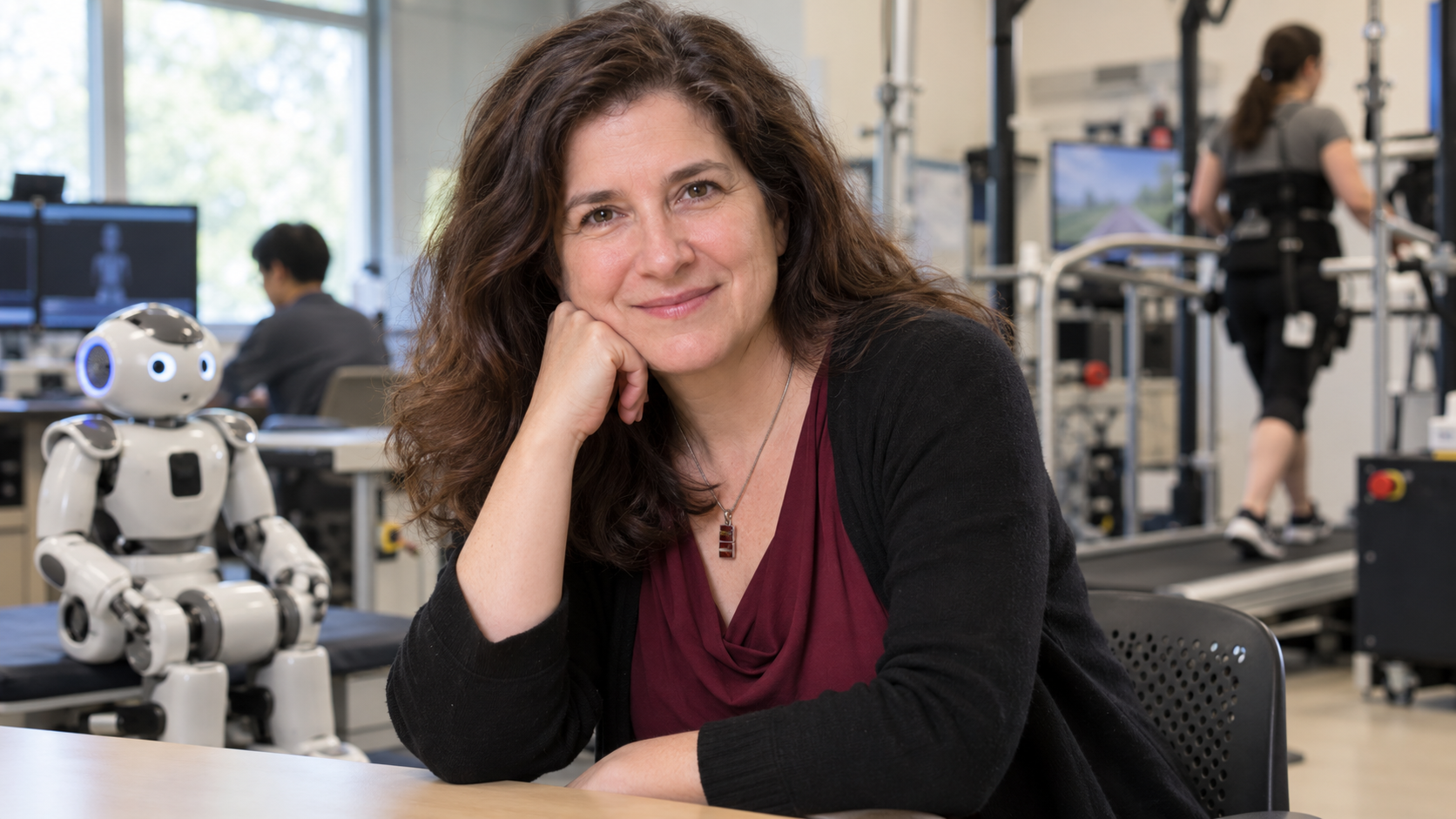
“Socially assistive robotics focuses on assisting users through social rather than physical interaction.”
Maja J. Matarić and David Feil-Seifer defined socially assistive robotics as a field where robots help through social interaction rather than physical contact. A robot might coach rehabilitation exercises, encourage a child during learning, or help an older adult maintain routines. The machine’s role is not to lift or manipulate the person but to use communication, feedback, and presence to support a human goal. The wording is compact because it identifies the change the authors wanted readers to notice, rather than turning a complex project into a promise of automatic progress.
Social assistance draws on timing, personalization, expression, and relationship. A useful robot can notice progress, adapt difficulty, and offer encouragement while preserving the user’s control. Success depends on more than task completion: engagement, dignity, trust, and long-term benefit matter. The robot should complement clinicians, teachers, caregivers, and families rather than presenting itself as a replacement for human connection. A careful reading separates the mechanism from the mythology that later accumulates around it. The quotation becomes more useful when its assumptions remain visible.
Research explores socially assistive robots in stroke recovery, autism support, wellness, education, and aging. Real deployments need collaboration with domain professionals and the people who will use the system. Studies should measure durable outcomes, not just novelty effects during a short demonstration. Interfaces must accommodate different languages, abilities, cultures, and comfort with machines, including an easy choice not to participate. The modern relevance lies in method, not nostalgia. Researchers and product teams can preserve the original curiosity while demanding stronger documentation, independent checks, and realistic operating conditions.
Social cues can persuade vulnerable users to disclose information, comply, or form attachments. Privacy protections, consent, age-appropriate design, and limits on emotional manipulation are essential. Institutions should be honest about what the robot understands, who sees the data, and when a human will intervene. Cost savings should never become the sole reason to substitute a machine where a person needs care. A responsible interpretation keeps people in the frame. Technical success is incomplete if the system weakens agency, obscures accountability, or shifts risk onto those with the least power to object. Matarić’s field makes assistance relational. Its best systems use social intelligence to strengthen human capability and connection, not to imitate care while quietly removing it. For readers, the practical habit is to return to the evidence: identify the task, examine the conditions of success, and ask who can act when reality differs from the demonstration. The work continues with care.
These robots support users through coaching, reminders, feedback, expression, and engagement rather than physical manipulation.
The goal may be rehabilitation, learning, wellness, or routine support under the guidance of responsible people.
A novel robot may increase attention briefly without producing durable health, learning, or quality-of-life benefits.
Longitudinal studies, domain experts, accessibility, cultural fit, and the option to refuse are crucial.
Humanlike cues can encourage disclosure, compliance, or emotional attachment beyond the system’s real understanding.
Consent, privacy, honest capability statements, human escalation, and limits on manipulation should shape every deployment.
Explore more "Quotes of The Day"
Continue exploring how writers, thinkers, artists, and advocates have described the choices that shape an everyday life.