

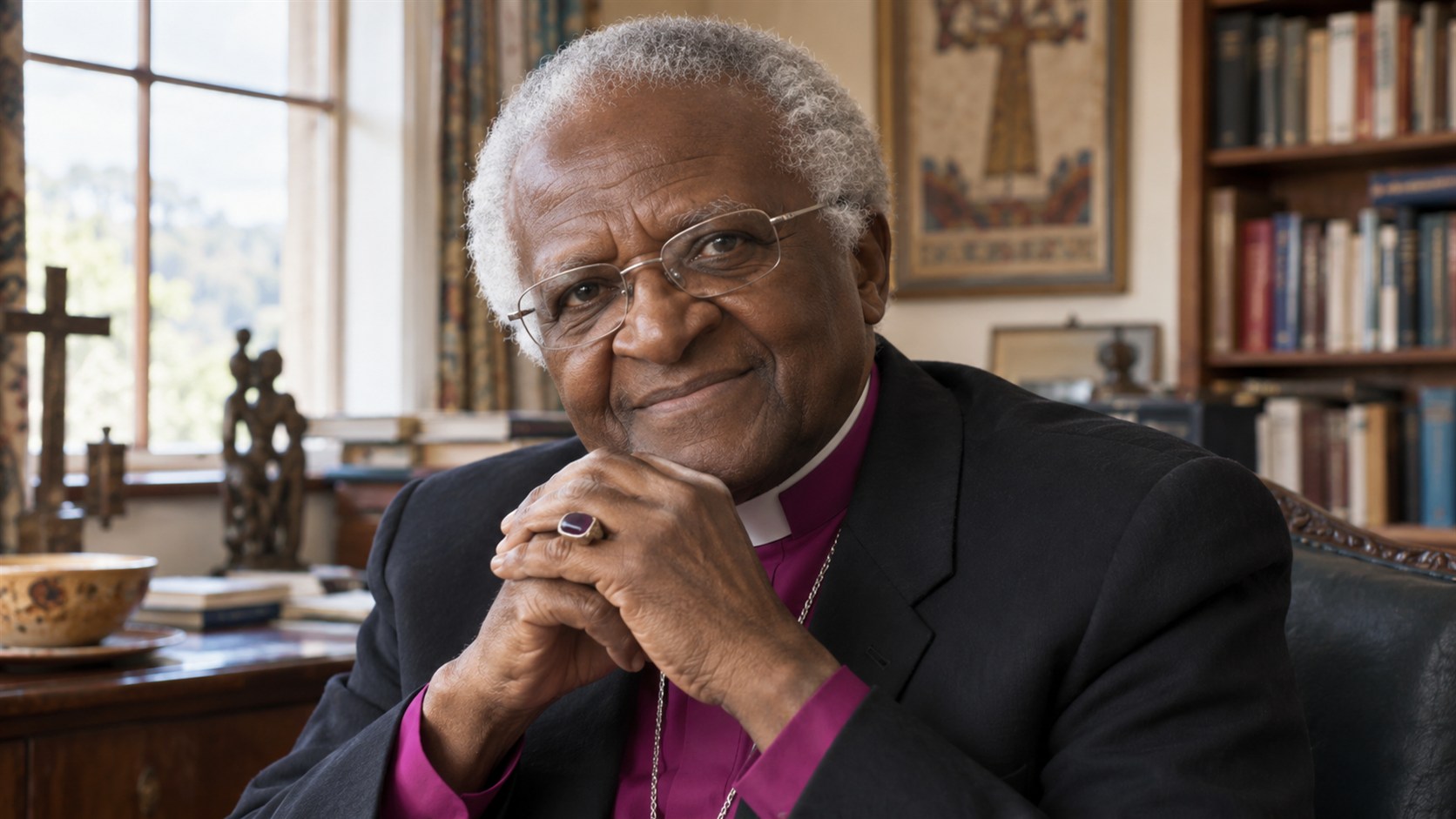
“If you are neutral in situations of injustice, you have chosen the side of the oppressor.”
The verified source for “If you are neutral in situations of injustice, you have chosen the side of the oppressor.” is public anti-apartheid teaching, associated with Desmond Tutu in 1986. There, the source used the image of an elephant standing on a mouse’s tail to show why claimed neutrality can preserve a powerful party’s control. Tutu challenges passive neutrality without licensing careless certainty or ignoring the discipline of nonviolent justice. November 13 simply locates this article within the Life series. Separating the series date from the quotation’s real setting avoids a false historical connection and keeps attention on the argument the words originally served.
When power and harm are unequal, refusing to respond can protect the status quo rather than creating a fair position between sides. Its relevance becomes clearer because institutions often describe silence as impartial even when existing rules predictably advantage one group and burden another. A measured application would be to map who holds decision power, who bears the cost, and what remedy affected people request before choosing how to act. Starting at that scale respects uncertainty and turns an appealing idea into evidence. It also creates a pause between intention and consequence, where the people affected can correct assumptions or propose a better method.
The important qualification is that taking a moral side still requires accurate facts, proportional methods, accountability, and attention to those most exposed to retaliation. Compact language gains force by leaving conditions outside the frame, so responsible interpretation has to restore them. Resources, power, safety, health, culture, and timing can change what action is available. The fairest reading asks who benefits, who carries the risk, and what evidence could require a different conclusion. It also checks the sentence against the larger work instead of borrowing its authority for an unrelated argument. That discipline matters because familiar quotations are often repeated after their original tension, audience, and purpose have disappeared from view.
Institutions often describe silence as impartial even when existing rules predictably advantage one group and burden another. The quotation still matters because it can reopen a choice that routine has made invisible. One next step is to map who holds decision power, who bears the cost, and what remedy affected people request before choosing how to act. Review what happens without demanding a predetermined moral. Tutu challenges passive neutrality without licensing careless certainty or ignoring the discipline of nonviolent justice. When the result is held beside the original context and the needs of others, the line becomes a tool for reflection instead of decorative certainty.
Desmond Tutu used the line in public anti-apartheid teaching, documented in 1986. The source used the image of an elephant standing on a mouse’s tail to show why claimed neutrality can preserve a powerful party’s control.
Tutu challenges passive neutrality without licensing careless certainty or ignoring the discipline of nonviolent justice. November 13 is only this series placement; it is not presented as the date when the words originated.
When power and harm are unequal, refusing to respond can protect the status quo rather than creating a fair position between sides.
Taking a moral side still requires accurate facts, proportional methods, accountability, and attention to those most exposed to retaliation.
Institutions often describe silence as impartial even when existing rules predictably advantage one group and burden another.
A measured way to act on the idea is to map who holds decision power, who bears the cost, and what remedy affected people request before choosing how to act.
Explore more "Quotes of The Day"
Continue exploring how writers, thinkers, artists, and advocates have described the choices that shape an everyday life.