

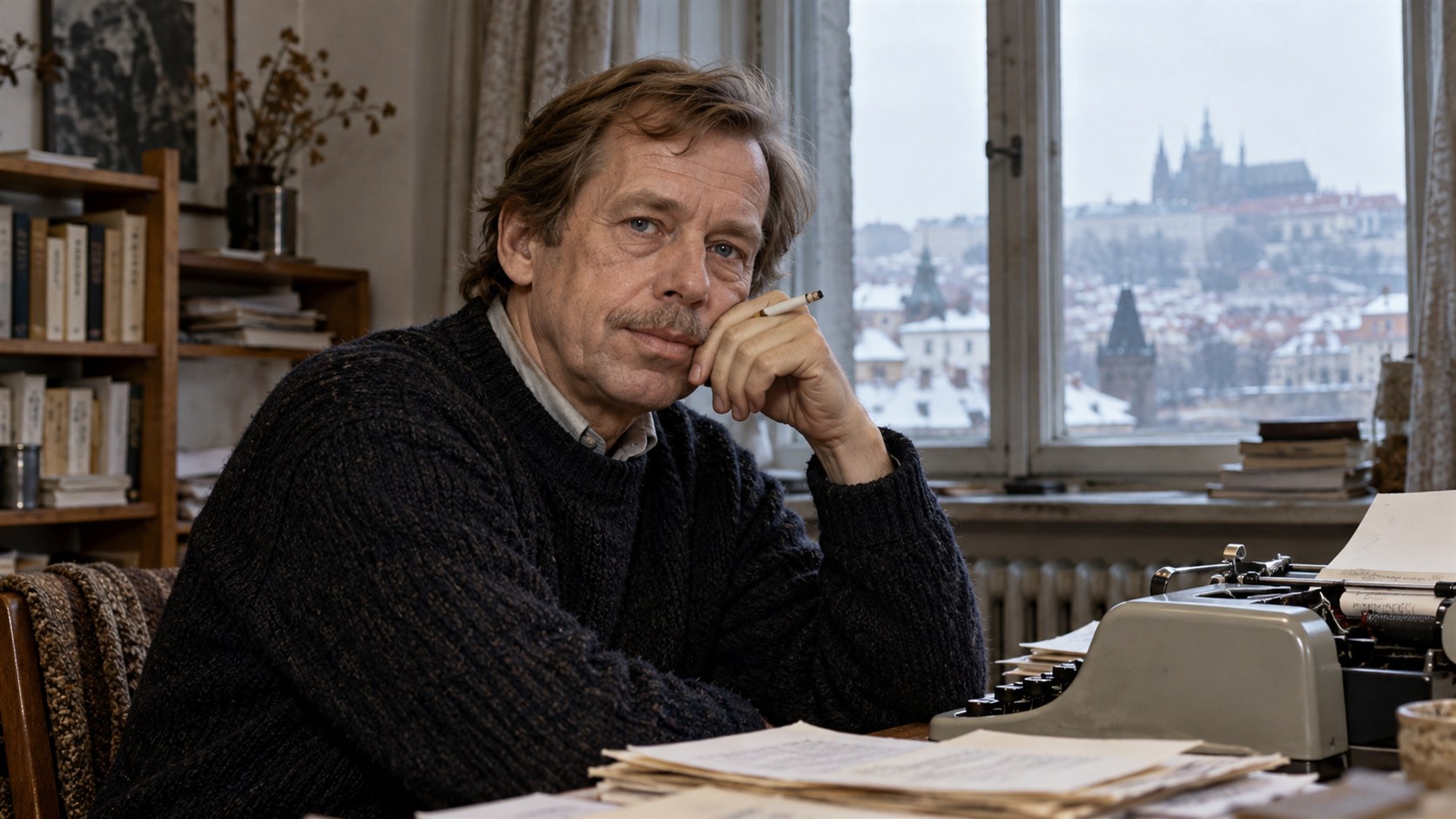
“Hope is not the conviction that something will turn out well, but the certainty that something makes sense, regardless of how it turns out.”
In 1986, Václav Havel gave readers the sentence “Hope is not the conviction that something will turn out well, but the certainty that something makes sense, regardless of how it turns out.” through Disturbing the Peace. The source distinguished hope from prediction after years of dissent under communist rule and repeated uncertainty about political outcomes. Its distinctive contribution is this: Havel locates hope in the orientation of action rather than in confidence about the forecast. The NewsStreets label November 15 marks a place in the annual series and does not assert that the quotation was first spoken, written, or published on that date. That sourcing distinction is small, but it is essential to trustworthy quotation work.
An action may be worth taking because it expresses truth, responsibility, or solidarity even when success cannot be guaranteed. Its relevance becomes clearer because people confronting long problems often confuse uncertain results with proof that continued principled work is pointless. A measured application would be to name the value that makes one task worthwhile, define the next accountable step, and separate that commitment from a promised outcome. Starting at that scale respects uncertainty and turns an appealing idea into evidence. It also creates a pause between intention and consequence, where the people affected can correct assumptions or propose a better method.
The important qualification is that hope without strategy can become consolation, and meaningful effort still needs evidence, priorities, and care for consequences. Compact language gains force by leaving conditions outside the frame, so responsible interpretation has to restore them. Resources, power, safety, health, culture, and timing can change what action is available. The fairest reading asks who benefits, who carries the risk, and what evidence could require a different conclusion. It also checks the sentence against the larger work instead of borrowing its authority for an unrelated argument. That discipline matters because familiar quotations are often repeated after their original tension, audience, and purpose have disappeared from view.
People confronting long problems often confuse uncertain results with proof that continued principled work is pointless. Seen this way, the quotation remains relevant without pretending to be universal. Try to name the value that makes one task worthwhile, define the next accountable step, and separate that commitment from a promised outcome. Notice both the benefit and the friction it produces, then alter the next step when the evidence calls for it. Havel locates hope in the orientation of action rather than in confidence about the forecast. The words earn their place in daily life when they deepen responsibility rather than merely sounding memorable.
Václav Havel used the line in Disturbing the Peace, documented in 1986. The source distinguished hope from prediction after years of dissent under communist rule and repeated uncertainty about political outcomes.
Havel locates hope in the orientation of action rather than in confidence about the forecast. November 15 is only this series placement; it is not presented as the date when the words originated.
An action may be worth taking because it expresses truth, responsibility, or solidarity even when success cannot be guaranteed.
Hope without strategy can become consolation, and meaningful effort still needs evidence, priorities, and care for consequences.
People confronting long problems often confuse uncertain results with proof that continued principled work is pointless.
A measured way to act on the idea is to name the value that makes one task worthwhile, define the next accountable step, and separate that commitment from a promised outcome.
Explore more "Quotes of The Day"
Continue exploring how writers, thinkers, artists, and advocates have described the choices that shape an everyday life.