

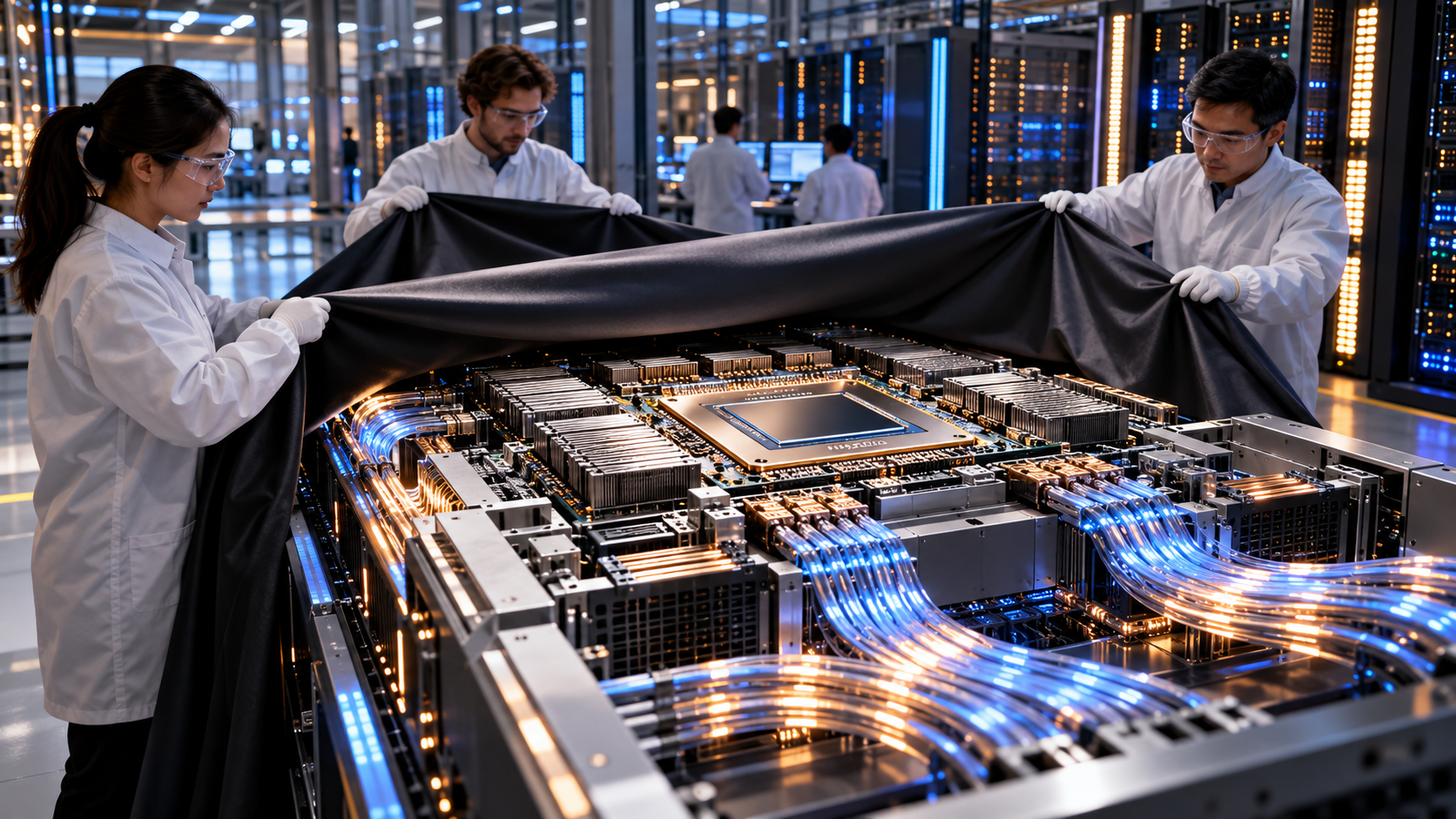
March 18, 2024: Nvidia Unveils Blackwell
On March 18, 2024, Nvidia introduced the Blackwell GPU architecture and a platform designed to train and run increasingly large generative models. The company said new processors, interconnects, transformer engines, and reliability features could support trillion-parameter systems at substantially lower inference cost and energy use. Demand for generative AI had turned specialized accelerators into strategic infrastructure. Model developers were limited not only by algorithms and data but by the availability, memory, networking, electricity, and reliability of clusters containing thousands of chips. The date matters because it turned a fast-moving technical or policy development into a visible milestone that people, institutions, and researchers could evaluate.
The substance of Nvidia’s introduction of the Blackwell computing platform was as important as the headline. The flagship Blackwell GPU contained 208 billion transistors across two connected dies. Nvidia paired it with faster NVLink networking and systems such as the GB200 Grace Blackwell Superchip, while major cloud providers, server makers, and model companies announced plans to adopt the platform. Those choices reveal what the people behind the milestone believed was necessary at the time. AI history rarely advances through one breakthrough alone; research, product design, infrastructure, governance, and access all shape what a system can become.
The immediate consequences reached beyond the organization at the center of the event. Blackwell reinforced Nvidia’s central position in the AI economy and influenced data-center investment around the world. The promise of more efficient inference made richer models and real-time applications more practical, even as total electricity demand grew because deployment expanded so quickly. The moment also invited scrutiny, because new capabilities create new dependencies. Reliability, safety, cost, privacy, and human control determine whether an impressive demonstration becomes a trustworthy part of everyday life.
In retrospect, The platform became a symbol of the hardware scale behind modern AI. Its launch reminded the public that apparent software intelligence depends on advanced manufacturing, packaging, networking, cooling, and power, and that control over those supply chains can shape which laboratories and countries compete at the frontier. Looking back from today’s rapidly changing AI landscape, this event belongs to a larger transition from specialized machine-learning experiments to systems embedded in ordinary products, workplaces, institutions, and public decisions. Its enduring lesson is that technical progress becomes historically significant when it changes what people can do and what society expects next. That connection between capability and consequence gives the milestone its lasting relevance.
Nvidia introduced the Blackwell GPU architecture and a platform designed to train and run increasingly large generative models. The company said new processors, interconnects, transformer engines, and reliability features could support trillion-parameter systems at substantially lower inference cost and energy use.
The flagship Blackwell GPU contained 208 billion transistors across two connected dies. Nvidia paired it with faster NVLink networking and systems such as the GB200 Grace Blackwell Superchip, while major cloud providers, server makers, and model companies announced plans to adopt the platform.
Blackwell reinforced Nvidia's central position in the AI economy and influenced data-center investment around the world. The promise of more efficient inference made richer models and real-time applications more practical, even as total electricity demand grew because deployment expanded so quickly.
The event connected a concrete technical, commercial, or policy decision with the wider development of artificial intelligence.
The platform became a symbol of the hardware scale behind modern AI. Its launch reminded the public that apparent software intelligence depends on advanced manufacturing, packaging, networking, cooling, and power, and that control over those supply chains can shape which laboratories and countries compete at the frontier.
Its influence can be traced through later products, research, governance, or industry practice.
Explore more of "On This Day ..."
Discover more events from the same date across news, politics, technology, sports, and other fields. Each link highlights significant moments that shaped history on different fronts.