

March 29, 2024: OpenAI Previews Voice Engine
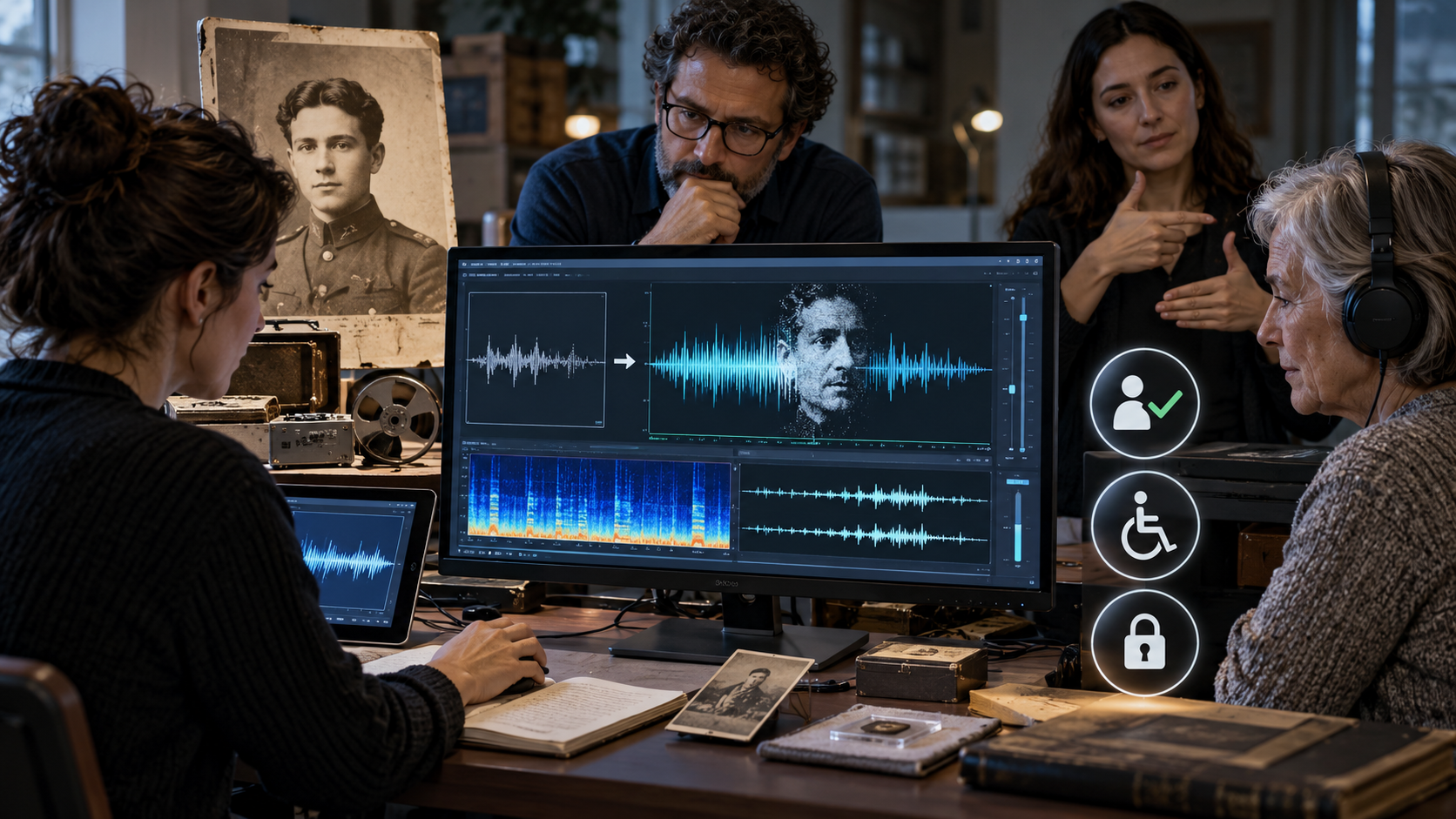
On March 29, 2024, OpenAI shared results from a limited preview of Voice Engine, a model capable of creating natural-sounding speech from text and a fifteen-second voice sample. The company highlighted accessibility, translation, education, and healthcare uses while withholding a broad release because of impersonation and election risks. Synthetic speech had improved rapidly, making personalized audio useful for people who lost their voices and creators working across languages. The same capability could enable fraud, harassment, or political deception, especially when listeners still treated a familiar voice as proof of identity. The date matters because it turned a fast-moving technical or policy development into a visible milestone that people, institutions, and researchers could evaluate.
The substance of OpenAI’s public preview of Voice Engine was as important as the headline. Trusted partners tested reading assistance, multilingual video translation, community-health training, augmentative communication, and voice restoration. OpenAI required informed consent and disclosure, prohibited unauthorized impersonation, and used watermarking and monitoring while proposing voice authentication and a protected list of prominent voices. Those choices reveal what the people behind the milestone believed was necessary at the time. AI history rarely advances through one breakthrough alone; research, product design, infrastructure, governance, and access all shape what a system can become.
The immediate consequences reached beyond the organization at the center of the event. The preview made responsible nonrelease part of the story: technical capability did not automatically become a public product. It encouraged discussion about consent, provenance, bank authentication, and media literacy before customized voices became widely accessible through a major AI platform. The moment also invited scrutiny, because new capabilities create new dependencies. Reliability, safety, cost, privacy, and human control determine whether an impressive demonstration becomes a trustworthy part of everyday life.
In retrospect, Voice Engine became a prominent example of staged deployment for dual-use generative technology. Its broader lesson is that realistic media systems require safeguards outside the model itself, including identity verification, disclosure, traceability, social preparedness, and rules that protect a person’s control over their likeness and voice. Looking back from today’s rapidly changing AI landscape, this event belongs to a larger transition from specialized machine-learning experiments to systems embedded in ordinary products, workplaces, institutions, and public decisions. Its enduring lesson is that technical progress becomes historically significant when it changes what people can do and what society expects next. That connection between capability and consequence gives the milestone its lasting relevance.
OpenAI shared results from a limited preview of Voice Engine, a model capable of creating natural-sounding speech from text and a fifteen-second voice sample. The company highlighted accessibility, translation, education, and healthcare uses while withholding a broad release because of impersonation and election risks.
Trusted partners tested reading assistance, multilingual video translation, community-health training, augmentative communication, and voice restoration. OpenAI required informed consent and disclosure, prohibited unauthorized impersonation, and used watermarking and monitoring while proposing voice authentication and a protected list of prominent voices.
The preview made responsible nonrelease part of the story: technical capability did not automatically become a public product. It encouraged discussion about consent, provenance, bank authentication, and media literacy before customized voices became widely accessible through a major AI platform.
The event connected a concrete technical, commercial, or policy decision with the wider development of artificial intelligence.
Voice Engine became a prominent example of staged deployment for dual-use generative technology. Its broader lesson is that realistic media systems require safeguards outside the model itself, including identity verification, disclosure, traceability, social preparedness, and rules that protect a person's control over their likeness and voice.
Its influence can be traced through later products, research, governance, or industry practice.
Explore more of "On This Day ..."
Discover more events from the same date across news, politics, technology, sports, and other fields. Each link highlights significant moments that shaped history on different fronts.