

On This Day in Pop: March 16, 1971
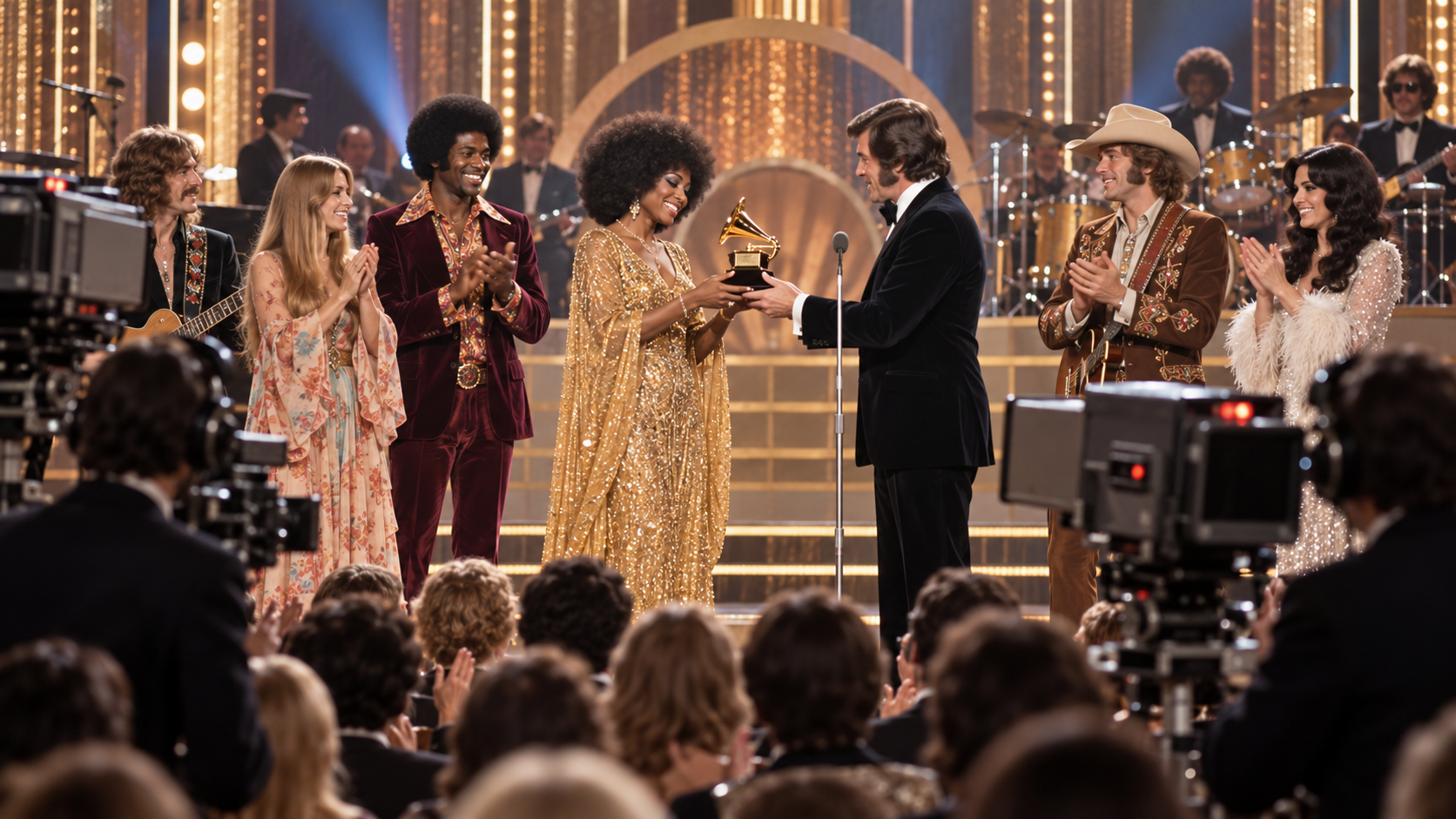
On March 16, 1971, the 13th Annual Grammy Awards became the ceremony’s first live television broadcast. Earlier Grammy specials had used taped presentations, but ABC carried the event as it happened from the Hollywood Palladium. The move put the recording industry’s prizes in front of a national audience and added the uncertainty, pacing and spectacle that come when winners, speeches and performances unfold without an editing room. Seen in its own time, the occasion was more than a tidy calendar entry. It emerged from choices by performers, writers, technicians, executives and audiences, each working within the opportunities and constraints of the period. Restoring that setting keeps the story human and specific instead of treating a complicated cultural shift as inevitable.
Simon and Garfunkel’s Bridge Over Troubled Water dominated the major categories, while a broad field of winners reflected pop, soul, country, jazz and classical recording. Live television gave viewers a stronger sense of sharing an industry moment, even though the Grammy categories and voting system were not always legible outside professional circles. It also encouraged producers to think about camera-ready performances and emotional acceptance speeches as part of the event’s identity. The reaction also shows how popular culture gathers momentum. A premiere, broadcast, release or public appearance can feel self-contained on the day, yet its meaning expands through reviews, radio, television, sales, conversation and imitation. Those channels reach people unevenly, but together they can turn one event into a reference point that later work follows, revises or rejects.
The Grammys grew into a global broadcast built as much around collaborations and stage moments as around trophies. That evolution brought larger audiences and recurring arguments over representation, genre boundaries and which innovations institutions recognize late. The 1971 broadcast marks the point when an industry ceremony committed itself to the risks and rewards of live popular television, making the viewing public an active part of awards night. That longer view is why the date still matters. It opens a door onto changes involving many contributors, including people whose labor was less visible than the headline names. Recordings, films, photographs and documents allow later audiences to reconsider both the achievement and its limits. Pop history is strongest when celebration is paired with context, and this anniversary leaves room for both. Its afterlife also shows that cultural memory is active: anniversaries, restorations, reissues and fresh criticism keep changing which details receive attention and which assumptions are questioned. Looking back does not mean pretending everyone experienced the moment alike; it means noticing the distance between a public milestone, the industry around it and the private reactions beyond the spotlight.
ABC carried the 13th Annual Grammy Awards live from the Hollywood Palladium, replacing the ceremony’s earlier taped television format.
The setting and sequence matter because they show how the first live Grammy telecast reached the public on this particular date.
Real-time winners, speeches and performances made the recording industry’s awards feel like a shared national occasion.
The immediate response traveled through the era’s available channels, from press and broadcast coverage to ticket buyers, listeners and viewers.
The live model became central to the Grammys, which evolved into a performance-driven global broadcast and a continuing debate over recognition.
Its reputation has kept developing through preservation, scholarship, revival and the interpretations of later audiences.
Explore more of "On This Day ..."
Discover more events from the same date across news, politics, technology, sports, and other fields. Each link highlights significant moments that shaped history on different fronts.