

On This Day in Pop: March 22, 1963
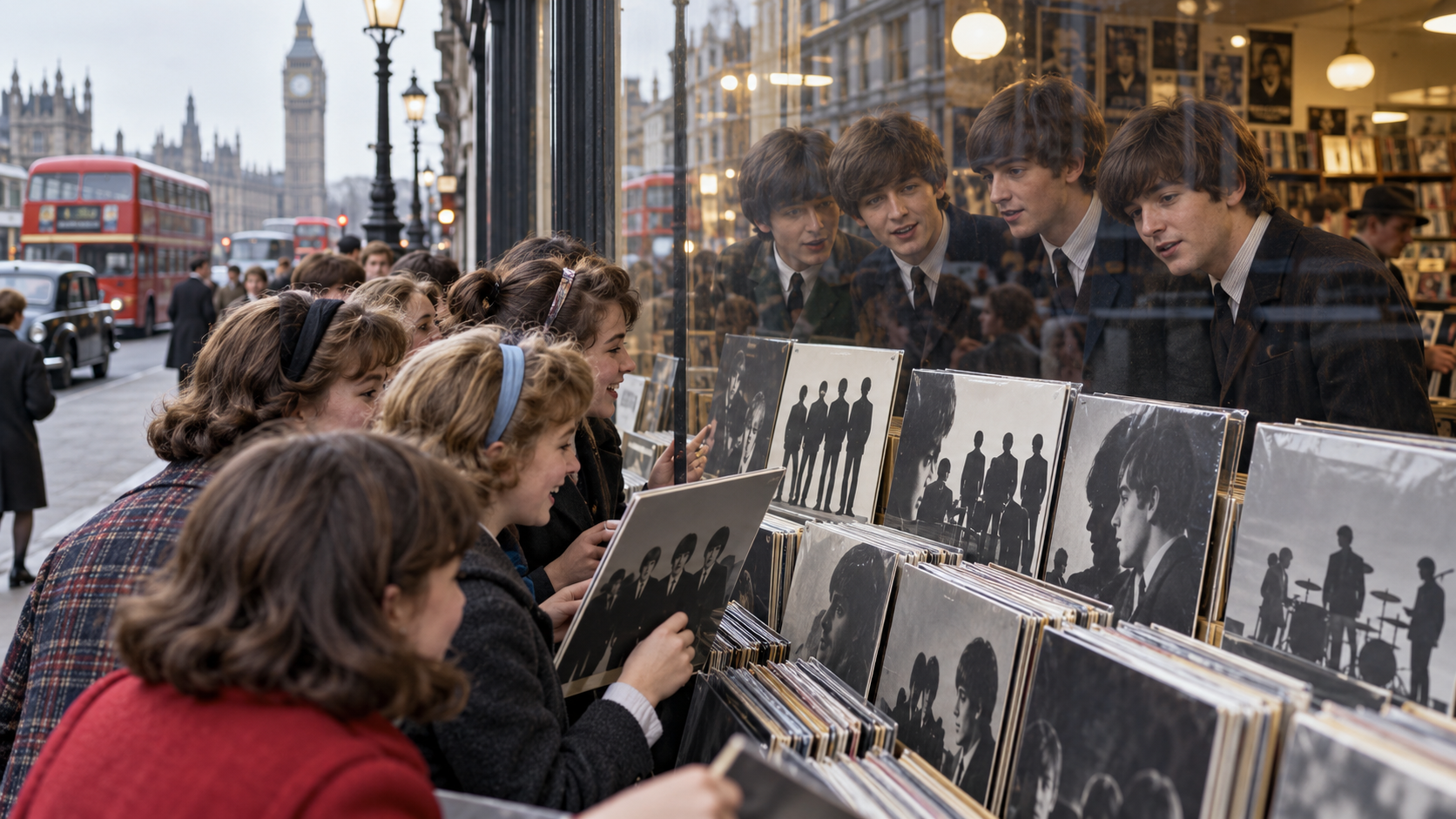
On March 22, 1963, the Beatles released their debut British album, Please Please Me. Producer George Martin had captured ten of its fourteen tracks during a marathon session at EMI Studios on February 11, adding the group’s first two singles. The compressed schedule treated the record almost like a live set, preserving the attack the band had sharpened through long nights in Liverpool and Hamburg. Seen in its own time, the occasion was more than a tidy calendar entry. It emerged from choices by performers, writers, technicians, executives and audiences, each working within the opportunities and constraints of the period. Restoring that setting keeps the story human and specific instead of treating a complicated cultural shift as inevitable.
The album moves between Lennon–McCartney originals and stage-tested covers, demonstrating both an emerging songwriting voice and the Black American music that formed the Beatles’ vocabulary. John Lennon’s raw closing vocal on “Twist and Shout” came after hours of singing because Martin knew his voice might not survive another take. The performance turned physical exhaustion into excitement and made the record end like a club show reaching its limit. The reaction also shows how popular culture gathers momentum. A premiere, broadcast, release or public appearance can feel self-contained on the day, yet its meaning expands through reviews, radio, television, sales, conversation and imitation. Those channels reach people unevenly, but together they can turn one event into a reference point that later work follows, revises or rejects.
Please Please Me topped the British album chart and began a sequence that transformed recording, fashion, fandom and the global music business. Later Beatles albums became more complex, but the debut’s speed and directness remain essential evidence of what the group was before studio experimentation expanded its world. The release date marks the arrival of an album that sounded immediate while opening a future no one involved could fully predict. That longer view is why the date still matters. It opens a door onto changes involving many contributors, including people whose labor was less visible than the headline names. Recordings, films, photographs and documents allow later audiences to reconsider both the achievement and its limits. Pop history is strongest when celebration is paired with context, and this anniversary leaves room for both. Its afterlife also shows that cultural memory is active: anniversaries, restorations, reissues and fresh criticism keep changing which details receive attention and which assumptions are questioned. Looking back does not mean pretending everyone experienced the moment alike; it means noticing the distance between a public milestone, the industry around it and the private reactions beyond the spotlight.
Ten songs were recorded in one long February session and joined the band’s early singles for a fourteen-track debut album.
The setting and sequence matter because they show how the release of Please Please Me reached the public on this particular date.
The LP translated the Beatles’ hard-earned club energy into a national release and quickly rose to the top of the British chart.
The immediate response traveled through the era’s available channels, from press and broadcast coverage to ticket buyers, listeners and viewers.
The debut began an unprecedented album run and preserved the covers, originals and live intensity beneath the group’s early breakthrough.
Its reputation has kept developing through preservation, scholarship, revival and the interpretations of later audiences.
Explore more of "On This Day ..."
Discover more events from the same date across news, politics, technology, sports, and other fields. Each link highlights significant moments that shaped history on different fronts.