

How Soccer Throw-Ins Work Explainer
A throw-in restarts play after the whole ball crosses a touchline, on the ground or in the air. It belongs to the opponents of the player who last touched the ball. The restart is taken from the point where the ball left the field.
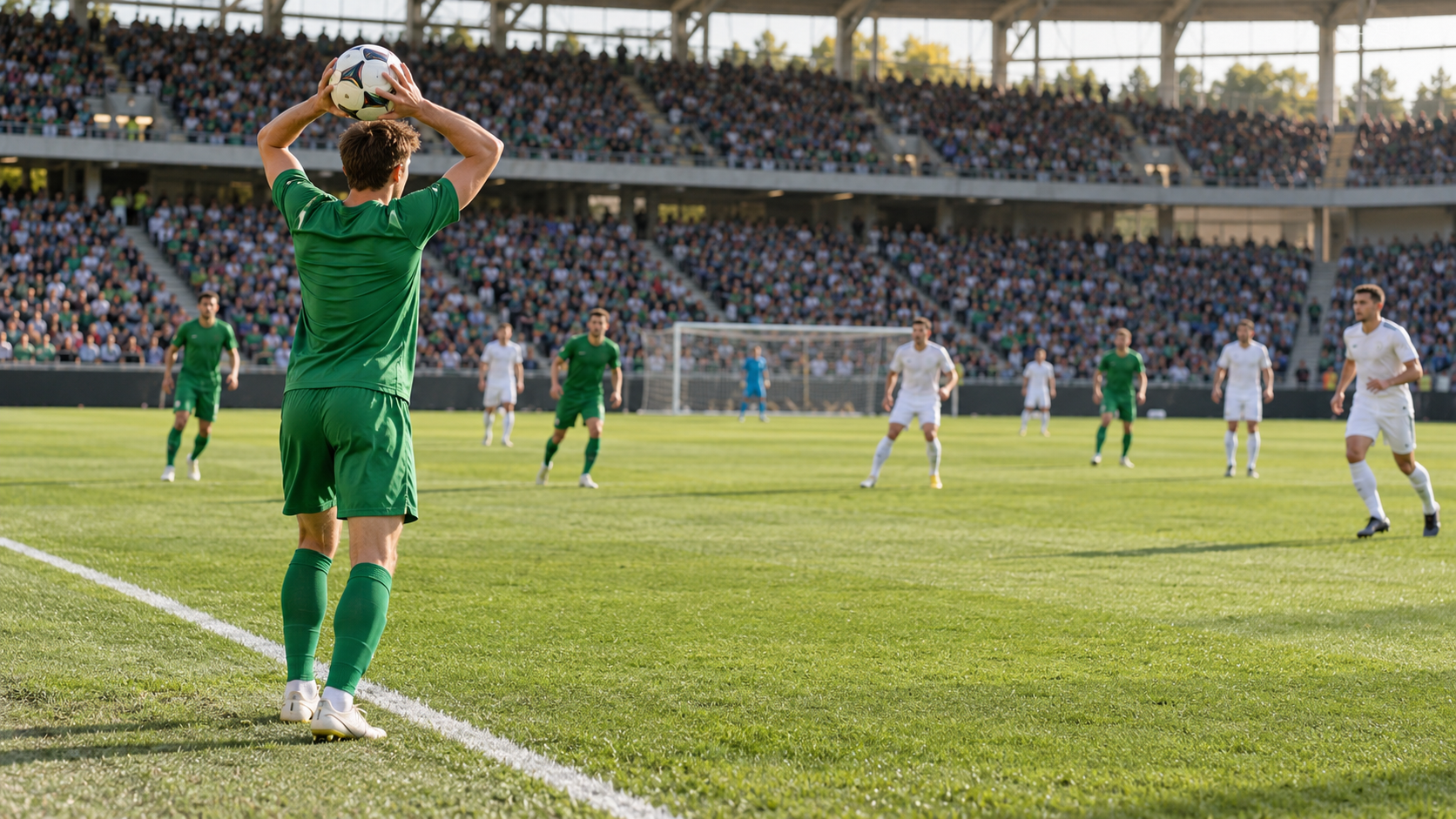
At delivery, the thrower faces the field, uses both hands, and brings the ball from behind and over the head. Part of each foot must be on the touchline or on the ground outside it. The ball becomes live when it enters the field of play.
Opponents must remain at least two metres from the throwing point. A goal cannot be scored directly from a throw-in: a ball entering the opponents' goal untouched produces a goal kick, while one entering the thrower's own goal produces a corner kick.
If the throw is taken incorrectly, the opponents normally receive the throw-in. The original thrower also may not touch the ball a second time before another player does. The clearest viewing clues are the feet, the two-handed over-head motion, and the ball's entry point.
The law requires part of each foot to remain on the touchline or on the ground outside it at delivery.
No. The restart is a goal kick or corner kick if the untouched ball enters a goal.
At least two metres from the point on the touchline where the throw is taken.
Explore more "Explainers"
Discover additional explainers across politics, science, business, technology, and other fields. Each explainer breaks down a complex idea into clear, everyday language—helping you better understand how major concepts, systems, and debates shape the world around us.