

How NBA Jump Balls Work Explainer
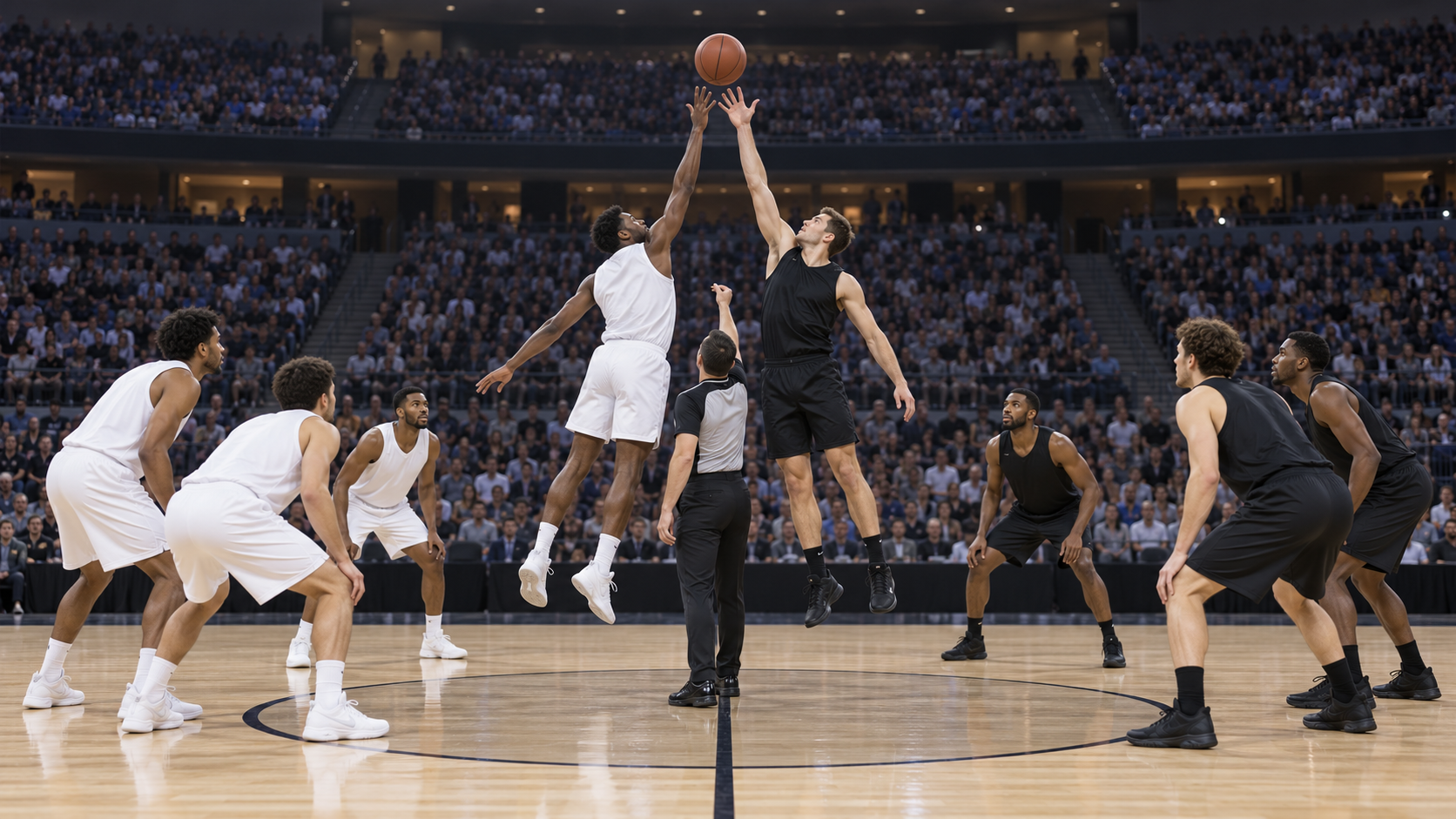
The NBA starts the game and each overtime with a center-circle jump ball. Other jump-ball situations can follow a held ball, simultaneous possession, a ball lodged on the basket support, or certain double violations when neither team is entitled to possession.
The official tosses the ball upward between two opponents. Each jumper may tap it after it reaches its highest point, but neither may catch it before the ball touches a non-jumper, the floor, the basket, or the backboard. A jumper also cannot tap it more than twice.
The jumpers must remain inside their half of the circle until the toss and may not move into a new position around the circle. The other players stay outside the circle but can arrange themselves strategically, subject to rules against illegal positioning or holding.
Unlike many college competitions, the NBA does not use an alternating-possession arrow to settle ordinary held balls. It conducts another jump between involved players when possible. The game clock starts when the ball is legally tapped, so the first touch matters for both possession and timing.
When one of the jumpers legally taps the tossed ball.
Not before the ball touches a non-jumper, the floor, the basket, or the backboard.
No. Ordinary held-ball situations are resolved with a jump ball.
Explore more "Explainers"
Discover additional explainers across politics, science, business, technology, and other fields. Each explainer breaks down a complex idea into clear, everyday language—helping you better understand how major concepts, systems, and debates shape the world around us.