

How Hockey Line Changes Work Explainer
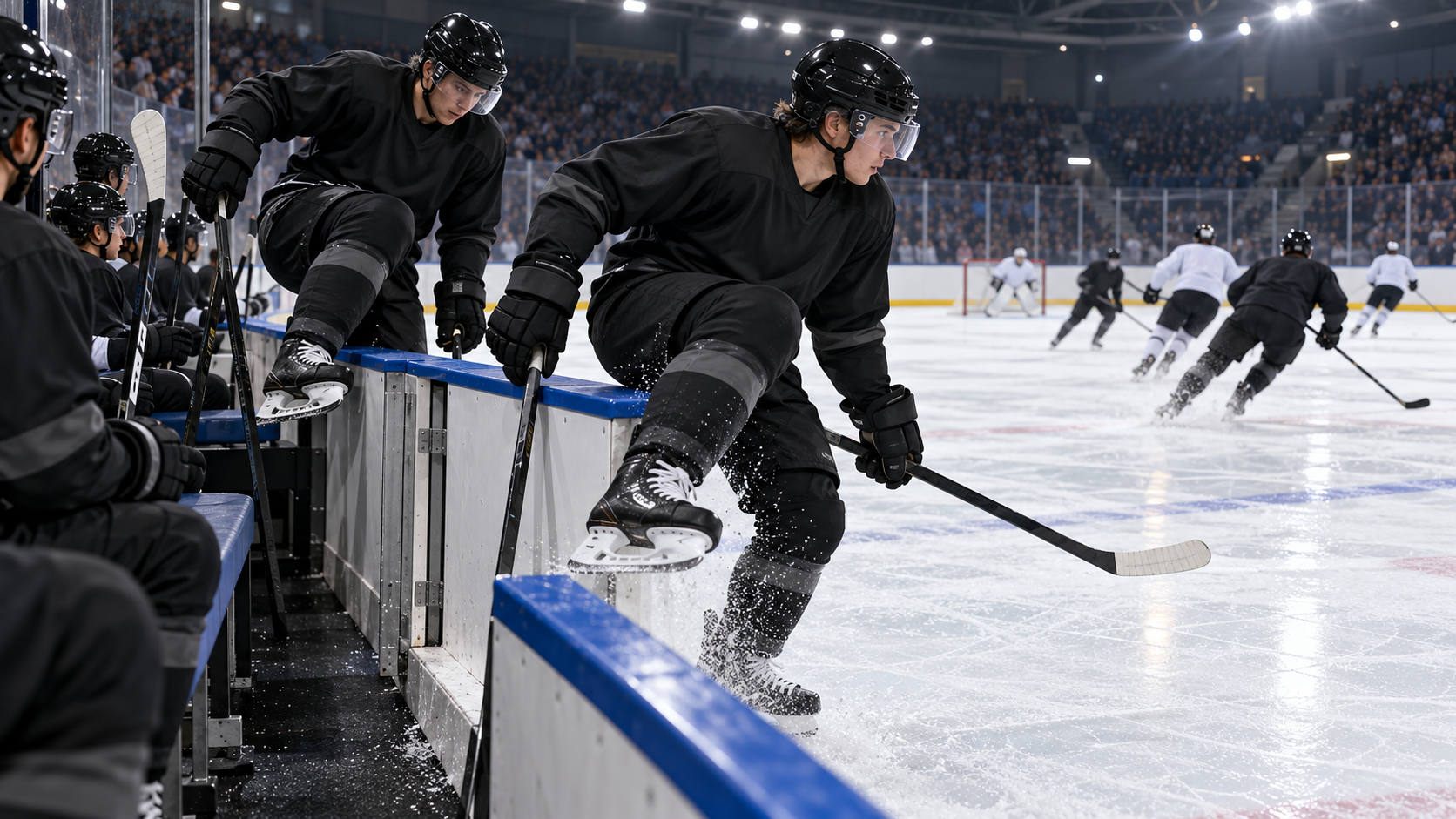
Hockey allows substitutions while play continues, producing the rapid line changes seen throughout an NHL game. A skater heads to the players' bench while a replacement enters, ideally when the puck is safely away and the change will not weaken defensive coverage.
During a legal change, the departing player must be at the bench and out of the play before the replacement becomes involved. The rules use the bench area and player proximity to decide when the exchange is complete, allowing a brief physical overlap without granting two active players.
If either changing player plays the puck, checks an opponent, or gains an unfair positional advantage while both are effectively active, officials can call too many men on the ice. The bench receives a minor penalty served by a player chosen under the rule.
After certain stoppages, the visiting team changes first and the home team receives the last change, giving the host a matchup advantage. Icing can restrict substitutions for the offending team. Watch the bench doors and the puck together; participation, not a simple headcount, drives many calls.
Yes. Most hockey line changes occur during play.
A short overlap is allowed during a proper bench change if the departing and entering players do not both participate.
A bench minor penalty.
Explore more "Explainers"
Discover additional explainers across politics, science, business, technology, and other fields. Each explainer breaks down a complex idea into clear, everyday language—helping you better understand how major concepts, systems, and debates shape the world around us.