

On This Day in AI: April 20, 2023
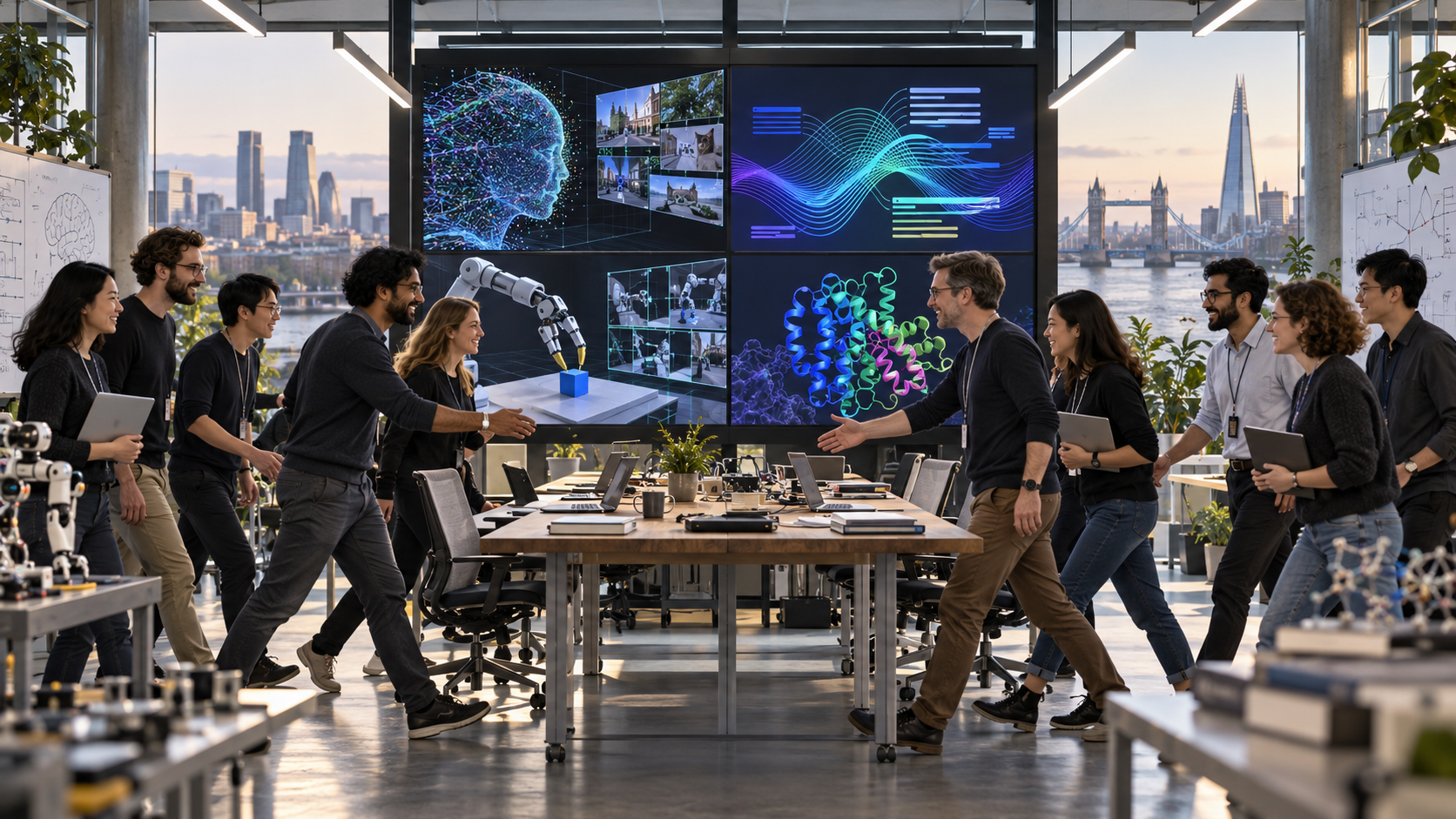
On April 20, 2023, Alphabet announced that DeepMind and the Brain team from Google Research would combine as Google DeepMind. Demis Hassabis became chief executive of the new unit, while Jeff Dean took an expanded chief-scientist role across Google Research and the merged organization. The two groups had produced breakthroughs including AlphaGo, Transformers, word2vec, WaveNet, AlphaFold, TensorFlow, and deep reinforcement learning. Generative AI competition was accelerating, creating pressure to coordinate talent, computing resources, and product strategy more closely. The date matters because it turned a fast-moving technical or policy development into a visible milestone that people, institutions, and researchers could evaluate.
The substance of the creation of Google DeepMind was as important as the headline. The announcement framed the merger as a way to develop capable general AI systems more safely and responsibly. Google Research continued separately under James Manyika, while the combined team took responsibility for a new series of powerful multimodal models. Those choices reveal what the people behind the milestone believed was necessary at the time. AI history rarely advances through one breakthrough alone; research, product design, infrastructure, governance, and access all shape what a system can become.
The immediate consequences reached beyond the organization at the center of the event. The reorganization concentrated some of the world’s most influential AI researchers inside one mission and simplified the path from foundational research to Google’s products. It also signaled that frontier competition had become important enough to reshape the structure of one of technology’s largest companies. The moment also invited scrutiny, because new capabilities create new dependencies. Reliability, safety, cost, privacy, and human control determine whether an impressive demonstration becomes a trustworthy part of everyday life. Those practical limits are essential to understanding both the achievement and the response it received.
In retrospect, Google DeepMind went on to lead the Gemini model family and continued scientific work in biology, mathematics, weather, robotics, and other fields. Its formation linked two distinct research traditions and became a defining organizational milestone of the generative-AI era. Looking back from today’s rapidly changing AI landscape, this event belongs to a larger transition from specialized machine-learning experiments to systems embedded in ordinary products, workplaces, institutions, and public decisions. Its enduring lesson is that technical progress becomes historically significant when it changes what people can do and what society expects next. That connection between capability and consequence gives the milestone its lasting relevance. The anniversary therefore records a turning point, not simply an announcement.
Alphabet announced that DeepMind and the Brain team from Google Research would combine as Google DeepMind. Demis Hassabis became chief executive of the new unit, while Jeff Dean took an expanded chief-scientist role across Google Research and the merged organization.
The announcement framed the merger as a way to develop capable general AI systems more safely and responsibly. Google Research continued separately under James Manyika, while the combined team took responsibility for a new series of powerful multimodal models.
The reorganization concentrated some of the world's most influential AI researchers inside one mission and simplified the path from foundational research to Google's products. It also signaled that frontier competition had become important enough to reshape the structure of one of technology's largest companies.
The event connected a concrete technical, commercial, or policy decision with the wider development of artificial intelligence.
Google DeepMind went on to lead the Gemini model family and continued scientific work in biology, mathematics, weather, robotics, and other fields. Its formation linked two distinct research traditions and became a defining organizational milestone of the generative-AI era.
Its influence can be traced through later products, research, governance, or industry practice.
Explore more of "On This Day ..."
Discover more events from the same date across news, politics, technology, sports, and other fields. Each link highlights significant moments that shaped history on different fronts.