

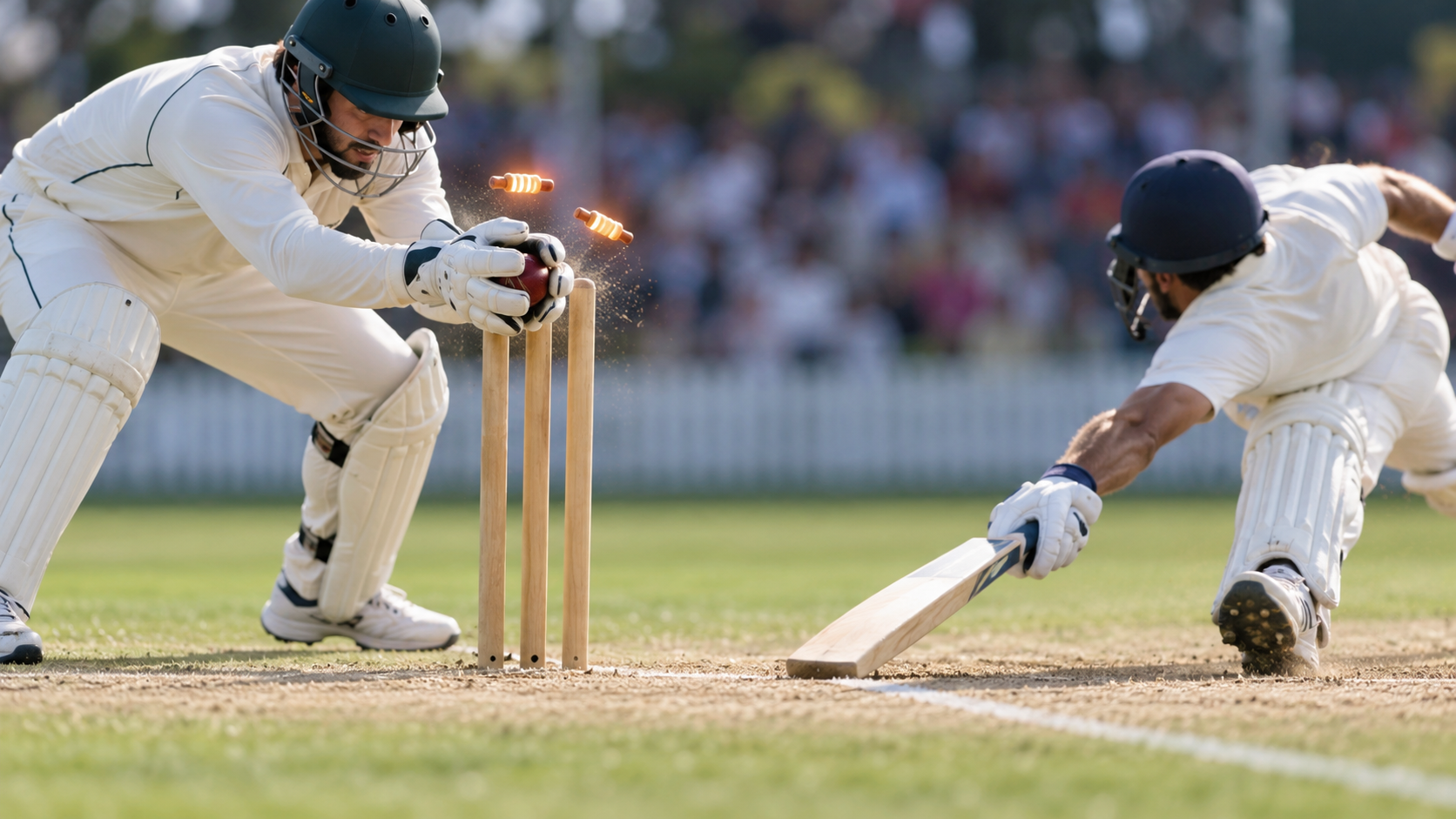
How Cricket Stumping Works Explainer
A batter is stumped when the wicketkeeper fairly puts down the wicket while the striker is out of the ground and not attempting a run. The delivery must be a legal ball other than a no-ball, and the striker must not already be out under another dismissal that takes priority.
Being out of the ground means neither the batter's body nor bat is grounded behind the popping crease. The wicketkeeper must have the ball and remove a bail, strike the stumps, or otherwise put down the wicket in the manner the Laws allow. Fast hands can make the decision a matter of centimeters.
The distinction from a run out turns mainly on intent and involvement. If the striker leaves the crease while attempting a run, the dismissal is generally recorded as a run out. If the wicket is put down by someone other than the wicketkeeper, or after another fielder's intervention changes the play, the classification may also be run out.
A wide can still produce a stumping because the ball remains live and the wicketkeeper may complete the dismissal. A no-ball cannot. That contrast explains why a batter who overbalances while chasing a wide delivery can be dismissed even though the delivery adds an extra to the batting side's score.
Yes. A wide remains live and does not prevent a stumping.
No. The striker cannot be out stumped from a no-ball.
Stumping normally applies when the striker is out of the ground and not attempting a run, with the wicketkeeper putting down the wicket.
Explore more "Explainers"
Discover additional explainers across politics, science, business, technology, and other fields. Each explainer breaks down a complex idea into clear, everyday language—helping you better understand how major concepts, systems, and debates shape the world around us.