

How the NFL's Down-by-Contact Rule Works Explainer
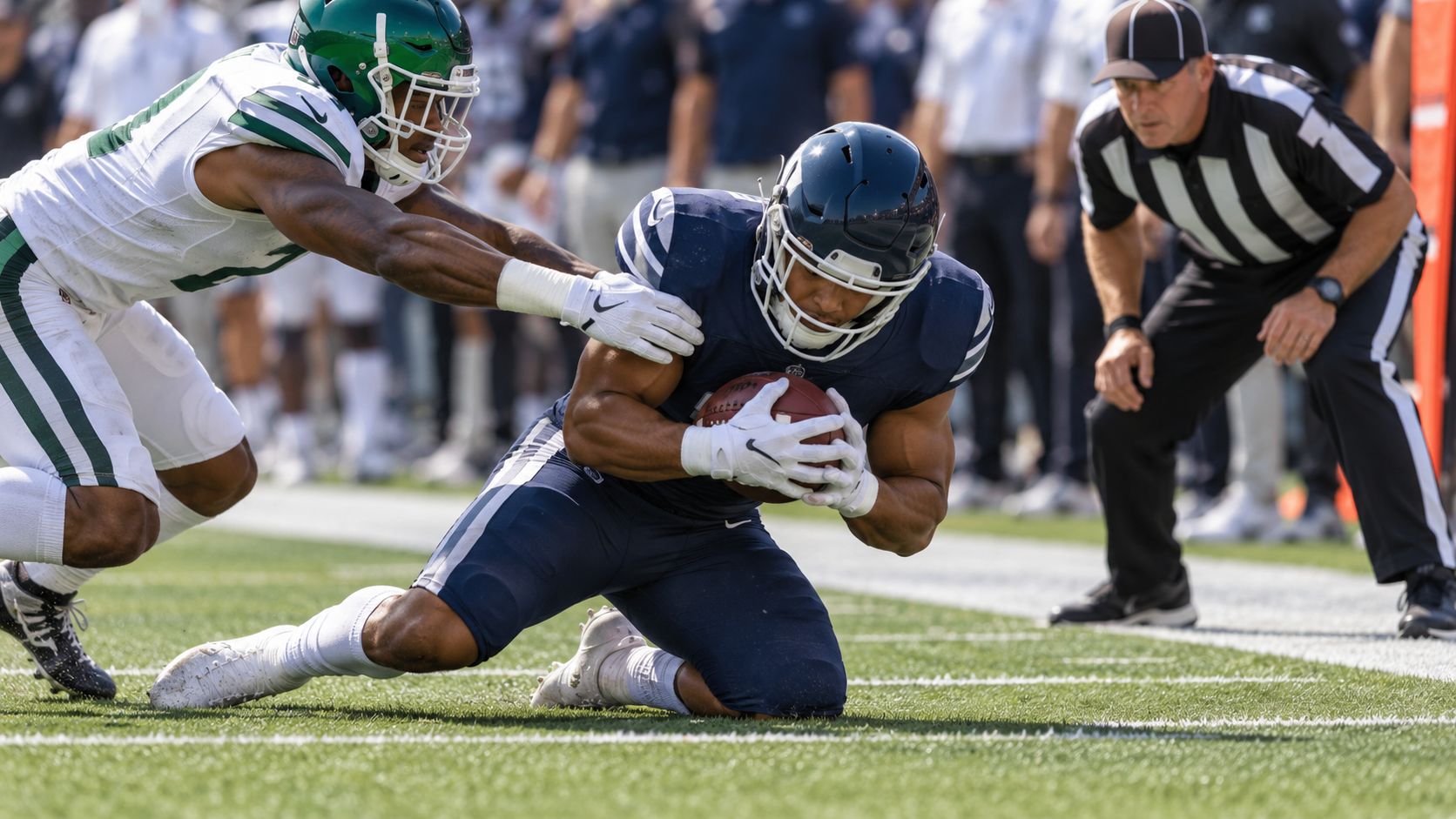
In the NFL, a runner is generally down when an opponent's contact causes any body part other than the hands or feet to touch the ground. Contact can occur before or while the runner is going down, and it need not be a dramatic tackle. Once the condition is satisfied, the ball becomes dead.
A runner who slips or falls without an opponent's contact may get up and continue, provided no other rule ends the play. That differs from college football, where a ball carrier is normally down when a body part other than a hand or foot touches the ground even without defensive contact.
A defender can complete the down-by-contact requirement by touching a fallen runner before the runner regains a protected upright position. Officials look for clear contact and control of the ball. Replay may review whether the knee was down, when contact occurred, and whether a fumble came out first.
Players can also end the play by intentionally giving themselves up. A quarterback who slides or a runner who clearly kneels receives the applicable protection and the ball is spotted under that rule. The purpose is to distinguish live athletic recovery from a player who has surrendered the play.
Yes, if no opponent caused or completed the down and no other dead-ball rule applies.
Not by themselves; another body part is generally required for down by contact.
Yes. A player who intentionally gives himself up ends the play under a separate protection.
Explore more "Explainers"
Discover additional explainers across politics, science, business, technology, and other fields. Each explainer breaks down a complex idea into clear, everyday language—helping you better understand how major concepts, systems, and debates shape the world around us.