

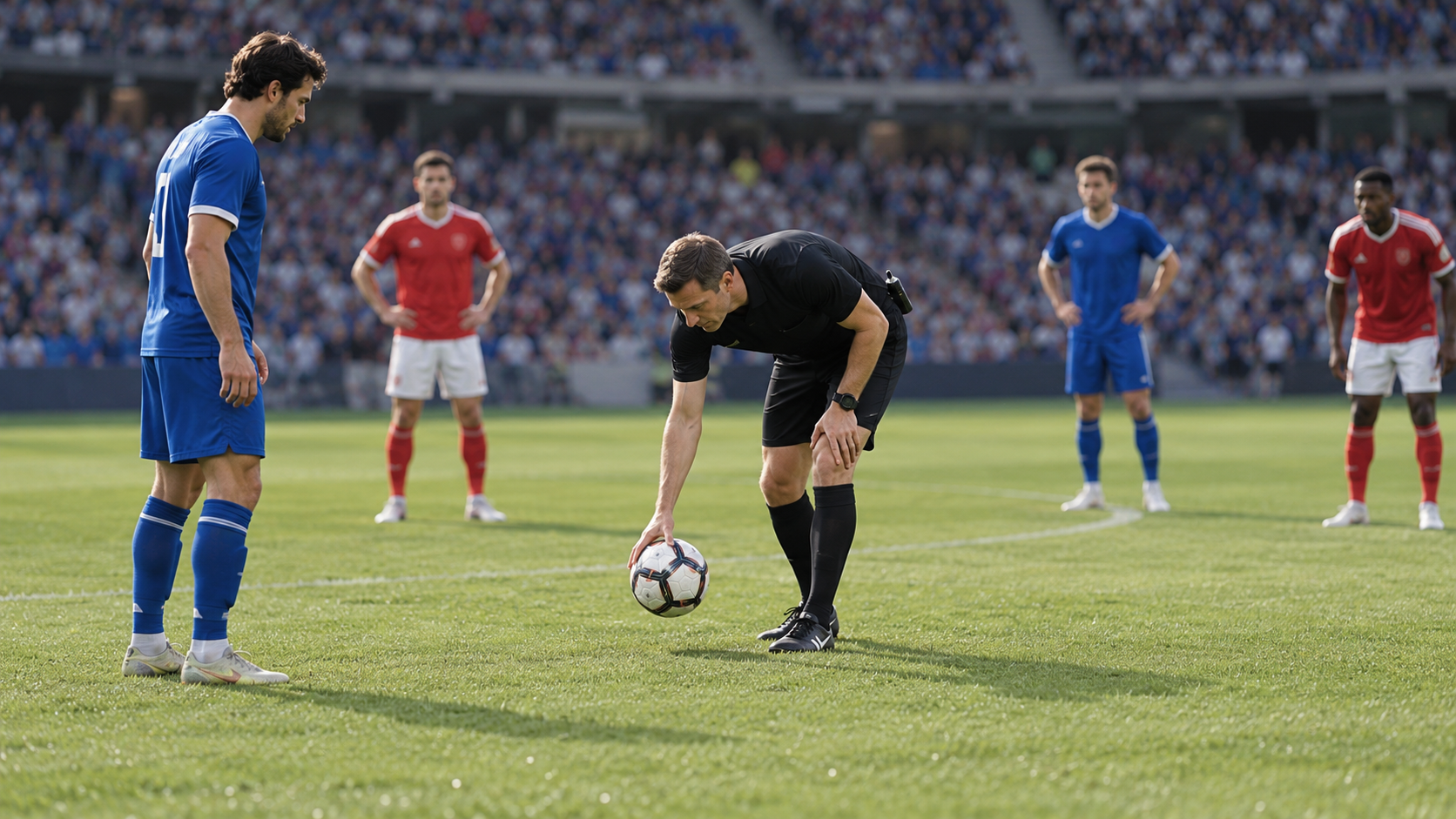
How Soccer Dropped-Ball Restarts Work Explainer
A dropped ball restarts play when the referee stops the match for a reason not covered by another restart. Common examples include an injury with no foul, outside interference, or the ball striking a match official and causing a specified significant change. The referee returns possession according to where play stopped.
Inside the penalty area, the ball is dropped for the defending goalkeeper when the ball was there at the stoppage or was last touched there. In other situations, it is generally dropped for one player of the team that last touched it, at the last-touch location. All other players must remain at least four meters away.
The ball becomes live when it touches the ground. Players do not contest the drop shoulder to shoulder, and the referee does not bounce or throw it upward. If the ball leaves the field before anyone touches it, or a player touches it before it reaches the ground, the drop is repeated.
A goal cannot be scored directly from a dropped ball. The ball must touch at least two players before a goal can count; otherwise the restart becomes a goal kick or corner kick as appropriate. This prevents an administrative restart from turning into an uncontested shot.
No. One designated player receives it while everyone else stays at least four meters away.
When it touches the ground.
No. The ball must touch at least two players before a goal can count.
Explore more "Explainers"
Discover additional explainers across politics, science, business, technology, and other fields. Each explainer breaks down a complex idea into clear, everyday language—helping you better understand how major concepts, systems, and debates shape the world around us.