

How Baseball Checked Swings Work Explainer
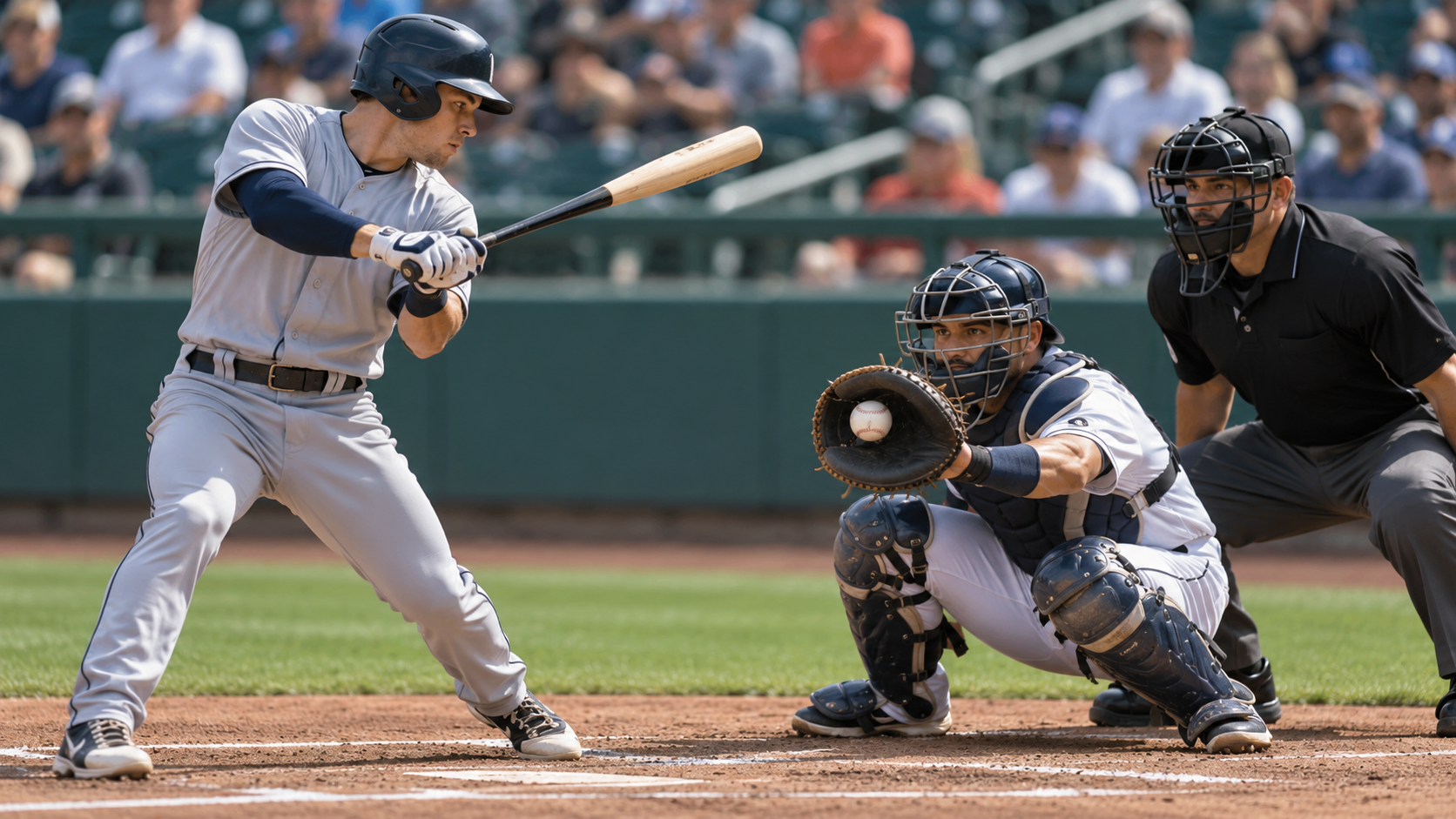
A checked swing happens when a batter starts to swing and tries to stop. Official baseball rules do not give umpires a universal bat-angle or wrist-breaking formula for deciding whether the batter offered at the pitch. The call is a judgment based on the total motion and the batter's attempt.
The plate umpire makes the initial decision. If the pitch is called a ball and the defense asks, the plate umpire can appeal to the appropriate base umpire for help. On an appeal, the base umpire signals whether the batter swung, and that ruling controls the strike decision.
Television often compares the barrel with the front edge of home plate, but crossing that plane is not an official bright-line test. Umpires may consider how far the bat moved, whether the wrists rolled, and whether the batter carried the bat through the hitting zone, without one factor automatically deciding it.
A checked swing can combine with other pitch results. A foul tip, hit-by-pitch, or ball in play follows its own rule if contact occurs. When there is no contact, the swing judgment determines whether the pitch is a ball or strike and can change the count or end the at-bat.
No. The rules provide no universal plate-crossing test.
A base umpire may give a ruling when the plate umpire grants a defensive appeal.
Traditional checked-swing judgments are umpire calls; experimental challenge systems may be tested separately.
Explore more "Explainers"
Discover additional explainers across politics, science, business, technology, and other fields. Each explainer breaks down a complex idea into clear, everyday language—helping you better understand how major concepts, systems, and debates shape the world around us.