

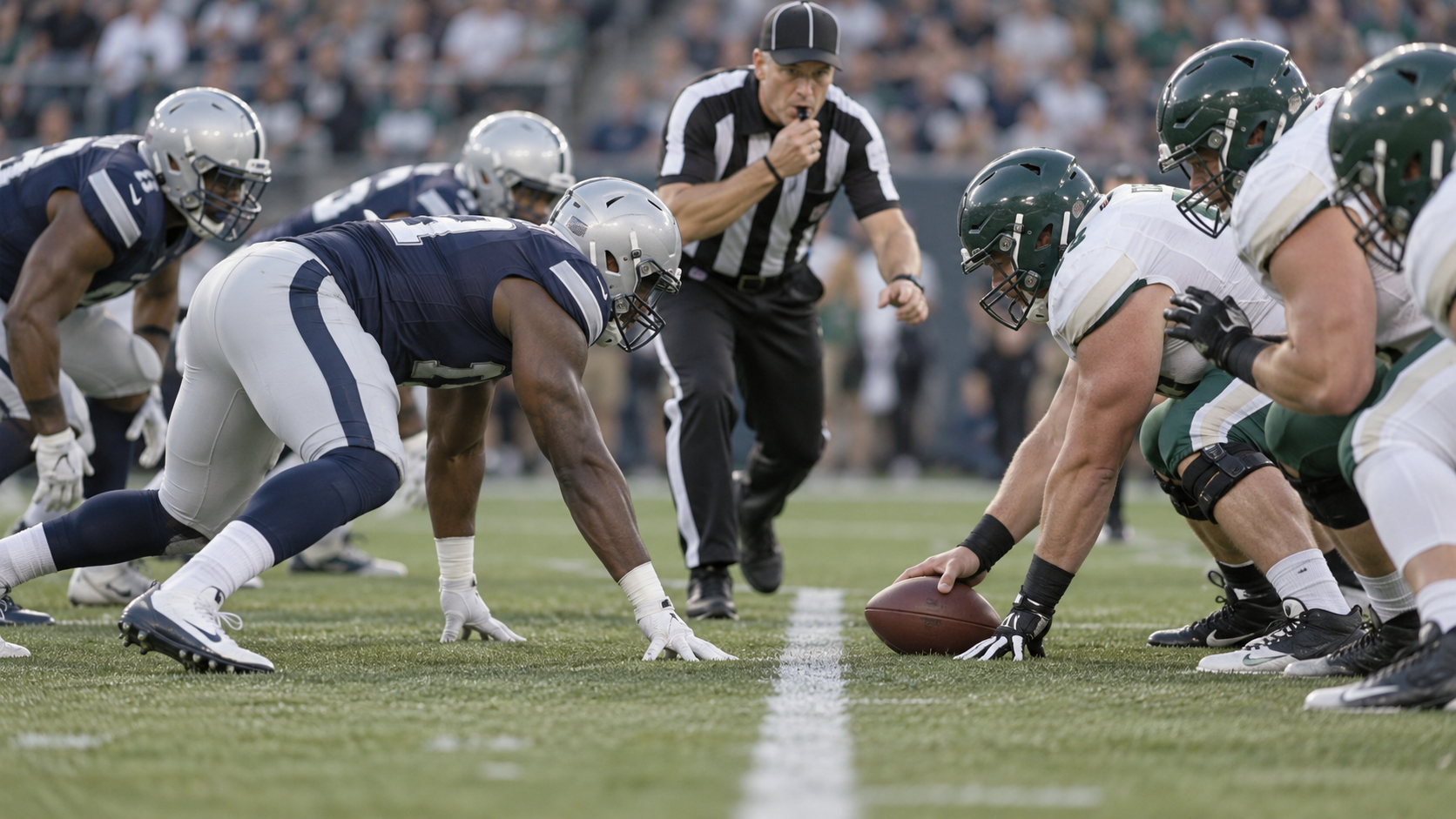
How NFL Encroachment and Neutral-Zone Infractions Differ Explainer
Encroachment occurs when a defensive player enters the neutral zone before the snap and makes contact with an opponent or has an unobstructed path to the quarterback or kicker under the rule. Officials stop the play immediately because the pre-snap action creates contact or an obvious safety threat.
A neutral-zone infraction also begins with a defender crossing into the neutral zone before the snap, but it often involves causing a nearby offensive player to react immediately or failing to get back before the snap in a way covered by the rule. The official may kill the play when the required reaction occurs.
Offside is related but not identical. A player may simply be in or beyond the neutral zone when the ball is snapped without the contact or induced reaction that makes the earlier foul dead-ball. That play can continue, giving the offense a chance to benefit from the result before choosing the penalty.
All three fouls protect the line of scrimmage and the snap count, and the standard distance is five yards. The labels matter because they explain whether the whistle comes before the snap, whether the offense had a free play, and exactly what the defender did to create the violation.
The defender enters early and makes contact or has the specified unobstructed path.
A defender's early movement that causes a nearby offensive player to react, among other defined situations.
Simple offside may be a live-ball foul without the contact or reaction that requires an immediate whistle.
Explore more "Explainers"
Discover additional explainers across politics, science, business, technology, and other fields. Each explainer breaks down a complex idea into clear, everyday language—helping you better understand how major concepts, systems, and debates shape the world around us.