

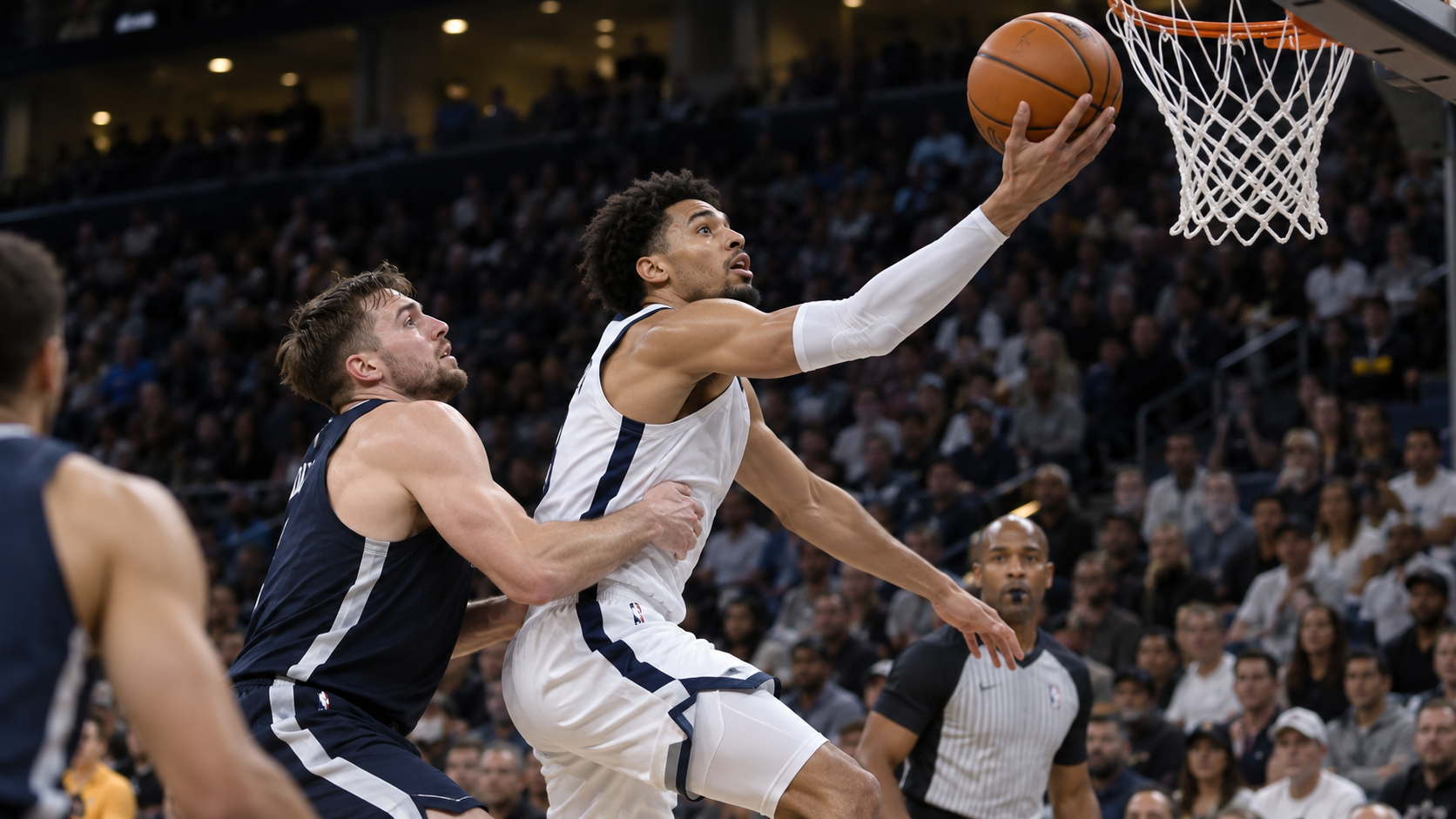
How Basketball Continuation and the And-One Work Explainer
An and-one occurs when a player is fouled in the act of shooting, makes the basket, and receives one additional free throw. The basket counts because the foul did not end the player's continuous shooting motion before the ball was released. The official must decide when the act of shooting began.
For many NBA shots, the act begins when the player gathers the ball and starts the upward motion toward the rim. Steps and body movement that are part of a continuous attempt may follow the contact. A foul that occurs before the gather or before shooting motion can instead be a non-shooting foul.
Continuation does not mean unlimited time after the whistle. If the player pauses, starts a new move, passes, or loses the continuous action, a later throw toward the basket will not convert the earlier foul into a shooting foul. Officials judge the sequence, not merely whether the ball eventually enters.
If the shot misses, the fouled shooter receives the number of free throws associated with the attempt, subject to other rules. If it goes in, one free throw offers a chance for a three-point play after a two-point basket or a four-point play after a made three.
A made basket plus one free throw after a foul in the act of shooting.
For many shots, it begins with the gather and upward shooting motion.
No. The attempt must remain part of the continuous shooting motion tied to the foul.
Explore more "Explainers"
Discover additional explainers across politics, science, business, technology, and other fields. Each explainer breaks down a complex idea into clear, everyday language—helping you better understand how major concepts, systems, and debates shape the world around us.