

On This Day in Sports: May 2, 1939
On May 2, 1939, Lou Gehrig told New York Yankees manager Joe McCarthy that he should not be in the starting lineup against Detroit. The decision ended Gehrig’s consecutive-games streak at 2,130, a record assembled without fanfare over fourteen years. His name was still announced before the game, but for the first time since June 1925, the Yankees lineup did not include him at first base. The public record fixes the central details with unusual clarity: Gehrig’s streak ended at 2,130 consecutive games. The Yankees were playing the Tigers in Detroit. Together, those facts explain why May 2, 1939 stands apart from the ordinary flow of a season and deserves to be remembered as a distinct historical moment.
Gehrig had struggled badly through the opening weeks of the season. Balls he once drove were becoming routine outs, and ordinary movements required unusual effort. The problem was not age or a simple slump, though neither Gehrig nor the public yet understood its cause. By removing himself, he acted with the same team-first judgment that had characterized the streak, acknowledging that the club needed a player who could perform the position. Two further details help reconstruct how the achievement unfolded: He told manager Joe McCarthy to remove him from the lineup. The streak had begun in June 1925. They move the story beyond a headline by showing the pressure, setting and competitive choices that shaped the decisive action in real time.
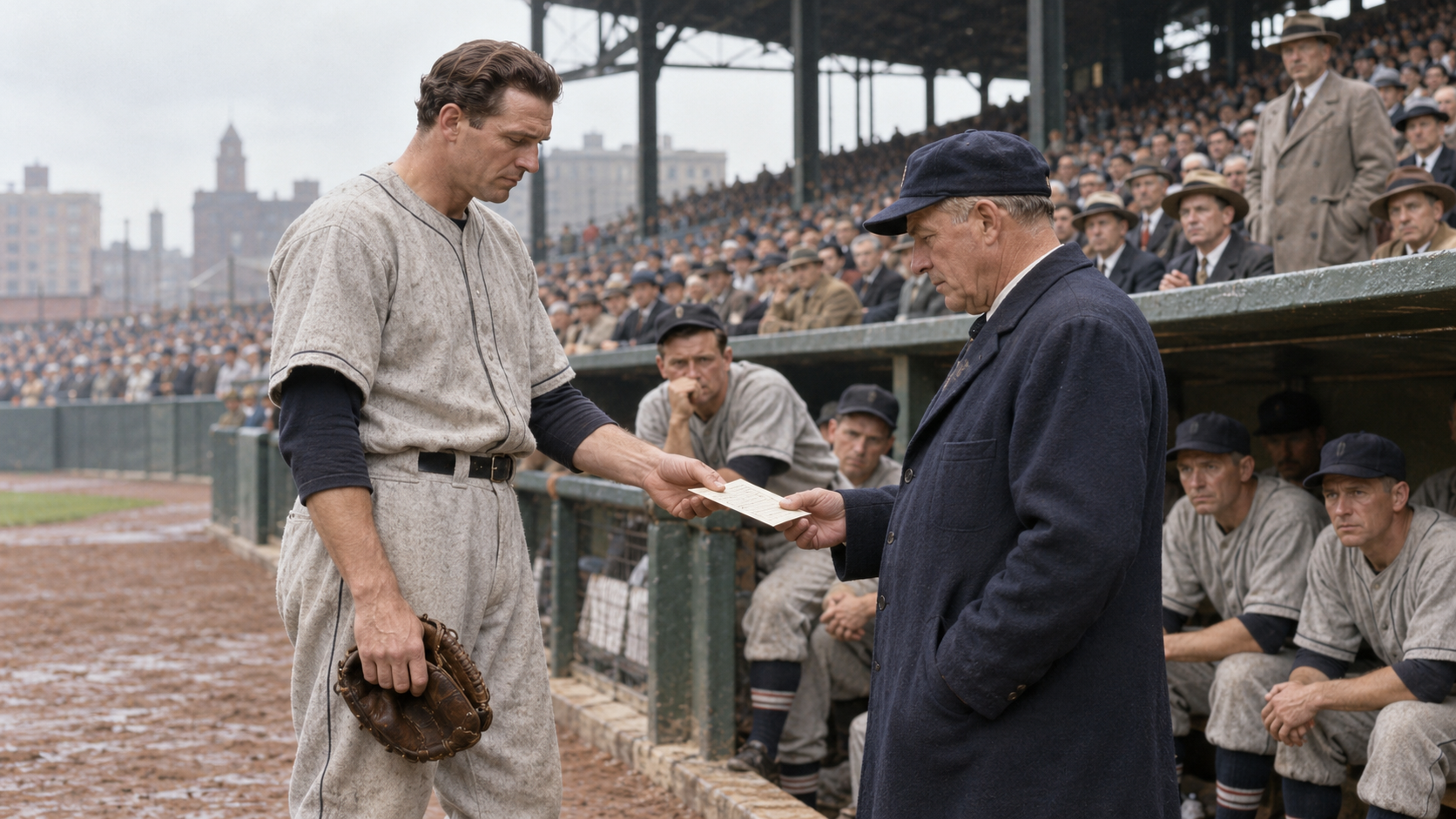
The Detroit crowd rose when Gehrig delivered the lineup card to the umpires, recognizing the end of a run that had redefined athletic reliability. He remained with the team while doctors searched for an explanation. Weeks later, at the Mayo Clinic, he was diagnosed with amyotrophic lateral sclerosis, the disease that would become permanently associated with his name and end his playing career. The wider context is equally important. Gehrig was diagnosed with ALS weeks later. Cal Ripken Jr. broke the record in 1995. Those points connect one day’s performance to a longer career, institution or rivalry and clarify why the event continued to matter after the immediate celebration had ended.
Gehrig’s 2,130-game mark stood until Cal Ripken Jr. surpassed it in 1995. Its power rests not only in the number, but in the contrast between endurance and sudden vulnerability. The player celebrated for appearing every day was confronting an illness no willpower could defeat. May 2 therefore became a quiet, deeply human turning point in baseball history—an act of honesty from a man famous for never stepping aside. Seen from today, the milestone remains compelling because it joins a measurable result with the uncertainty of live competition. Nothing about the outcome was guaranteed beforehand. That combination of preparation, opportunity and execution is what transformed the date from another entry on the schedule into lasting sports history.
Gehrig’s streak ended at 2,130 consecutive games.
The Yankees were playing the Tigers in Detroit.
He told manager Joe McCarthy to remove him from the lineup.
The streak had begun in June 1925.
Gehrig was diagnosed with ALS weeks later.
Cal Ripken Jr. broke the record in 1995.
Explore more "On This Day in Sports"
Discover more landmark games, records, championships, and turning points from sports history. Each day revisits the athletes, teams, and moments that shaped competition and culture.