

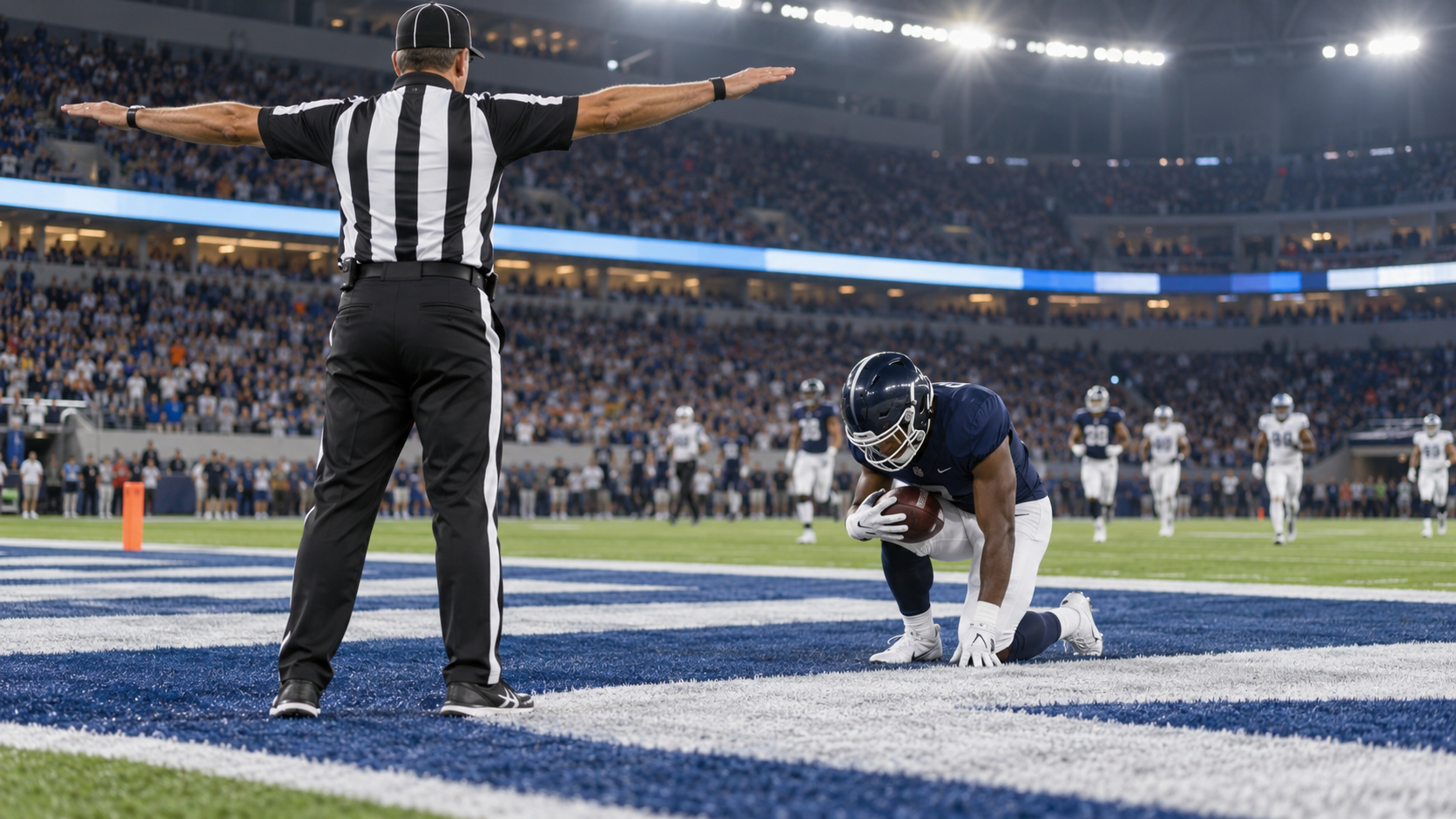
How NFL Touchbacks Work Explainer
An NFL touchback occurs when the ball becomes dead on or behind the goal line a team is defending, the opponent supplied the force that put it there, and the play is not a touchdown or incomplete forward pass. Kicks entering the end zone create the most familiar examples, but loose-ball situations can also qualify.
The rule uses the idea of impetus to separate a touchback from a safety. If the kicking or attacking team sends the ball into the end zone and the receiving team secures it there or the ball becomes dead, the result is generally a touchback. New force by the defending team can change the analysis.
A touchback gives possession to the defending or receiving team at a prescribed yard line. The exact spot is not identical for every play: kickoffs, punts, missed field goals, interceptions, and unusual free-kick situations are governed by different provisions, and the NFL periodically adjusts kickoff placement rules.
Players therefore cannot assume that every ball crossing the goal line has the same consequence. Officials identify the type of play, who last supplied the force, whether the ball was caught or recovered, and where it became dead. Those details determine both the ruling and the next snap.
No. It awards possession at the applicable yard line.
It identifies which team supplied the force that sent the ball behind the goal line.
No. The spot depends on the play and the current rule governing it.
Explore more "Explainers"
Discover additional explainers across politics, science, business, technology, and other fields. Each explainer breaks down a complex idea into clear, everyday language—helping you better understand how major concepts, systems, and debates shape the world around us.