

How the NBA's Five-Second Back-to-the-Basket Rule Works Explainer
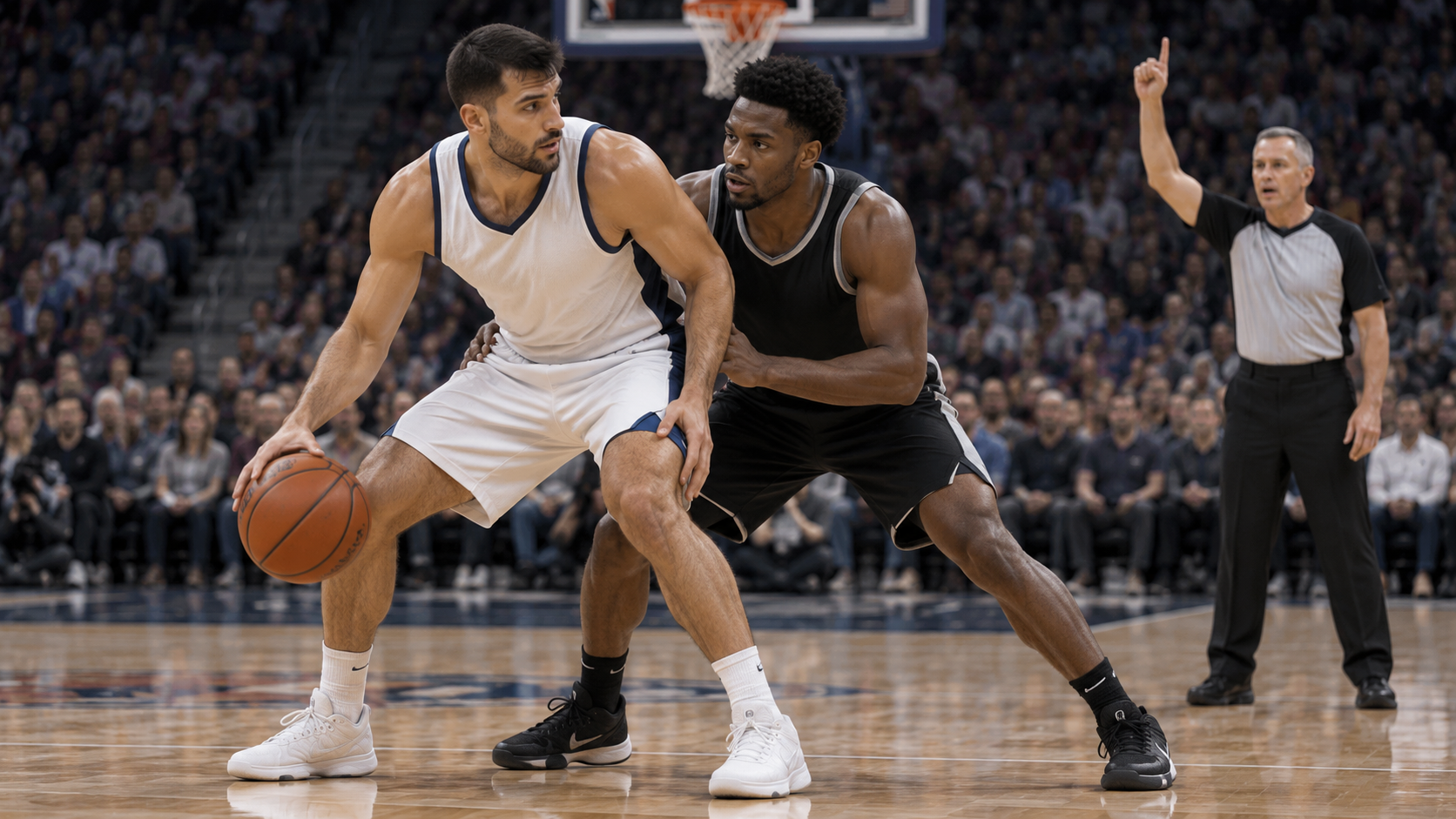
The NBA's five-second back-to-the-basket rule limits a specific kind of post-up. An offensive player in the frontcourt, below the free-throw-line extended, may not dribble with his back or side to the basket for more than five seconds. The official uses a visible count while the condition continues.
The count ends when the player picks up the ball, moves above the free-throw-line extended, or a defender deflects the ball away. Turning to face the basket can also end the back-to-the-basket condition, although another violation may apply if the player illegally starts a second dribble afterward.
If the count reaches five, the offense loses possession. The ball is awarded to the opponent on the sideline at the free-throw-line extended. It is a violation rather than a personal foul, so no foul is charged to the player and free throws are not awarded.
The rule discourages a ball handler from backing down a defender indefinitely while using the dribble to consume time and space. It does not ban post play or strength-based moves. A player can still establish position, make a quick move, pass, shoot, or face up before the count expires.
In the frontcourt below the free-throw-line extended.
Picking up the ball, moving above the line, facing the basket, or a defensive deflection can end it.
Loss of possession and a sideline inbound for the opponent.
Explore more "Explainers"
Discover additional explainers across politics, science, business, technology, and other fields. Each explainer breaks down a complex idea into clear, everyday language—helping you better understand how major concepts, systems, and debates shape the world around us.