

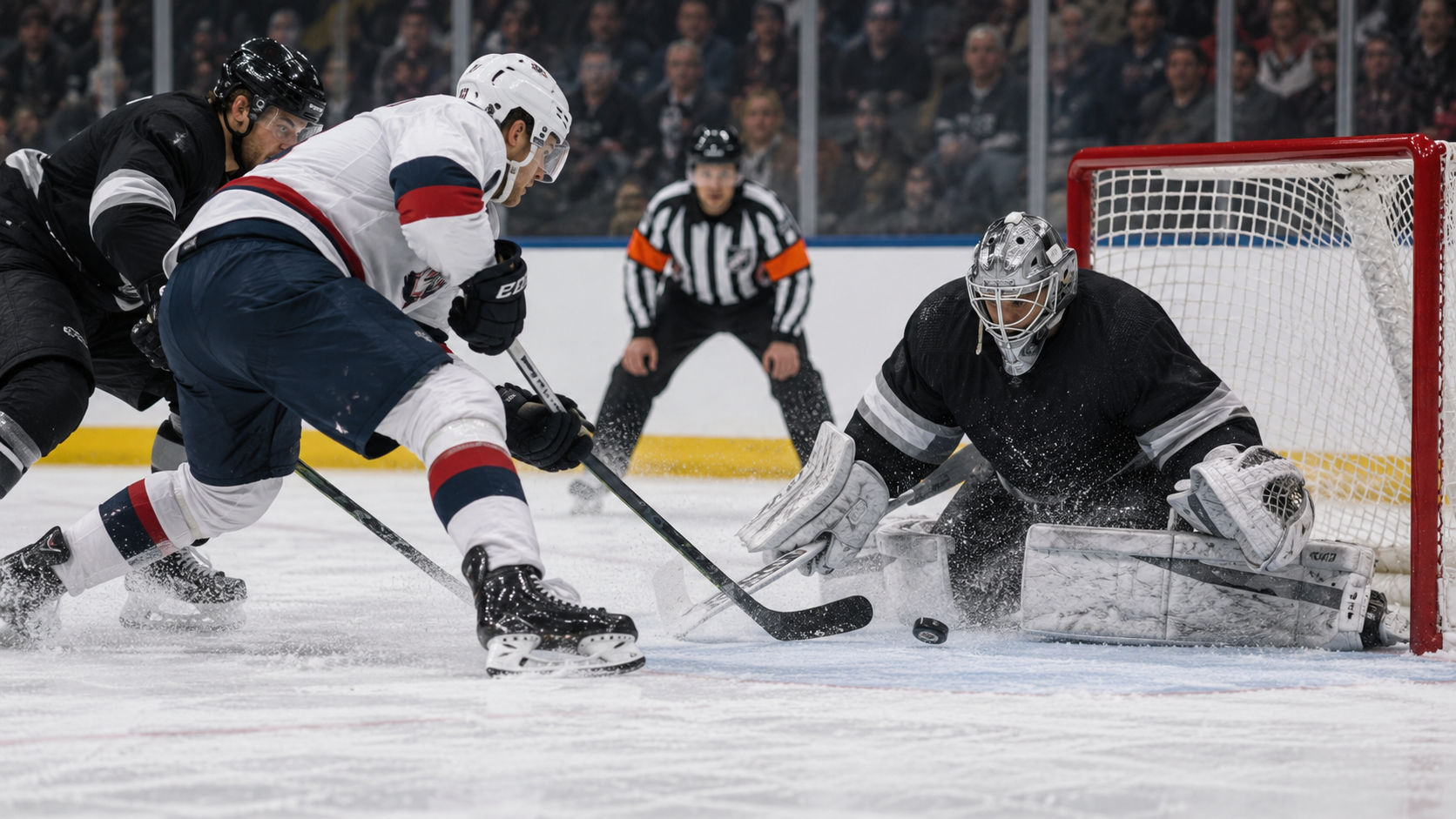
How Kicking the Puck Affects Hockey Goals Explainer
An NHL attacking player may legally score when the puck merely deflects into the net off a skate. The goal is disallowed when the player uses a distinct kicking motion to propel the puck into the goal. Video review often examines the direction and force of the skate movement.
Directing or angling the skate is not automatically a kick. A player can turn a skate to redirect the puck without a propelling motion, and that result can count. Officials focus on whether the foot actively swung or pushed the puck rather than remaining a surface for deflection.
A kicked puck that deflects into the net off a player's body or the goaltender is still no goal. However, later contact with a skater's stick can make the goal legal under the rule's listed sequences, including when the kicker's own stick touches the puck before it enters.
Kicking an opponent is an entirely different and serious infraction. The scoring rule concerns only how the puck enters the net. Review centers on the skate motion, the subsequent contacts, and whether an attacking player caused the goal through a prohibited kick.
Yes, if there is no distinct kicking motion.
No. The skate must actively propel the puck.
Yes, in the sequences specified by the rule.
Explore more "Explainers"
Discover additional explainers across politics, science, business, technology, and other fields. Each explainer breaks down a complex idea into clear, everyday language—helping you better understand how major concepts, systems, and debates shape the world around us.