

How Soccer's Back-Pass Rule Works Explainer
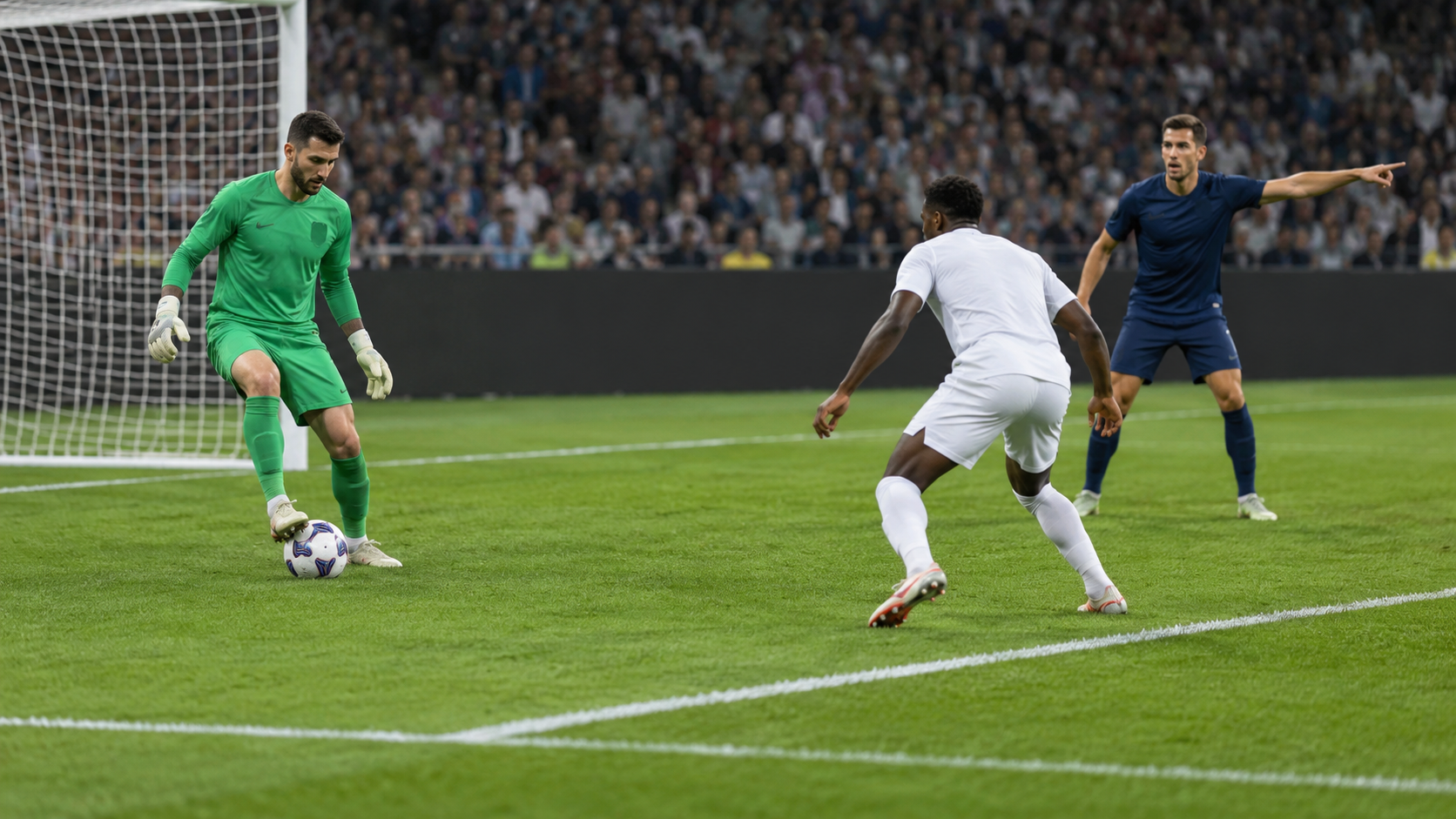
Soccer's back-pass rule prevents a goalkeeper from handling the ball inside the penalty area after it has been deliberately kicked to the goalkeeper by a teammate. The offense is about the deliberate kick and later hand or arm contact, not simply the ball traveling backward.
A teammate may legally head, chest, or knee the ball to the goalkeeper, provided there is no deliberate trick designed to evade the rule. A player who flicks the ball up to create an artificial headed pass can be cautioned for unsporting behavior even if the goalkeeper never handles it.
The goalkeeper may use the feet normally and can dribble into the penalty area after receiving the ball. If the goalkeeper clearly kicks or attempts to kick the teammate's deliberate pass to release it into play but mishits it, a later hand touch may be allowed under the stated exception.
Illegal handling produces an indirect free kick for the opponents and usually no card by itself. A direct throw-in from a teammate creates a similar restriction. Referees judge the teammate's action, the goalkeeper's attempted release, and the location of the handling before deciding the restart.
No. The rule concerns a deliberate kick to the goalkeeper.
Yes, unless a deliberate trick is used to evade the rule.
An indirect free kick to the opponents.
Explore more "Explainers"
Discover additional explainers across politics, science, business, technology, and other fields. Each explainer breaks down a complex idea into clear, everyday language—helping you better understand how major concepts, systems, and debates shape the world around us.