

How Formula 1 Red Flags Work Explainer
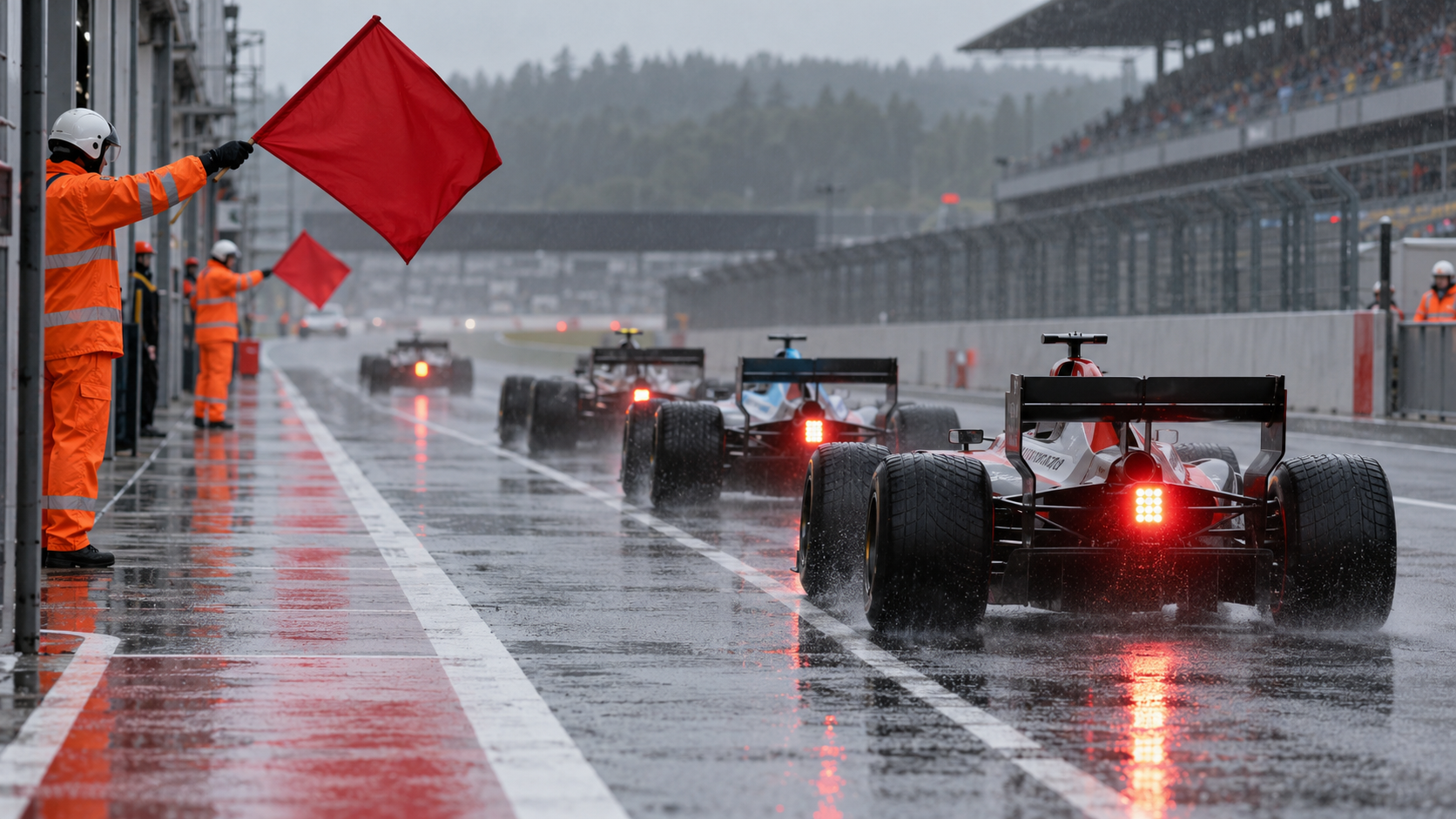
A Formula 1 red flag suspends a race or sprint when the race director decides conditions are unsafe for normal running. A major crash, blocked circuit, barrier repair, severe weather, or another hazard can trigger it. Red flags appear at marshal posts and the official message reaches every team.
Overtaking is forbidden, and cars proceed slowly to the pit lane unless exceptional instructions send them to the grid. They line up in a controlled order near pit exit. The race and timekeeping framework does not simply reset; regulations define how suspension time and maximum duration are handled.
Teams may perform work allowed by the sporting regulations while cars wait, but the red flag is not unrestricted repair time. Tire choices, damage work, parc-ferme limits, and instructions from officials still apply. Cars moved into garages can face a pit-lane restart requirement.
When conditions improve, the race director can choose a rolling or standing resumption. Cars first follow the safety car under the restart procedure, then either return to racing behind it or form on the grid. If racing cannot resume, results are taken from the prescribed earlier lap.
No.
Normally in a line at pit exit, unless officials direct them to the grid.
The race director chooses a rolling or standing resumption under the safety-car procedure.
Explore more "Explainers"
Discover additional explainers across politics, science, business, technology, and other fields. Each explainer breaks down a complex idea into clear, everyday language—helping you better understand how major concepts, systems, and debates shape the world around us.