

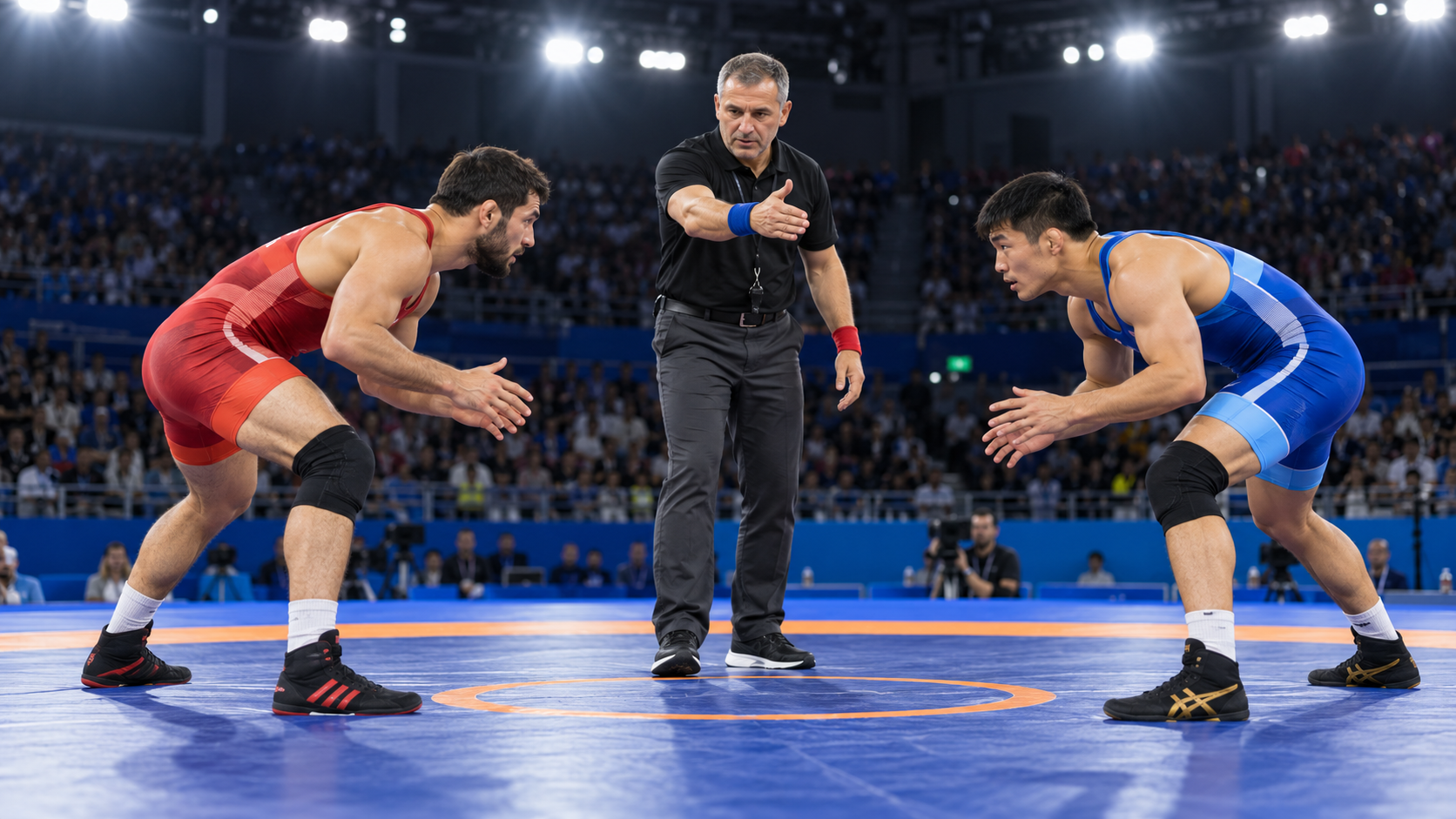
How Passivity Is Penalized in Olympic Wrestling Explainer
Olympic wrestling requires competitors to pursue active scoring rather than block indefinitely. Referees look for athletes who avoid contact, prevent action, remain defensive without a genuine attack, or use the edge of the mat to escape engagement. A verbal stimulation can come before a formal passivity call.
In freestyle, the passive wrestler can be placed on an activity period. The athlete must score within the specified time or the opponent receives a point. If either wrestler scores during the activity time, the special consequence ends and normal scoring continues.
Greco-Roman uses a different passivity procedure that can award a point and give the active wrestler a choice between standing and par-terre positions, subject to the sequence in the current rules. Officials balance encouraging attacks with avoiding artificial interruptions of genuine action.
Passivity is not the same as simply trailing on the scoreboard or taking a brief defensive position. The referee team considers the whole exchange, including attempted holds, counterattacks, movement, and control of the center. The rule is designed to produce wrestling action, not force reckless attacks.
No. Freestyle and Greco-Roman use different procedures.
A timed period in which the designated freestyle wrestler must score to avoid conceding a point.
No. Officials evaluate avoidance and lack of genuine action in context.
Explore more "Explainers"
Discover additional explainers across politics, science, business, technology, and other fields. Each explainer breaks down a complex idea into clear, everyday language—helping you better understand how major concepts, systems, and debates shape the world around us.