

How Hockey Broken-Stick Rules Work Explainer
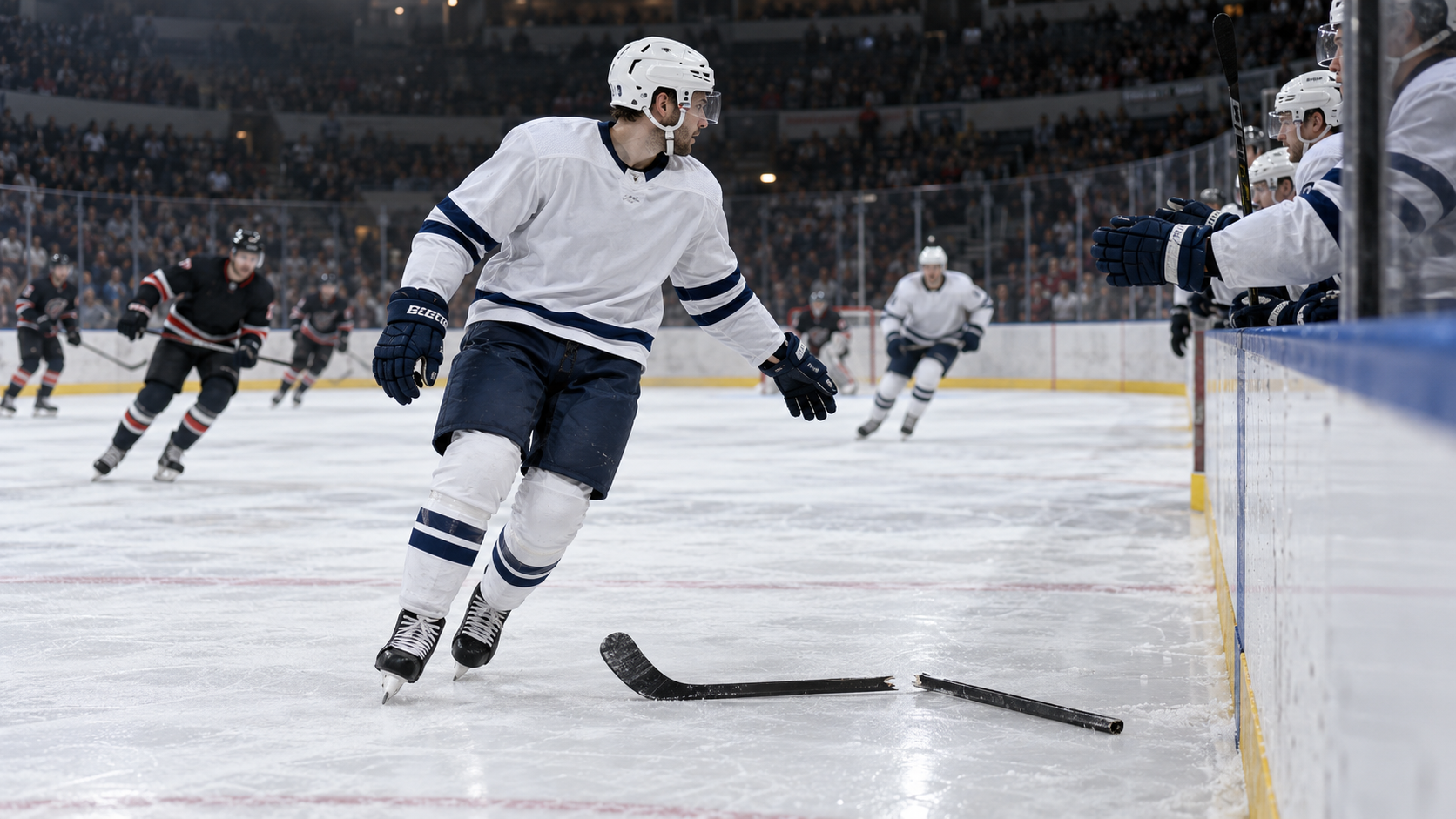
An NHL skater may continue playing without a stick, but may not participate while carrying a broken one. Once a stick is broken, the player must drop it immediately. The rule reduces the risk created by splintered shafts and prevents a player from using equipment that no longer functions as intended.
The player can obtain a replacement at the bench or receive one from a teammate on the ice. A teammate may hand over a legal stick, leaving that teammate to play without one. The exchange must occur hand to hand; throwing or sliding a replacement onto the ice can produce a penalty.
A player also cannot pick up an opponent's discarded stick or use a stick passed illegally from the penalty bench or spectator area. Goalkeepers have additional equipment rules, and a skater cannot participate with a goalkeeper's stick in a way the rules prohibit. Officials focus on possession and use, not merely nearby debris.
Breaking a stick does not automatically stop play. The affected player must make a quick decision: defend without it, go to the bench, or receive a lawful replacement. That continuity keeps play moving while making the player responsible for abandoning hazardous equipment immediately.
Usually no. The player must drop the broken stick and play without it or obtain a legal replacement.
Yes, if it is handed over lawfully on the ice.
No. Throwing or sliding a stick onto the ice can result in a penalty.
Explore more "Explainers"
Discover additional explainers across politics, science, business, technology, and other fields. Each explainer breaks down a complex idea into clear, everyday language—helping you better understand how major concepts, systems, and debates shape the world around us.