

How NFL Forward Progress Works Explainer
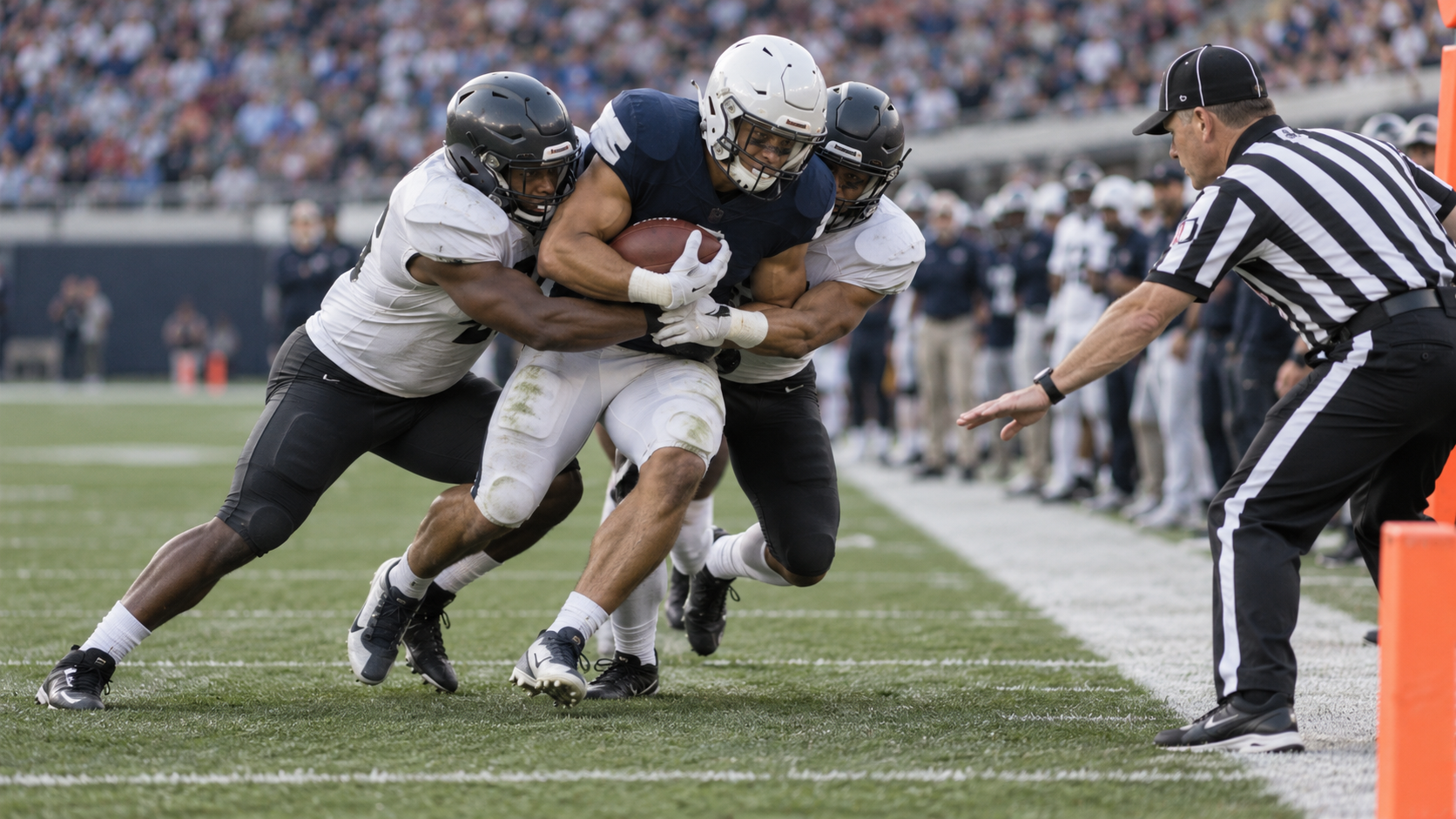
Forward progress is the most advanced point a ball carrier reaches before an opponent's contact stops the runner's movement toward the goal line. When officials judge that advance has ended, the ball becomes dead and the next down is spotted at that protected point rather than where the runner is later pushed backward.
The ruling is based on judgment, not a fixed stopwatch. Officials consider whether the runner is still driving, escaping, or being carried sideways, and whether the defense has controlled the runner with no immediate chance to advance. The whistle may follow the decision by a fraction of a second.
Because the play is dead once progress is ruled stopped, a subsequent strip generally cannot become a fumble. Replays can review certain boundary and possession questions, but the judgment that progress was stopped is often not reviewable in the same way as an objective line crossing.
Forward progress protects players from prolonged wrestling after a play is effectively over and creates a fair spot for earned yardage. It can also frustrate defenders who dislodge the ball after the whistle. The key is the official's determination of when meaningful advancement ended, not the sound of the whistle itself.
Not if contact drove the runner backward after forward progress had stopped.
No. The ball is already dead once the official rules forward progress ended.
The ruling makes the play dead; the whistle communicates that decision.
Explore more "Explainers"
Discover additional explainers across politics, science, business, technology, and other fields. Each explainer breaks down a complex idea into clear, everyday language—helping you better understand how major concepts, systems, and debates shape the world around us.