

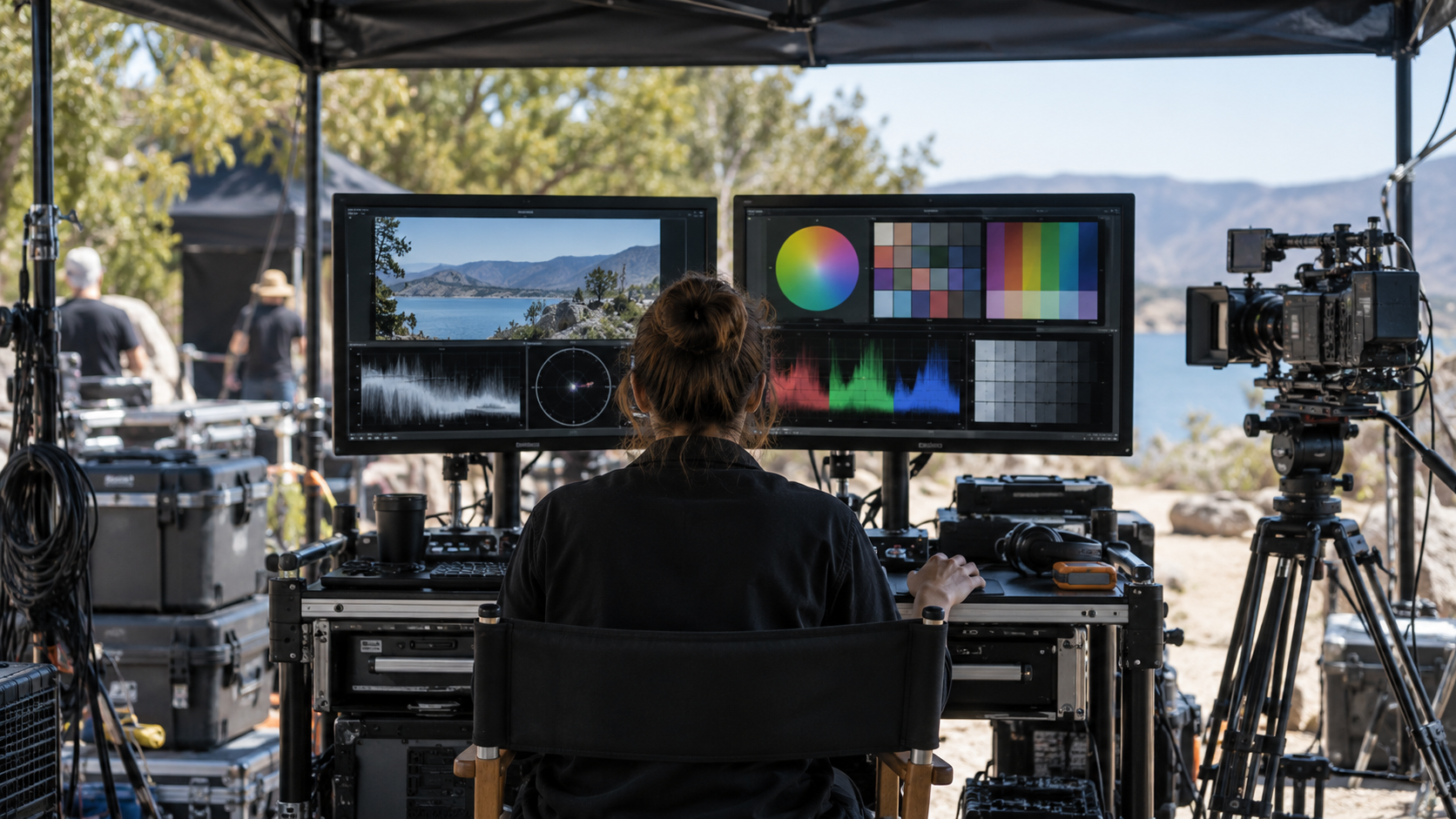
Digital Imaging Technicians Explainer
A digital imaging technician, often called a DIT, supports the digital image workflow between cameras, on-set monitoring, cinematography, and post-production. The role grew as motion-picture production moved from photochemical film toward digital capture. A DIT may help configure monitoring, evaluate exposure and signal integrity, apply temporary viewing transforms, record camera and color metadata, and coordinate how image files and reports move to later departments. The exact scope depends on the production, region, budget, and camera system.
Digital camera files rarely look exactly like the intended finished image when viewed without interpretation. Cameras may record a wide tonal range in a flat-looking format designed for later grading. Working with the cinematographer, a DIT can create or apply viewing looks so the director and departments see a useful preview without permanently baking every decision into the original. Calibrated monitors and controlled signal paths matter because an inaccurate display can lead the crew to make unnecessary lighting or exposure changes.
The workflow also depends on disciplined metadata and communication. Camera identifiers, lenses, frame rates, color settings, timecode, scene and take information, and viewing looks may need to travel with the footage. Some productions assign media copying and verification to a separate data wrangler or loader; others combine duties. Responsible workflows use verified copies, clear naming, reports, and multiple storage destinations, but job boundaries should never be assumed from the DIT title alone.
A DIT does not replace the cinematographer, colorist, editor, or post-production supervisor. The cinematographer sets photographic intent, the colorist performs the final grade, and editorial manages the cut. On-set image work is a bridge that lets those decisions remain coherent as equipment and environments change. Creative previews can guide the set while the underlying camera files preserve latitude for later finishing, provided the team documents which transformations are temporary and which are part of the intended pipeline. The role matters because a digital image can fail quietly. A misconfigured signal, inconsistent monitoring transform, clipped channel, mislabeled card, or incomplete handoff may not be obvious until a costly reshoot is impossible. Good DIT practice combines technical measurement with visual judgment and calm communication. When evaluating the workflow, ask who is responsible for exposure support, monitor calibration, viewing looks, media verification, metadata, and delivery, then confirm how each responsibility is documented. A practical way to read or discuss Digital Imaging Technicians is to begin with the basic definition and then identify the choices made in a particular example. Digital imaging technicians support the path from digital camera capture to trustworthy on-set viewing and organized post-production handoffs. Next, ask who sets the relevant rules, who performs the work, and which results follow from creative judgment, law, contracts, technology, budget, or production limits. Similar-looking examples can operate differently because their audience, market, format, timing, and agreements are different. DIT, data-wrangling, loading, and media-management duties vary by production, so the title does not guarantee one universal task list. It also helps to distinguish a formal industry category from an informal critical label or one organization's current practice. That separation keeps a memorable anecdote from becoming a false universal rule. Dates and territories matter: tools, distribution systems, audience behavior, and standard agreements change, while older examples can preserve assumptions that no longer apply everywhere. When a claim sounds absolute, compare it with a second kind of source and look for the conditions under which the claim is true. Then trace the process from the visible result back through the less visible decisions, handoffs, and quality checks that produced it. A reliable workflow defines responsibility for calibration, verified copies, reports, metadata, and delivery before the first card is recorded. Finally, compare the example with a contrasting case and note which part of the definition still holds. This method keeps the explanation grounded, highlights the people and systems behind the outcome, and leaves room for reasonable disagreement about hybrid or borderline cases.
Digital imaging technicians support the path from digital camera capture to trustworthy on-set viewing and organized post-production handoffs.
They may evaluate signals, exposure, monitoring, viewing transforms, metadata, camera settings, and image-workflow consistency.
A viewing look can help the crew judge intent without necessarily altering the original camera data used for final grading.
DIT, data-wrangling, loading, and media-management duties vary by production, so the title does not guarantee one universal task list.
The cinematographer retains photographic authorship, while editors, colorists, and post supervisors control later stages of the image.
A reliable workflow defines responsibility for calibration, verified copies, reports, metadata, and delivery before the first card is recorded.
Explore more "Explainers"
Discover additional explainers across politics, science, business, technology, and other fields. Each explainer breaks down a complex idea into clear, everyday language—helping you better understand how major concepts, systems, and debates shape the world around us.