

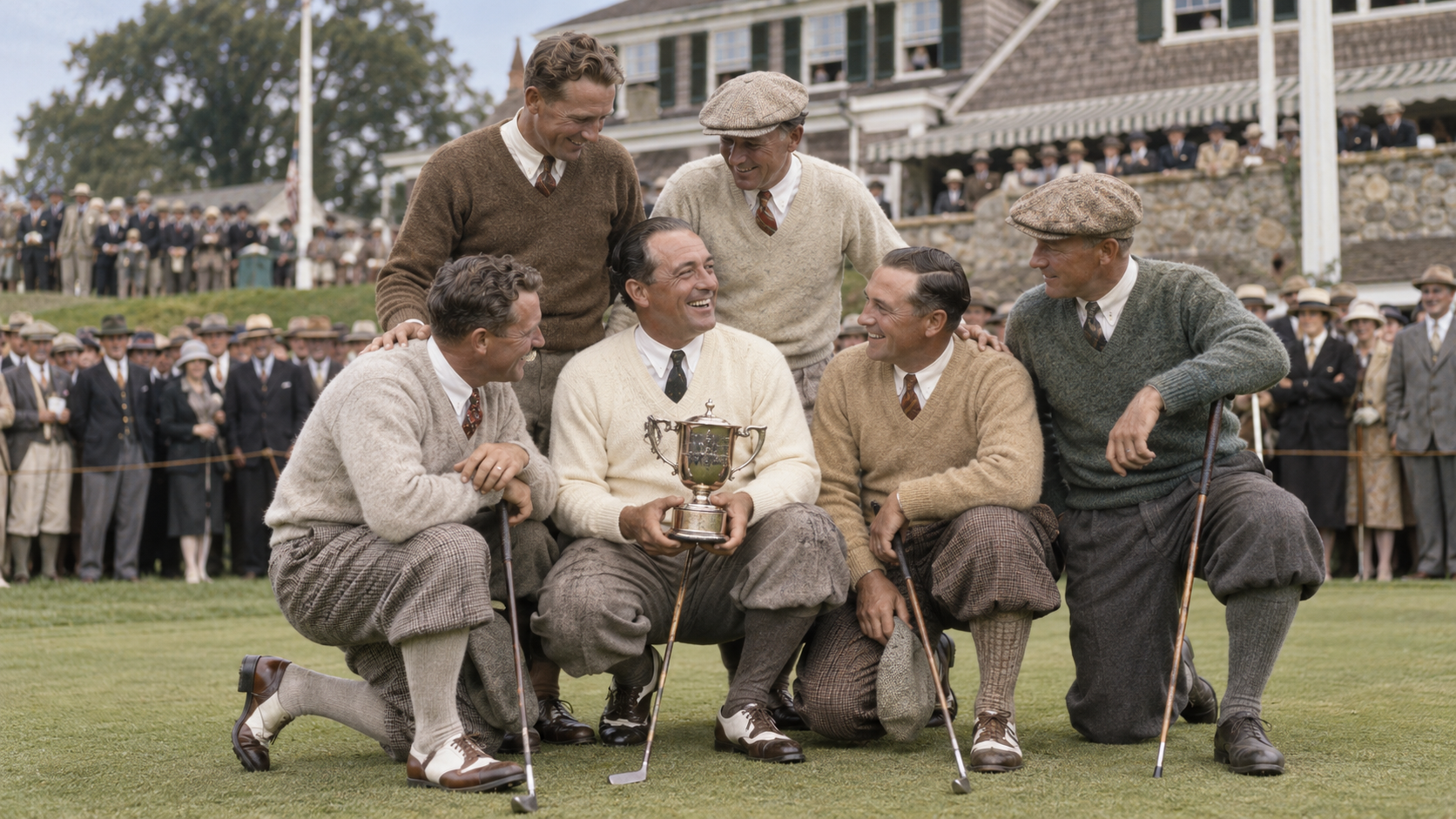
On This Day in Sports: June 4, 1927
On June 4, 1927, the United States completed a 9½-2½ victory over Great Britain in the first official Ryder Cup at Worcester Country Club in Massachusetts. The two-day match brought together leading professionals in foursomes and singles. Captain Walter Hagen’s American team turned a new international challenge into a convincing home victory. The public record fixes the central details with unusual clarity: The United States won 9½-2½. Worcester Country Club hosted the match. Together, those facts explain why June 4, 1927 stands apart from the ordinary flow of a season and deserves to be remembered as a distinct historical moment.
British seed merchant Samuel Ryder provided the gold trophy after earlier informal matches had revealed the appeal of team golf between the two nations. Eight players represented each side in the inaugural contest. The format emphasized partnership, national identity and match-play pressure rather than the individual stroke totals that usually defined championship golf. Two further details help reconstruct how the achievement unfolded: Walter Hagen captained the Americans. Ted Ray captained Great Britain. They move the story beyond a headline by showing the pressure, setting and competitive choices that shaped the decisive action in real time.
The Americans led after the opening foursomes and extended the advantage in singles. Hagen, Gene Sarazen and Johnny Farrell were among the U.S. stars, while Ted Ray captained Great Britain. Travel demands and professional commitments affected early teams, but the event immediately created a recurring stage for leading players from opposite sides of the Atlantic. The wider context is equally important. Eight players represented each team. Samuel Ryder donated the trophy. Those points connect one day’s performance to a longer career, institution or rivalry and clarify why the event continued to matter after the immediate celebration had ended.
The Ryder Cup later expanded from Great Britain and Ireland to a European team, creating one of golf’s most intense rivalries. Enormous galleries and global television audiences now follow every session. The modern spectacle traces back to Worcester, where a donated trophy and twelve matches gave international professional team golf its lasting shape. Seen from today, the milestone remains compelling because it joins a measurable result with the uncertainty of live competition. Nothing about the outcome was guaranteed beforehand. That combination of preparation, opportunity and execution is what transformed the date from another entry on the schedule into lasting sports history. It also reveals how records and championships depend on teammates, opponents, officials, venues and rules that shape the opportunity. Preserving those surrounding details helps explain both the achievement itself and the reason later generations still discuss it.
The United States won 9½-2½.
Worcester Country Club hosted the match.
Walter Hagen captained the Americans.
Ted Ray captained Great Britain.
Eight players represented each team.
Samuel Ryder donated the trophy.
Explore more "On This Day in Sports"
Discover more landmark games, records, championships, and turning points from sports history. Each day revisits the athletes, teams, and moments that shaped competition and culture.