

On This Day in Sports: June 30, 2002
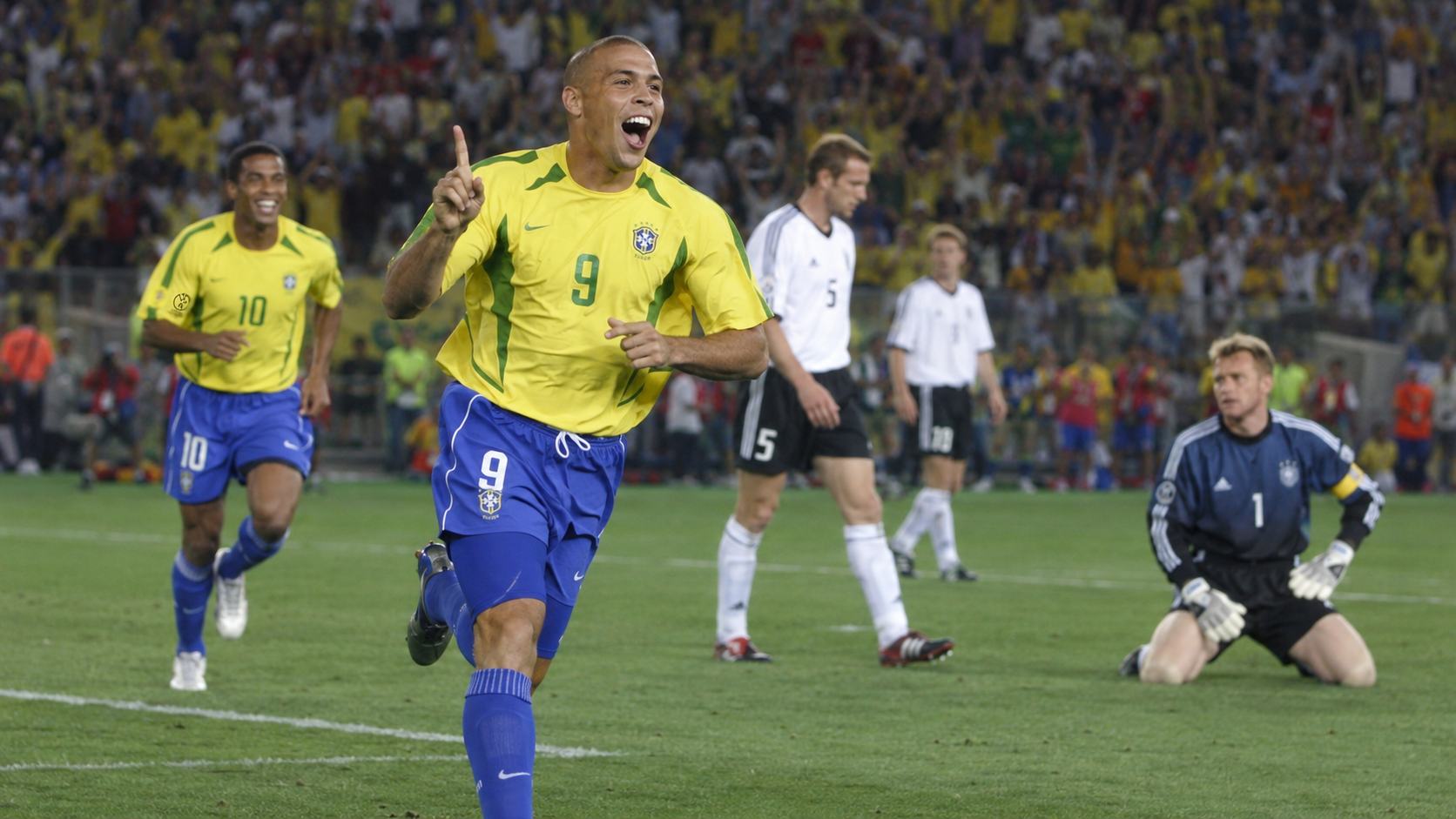
On June 30, 2002, Brazil defeated Germany 2-0 in Yokohama to win a record fifth FIFA World Cup. Ronaldo scored both goals in the second half, completing a remarkable comeback from the knee injuries that had threatened his career. Brazil won all seven tournament matches under coach Luiz Felipe Scolari. The public record fixes the central details with unusual clarity: Brazil won 2-0. Ronaldo scored both goals. Together, those facts explain why June 30, 2002 stands apart from the ordinary flow of a season and deserves to be remembered as a distinct historical moment.
German goalkeeper Oliver Kahn had been outstanding throughout the competition, but he spilled Rivaldo’s low shot in the 67th minute and Ronaldo finished the rebound. Twelve minutes later, Rivaldo let Kléberson’s pass run through to Ronaldo, whose precise shot inside the post settled the first World Cup meeting between the two powers. Two further details help reconstruct how the achievement unfolded: The final was played in Yokohama. Brazil won all seven matches. They move the story beyond a headline by showing the pressure, setting and competitive choices that shaped the decisive action in real time.
Ronaldo finished with eight goals and won the Golden Boot. Four years earlier, illness had surrounded his ineffective performance in Brazil’s final loss to France. In South Korea and Japan, his sharp movement and distinctive haircut accompanied a restored confidence, while Ronaldinho, Rivaldo, Cafu and Roberto Carlos gave Brazil multiple routes of attack. The wider context is equally important. Ronaldo finished with eight goals. Cafu played in a third consecutive final. Those points connect one day’s performance to a longer career, institution or rivalry and clarify why the event continued to matter after the immediate celebration had ended.
Captain Cafu became the first player to appear in three consecutive World Cup finals and lifted the trophy. The championship extended Brazil’s lead in the all-time standings and crowned the first World Cup held in Asia. For Ronaldo, the final transformed years of rehabilitation into two simple, decisive finishes on the largest stage. Seen from today, the milestone remains compelling because it joins a measurable result with the uncertainty of live competition. Nothing about the outcome was guaranteed beforehand. That combination of preparation, opportunity and execution is what transformed the date from another entry on the schedule into lasting sports history. It also reveals how records and championships depend on teammates, opponents, officials, venues and rules that shape the opportunity. Preserving those surrounding details helps explain both the achievement itself and the reason later generations still discuss it.
Brazil won 2-0.
Ronaldo scored both goals.
The final was played in Yokohama.
Brazil won all seven matches.
Ronaldo finished with eight goals.
Cafu played in a third consecutive final.
Explore more "On This Day in Sports"
Discover more landmark games, records, championships, and turning points from sports history. Each day revisits the athletes, teams, and moments that shaped competition and culture.