

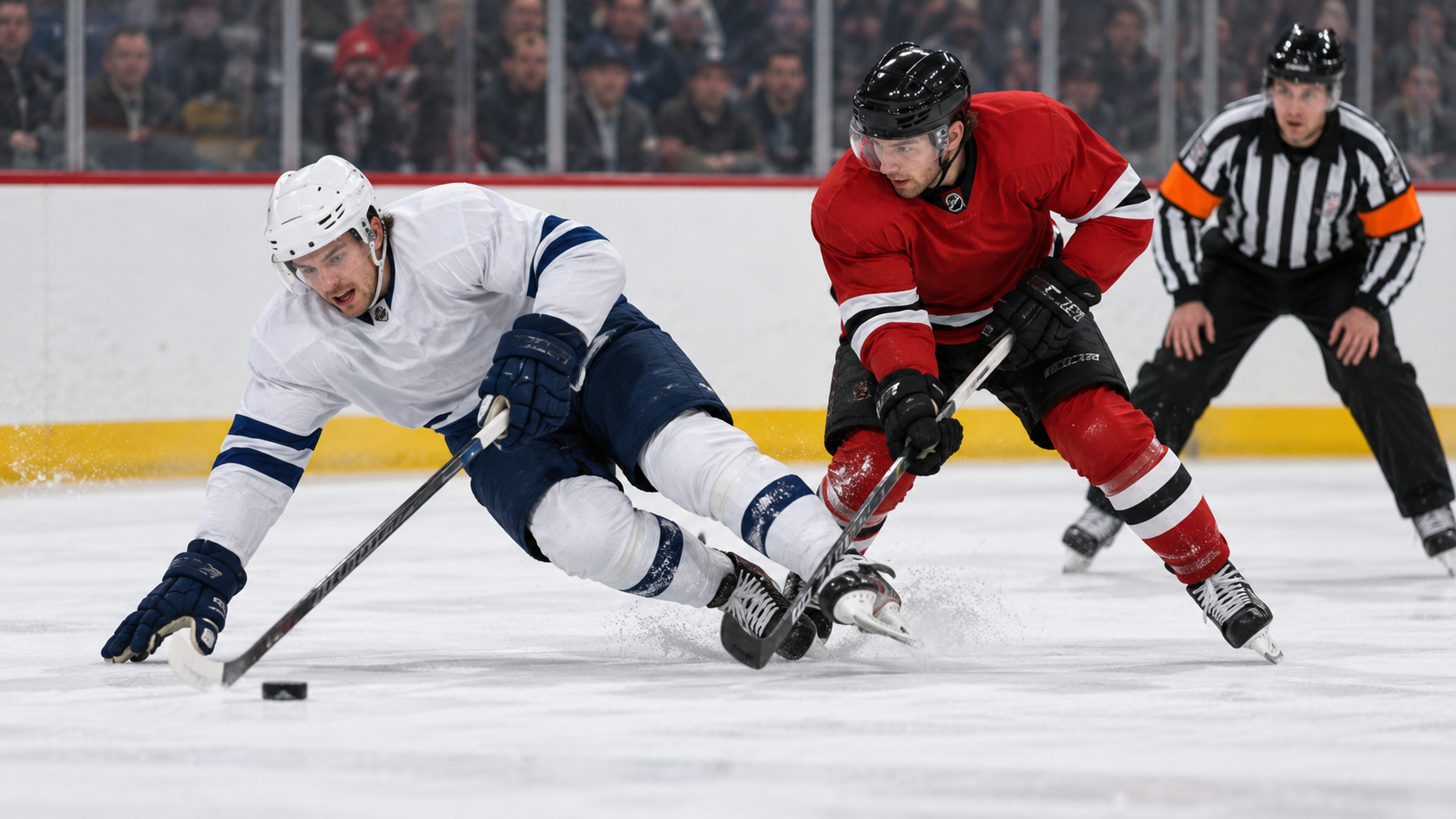
How Hockey Tripping Penalties Work Explainer
An NHL tripping penalty is called when a player uses a stick, arm, leg, or foot to cause an opponent to trip or fall. The rule also covers placing the body in a way that sends an opponent down. Officials judge the action and its effect rather than requiring a dramatic tumble.
Accidental trips can be legal when both players are simultaneously attempting to play a loose puck and the contact is incidental. A player is also not automatically penalized because an opponent falls over a stick after the puck has first been cleanly contacted. The full sequence determines responsibility.
The standard sanction is a minor penalty. A major penalty and game misconduct can be assessed when the referee believes the trip was executed in a manner likely to injure, with supplementary discipline possible. Dangerous feet-first actions may also be evaluated under the separate slew-footing rule.
Positioning matters because a defender may angle an opponent or make lawful body contact without sweeping the skates. Once the stick, knee, leg, or body becomes a barrier that illegally removes the opponent's support, the play crosses into tripping. Officials watch the puck, contact point, timing, and degree of danger.
No. Incidental contact during a simultaneous play on a loose puck can be legal.
A minor penalty is the standard sanction.
Yes, when the referee judges the action likely to injure, a major and game misconduct may be imposed.
Explore more "Explainers"
Discover additional explainers across politics, science, business, technology, and other fields. Each explainer breaks down a complex idea into clear, everyday language—helping you better understand how major concepts, systems, and debates shape the world around us.