

How Volleyball Net Serves Work Explainer
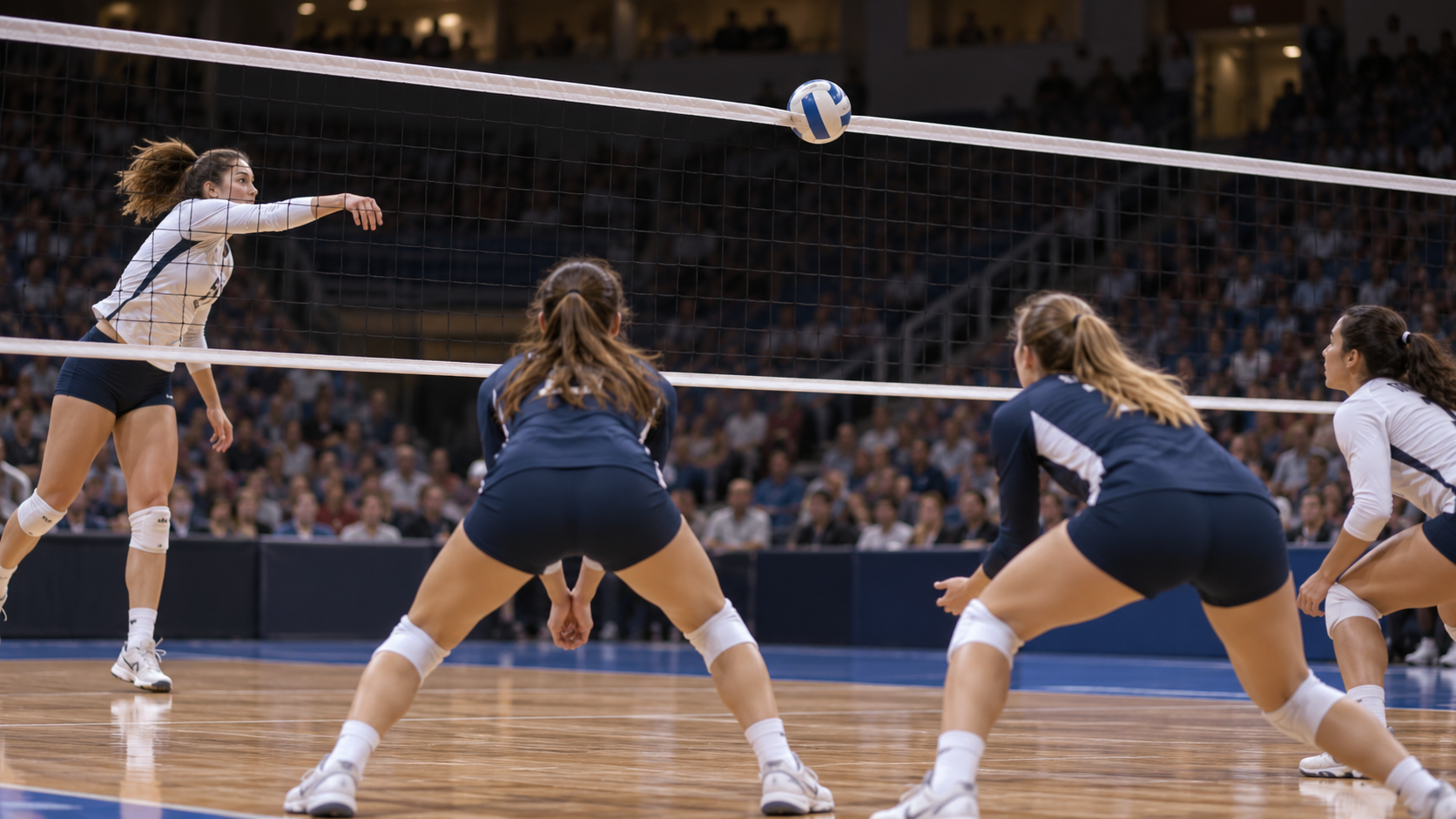
In indoor volleyball, a legally contacted serve does not become a fault merely because it touches the net. If the ball clips the tape and continues completely through the crossing space into or over the opponents' court, the rally remains live and the receiving team must attempt to play it.
The crossing space is the portion above the net between the antennae and their imaginary extensions. A served ball becomes faulty if it fails to cross the vertical plane of the net completely through that space, lands out, touches a player on the serving team, or passes over an illegal screen.
This differs from a let system in which contact would cancel the serve and require another attempt. Volleyball gives the server only one service opportunity for the rally. A net cord can slow the ball unpredictably, but the receivers must react because no automatic replay follows.
Officials watch both the first contact and the ball's path. A foot fault, wrong server, or improper execution can end the rally at the service hit, while a later flight fault is judged after an otherwise legal contact. The net touch itself is simply part of the ball's legal journey.
No. It remains live if it crosses legally into the opponents' side.
It is the area above the net between the antennae and their upward extensions.
No. The original serve continues if legal; otherwise the rally is lost.
Explore more "Explainers"
Discover additional explainers across politics, science, business, technology, and other fields. Each explainer breaks down a complex idea into clear, everyday language—helping you better understand how major concepts, systems, and debates shape the world around us.