

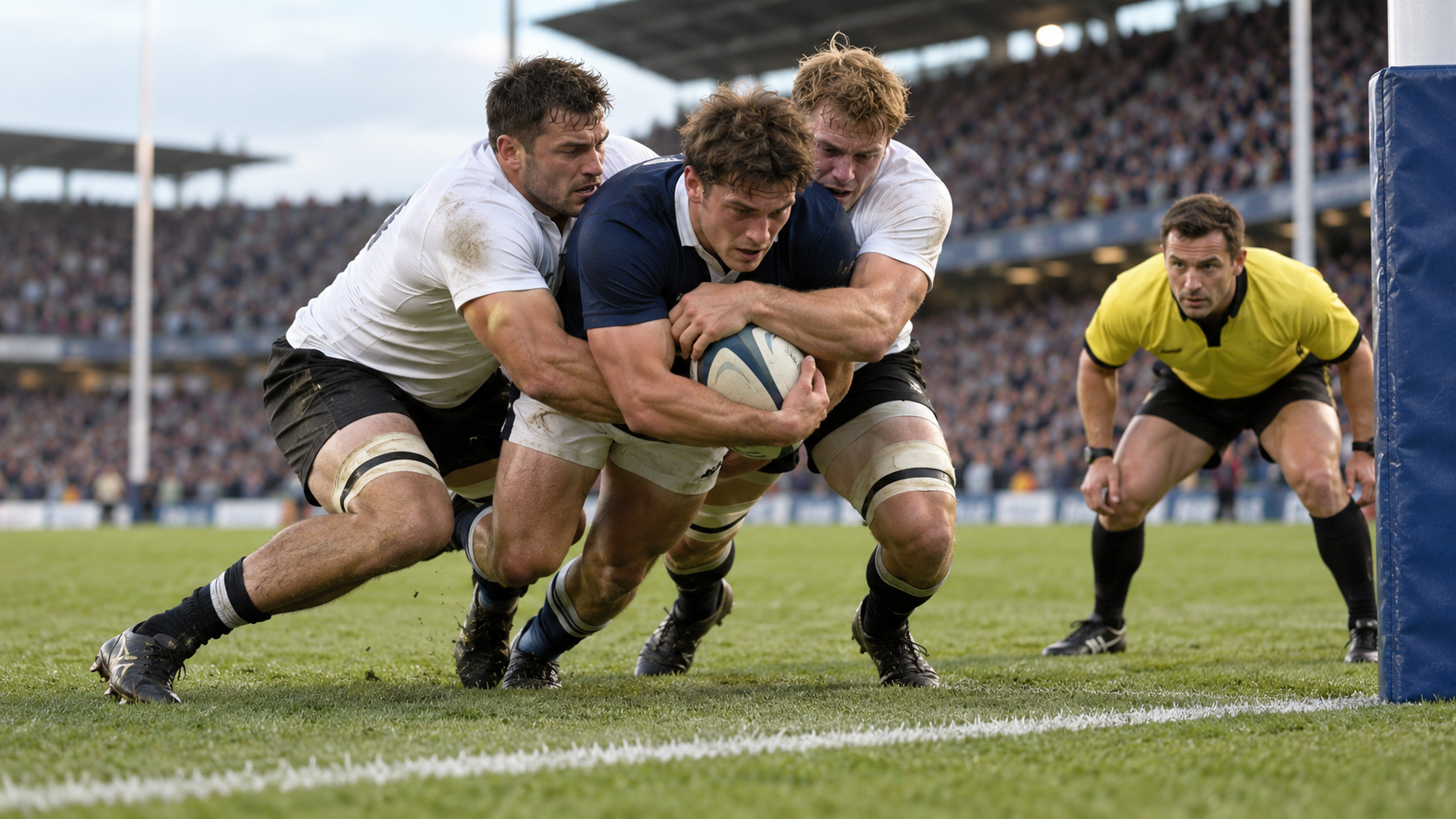
How Rugby Held-Up-in-Goal Restarts Work Explainer
A rugby ball carrier is held up in-goal when defenders prevent the player from grounding or otherwise playing the ball. Because a try requires downward pressure or possession while grounding the ball, crossing the try line alone is not enough. Once the ball cannot be played, the referee makes it dead.
The restart depends on how the ball entered in-goal. When the attacking team carried or played the ball there and it is held up, the modern default is a try-line drop-out for the defending team. That restart lets the defense kick the ball back into open play from behind the try line.
A five-metre scrum can instead apply when the defending team was responsible for taking the ball into its own in-goal before it became held up. The scrum is set in line with the relevant location, and the attacking team throws in. An unsuccessful kick at goal that becomes dead has its own 22-metre drop-out exception.
Officials must first decide whether the ball was grounded, in touch-in-goal, dead, or genuinely held up. They then identify which team supplied the action that brought it into in-goal. Those facts choose the correct restart, so apparently similar goal-line pileups can produce different decisions.
No. The ball must be legally grounded in-goal.
A try-line drop-out is the normal restart when the attacking team took the ball into in-goal.
It can apply when the defending team caused the ball to enter its own in-goal before it was held up.
Explore more "Explainers"
Discover additional explainers across politics, science, business, technology, and other fields. Each explainer breaks down a complex idea into clear, everyday language—helping you better understand how major concepts, systems, and debates shape the world around us.