

How Baseball Base Awards on Overthrows Work Explainer
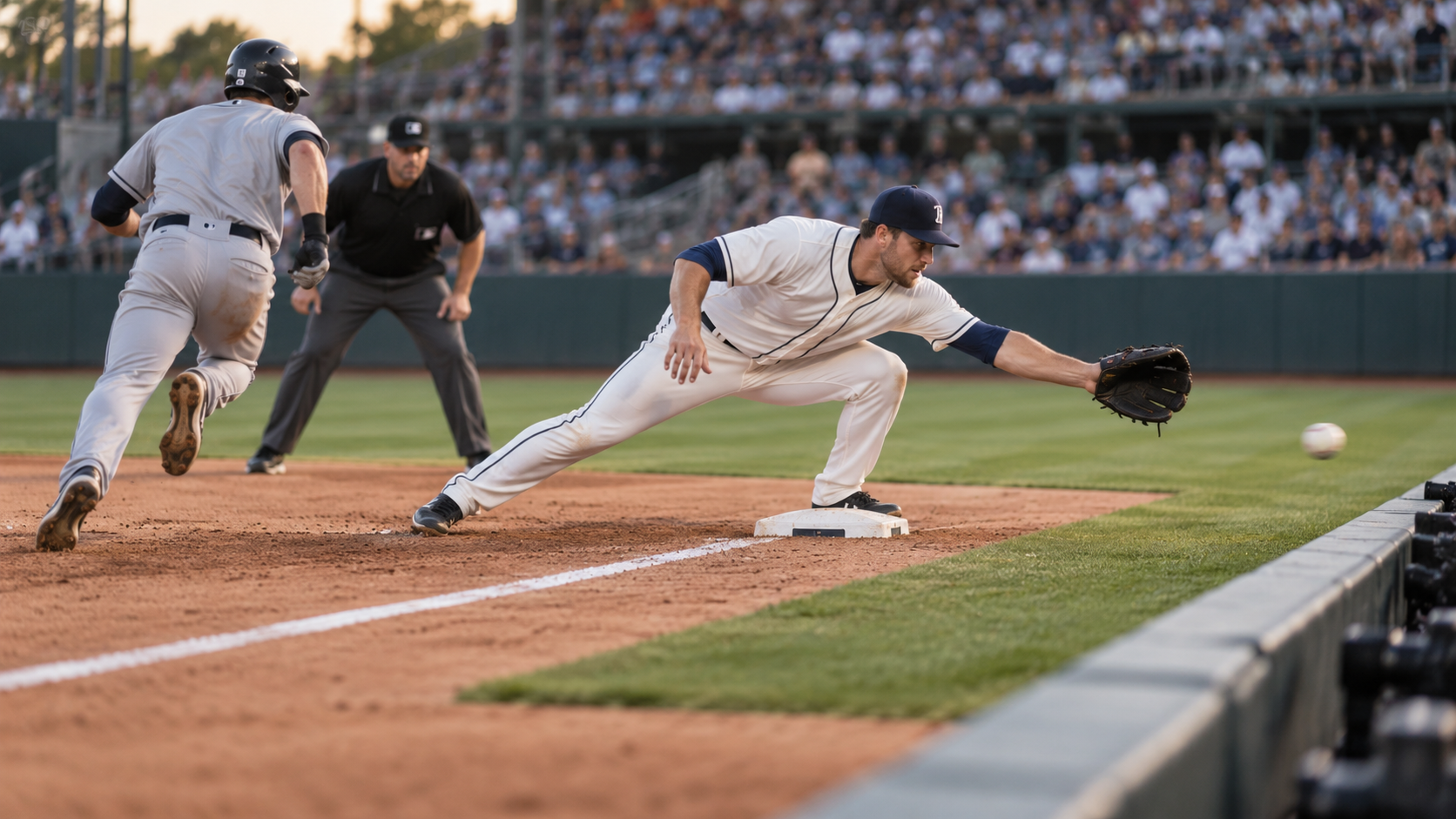
When a thrown baseball goes into the stands, a dugout, or another out-of-play area, runners are commonly awarded two bases. The award is not simply two bases from wherever each runner happens to be when the ball disappears. The rule uses either the time of the pitch or the time of the throw.
If the wild throw is the first play by an infielder after the pitch, the two-base award is generally measured from each runner's position at the time of the pitch. If all runners, including the batter-runner, had already advanced at least one base before that throw was released, the award is measured from the time of the throw.
For a second or later play by an infielder, or for a throw by an outfielder, placement is normally based on runner positions when the throw left the fielder's hand. Runners may be between bases at that instant, and officials determine the last base legally reached for the award.
The phrase ground-rule double is therefore misleading for many overthrows. It is a two-base award created by the thrown ball leaving play, with the reference moment deciding the destination. Umpires track who possessed the ball, whether this was the first infield play, and where every runner was when the controlling event occurred.
No. The award may use the time of the pitch or the time of the throw.
Two bases when a thrown ball goes into designated out-of-play territory.
Its award is usually measured from the time of the pitch unless every runner had already advanced at least one base.
Explore more "Explainers"
Discover additional explainers across politics, science, business, technology, and other fields. Each explainer breaks down a complex idea into clear, everyday language—helping you better understand how major concepts, systems, and debates shape the world around us.