

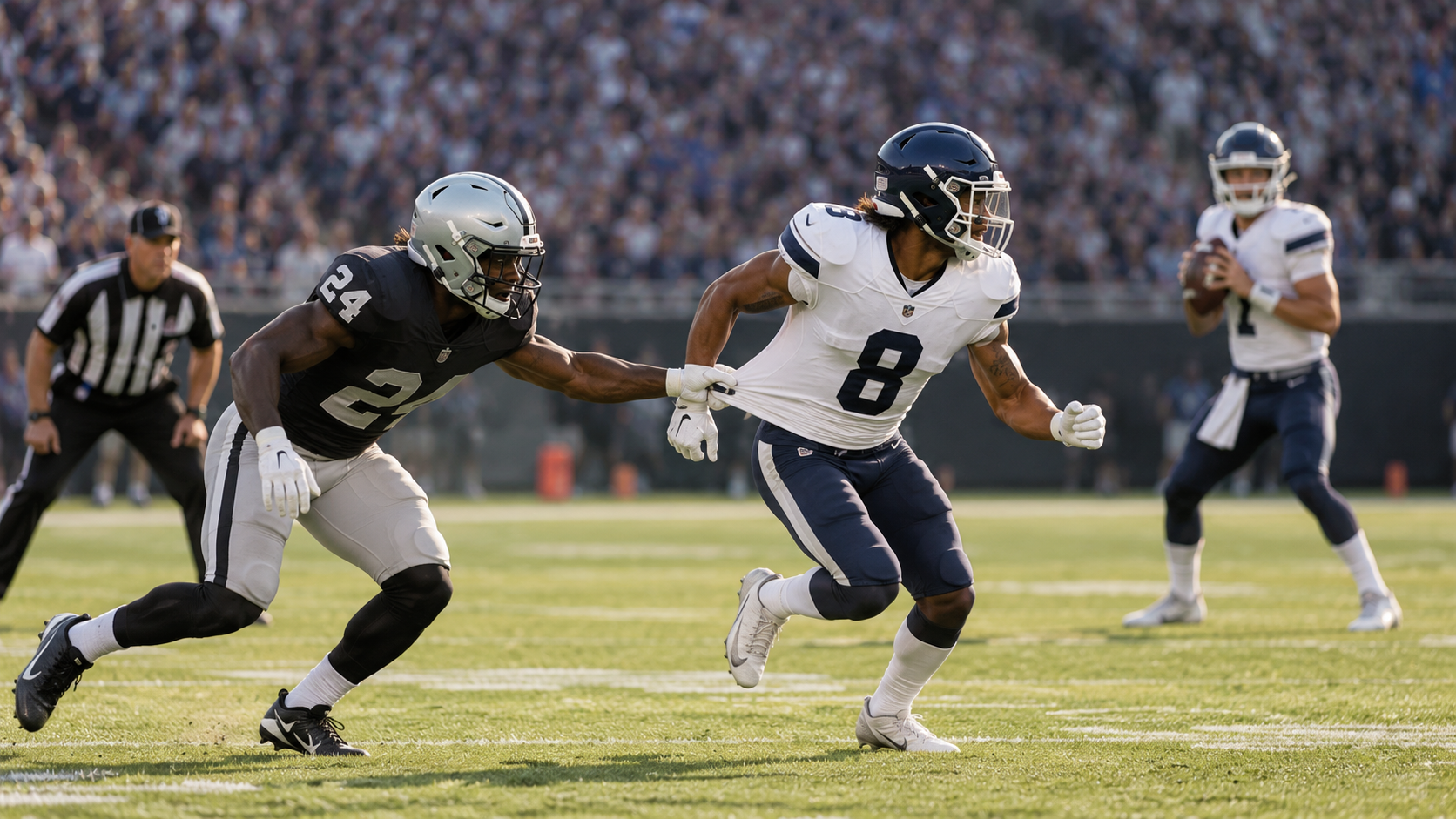
How NFL Defensive Holding Works Explainer
NFL defensive holding occurs when a defender tackles or illegally restrains an offensive player other than the runner. The action can include grabbing a receiver's body or jersey, hooking an arm, or otherwise preventing a free route. It can be called before a forward pass is thrown.
That timing helps distinguish holding from defensive pass interference. Pass interference restrictions begin when the ball leaves the passer's hand and apply to a catchable forward pass beyond the line. A restrictive grab before the throw is holding; similar contact after release may become pass interference depending on location and effect.
Defenders are allowed limited contact within the legal chuck area and may use hands to ward off or protect themselves, but they cannot continue to restrict an eligible receiver. The five-yard illegal-contact rule can cover prohibited contact without the sustained restraint characteristic of holding.
The accepted penalty for defensive holding is five yards and an automatic first down. Because the foul can occur away from the ball, officials monitor route releases across the formation. They look for material restriction rather than incidental hand contact, focusing on whether the receiver's speed, direction, or freedom was illegally taken away.
Yes. It often occurs during a receiver's route before the ball is thrown.
Five yards and an automatic first down.
Holding can occur before the pass; pass interference begins after a catchable pass is released.
Explore more "Explainers"
Discover additional explainers across politics, science, business, technology, and other fields. Each explainer breaks down a complex idea into clear, everyday language—helping you better understand how major concepts, systems, and debates shape the world around us.