

Key Grips Explainer
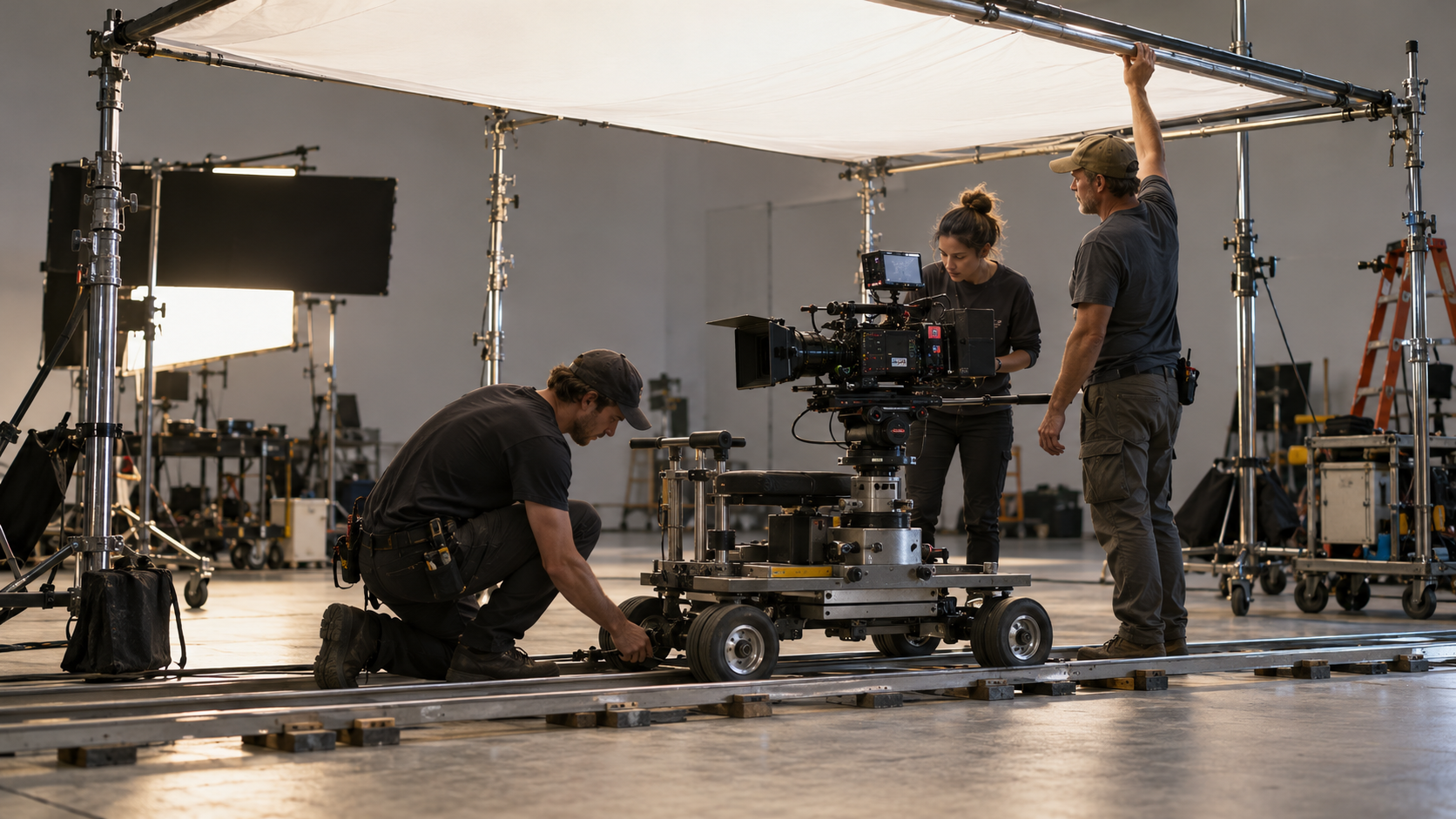
A key grip leads the grip department, which supports camera movement and controls light with non-electrical equipment. Grips may build and operate dollies, track, platforms, mounts, flags, frames, overhead diffusion, and specialized rigs. They work closely with the cinematographer, camera operator, gaffer, and production design teams. The exact division between grip, lighting, and rigging departments varies internationally, so the job should be understood within a particular production system.
Camera support is more than putting a tripod on the floor. A shot may require a smooth dolly move, a camera mounted to a vehicle, a temporary platform, a slider in a confined room, or a stabilized position above an actor. The key grip evaluates load, movement, access, vibration, and anchoring, then assigns qualified crew and appropriate hardware. Complex rigs need engineering or specialist approval rather than improvised solutions.
Grips also shape illumination without supplying electrical power. Flags can block spill, frames can hold diffusion, bounces can redirect light, and negative fill can remove unwanted reflection. These tools allow the cinematographer and gaffer to refine contrast and direction. Because camera and lighting setups occupy the same physical space, the departments plan together so stands, cables, track, scenery, and performers can move safely and the setup can change efficiently.
The key grip's planning begins before the camera rolls. Scouts reveal floors that cannot bear a load, walls that cannot be attached to, uneven terrain, wind exposure, narrow doors, or limited overhead structure. During work, the crew maintains equipment, marks hazards, controls exclusion zones, and communicates before anything moves. Vehicle work, cranes, elevated platforms, and suspended loads require specific expertise, permits, inspections, and conservative limits. Grip work is often invisible in the final frame, yet it determines whether ambitious shots are stable, controllable, and repeatable. A beautiful move that endangers people or damages a location is not a successful solution. The craft lies in translating a visual request into physical geometry: where force travels, what supports the camera, how light is shaped, and how the entire arrangement can be assembled and removed without surprises. A practical way to read or discuss Key Grips is to begin with the basic definition and then identify the choices made in a particular example. The key grip heads the grip department, which supports camera movement and controls light with non-electrical tools. Next, ask who sets the relevant rules, who performs the work, and which results follow from creative judgment, law, contracts, technology, budget, or production limits. Similar-looking examples can operate differently because their audience, market, format, timing, and agreements are different. Grip and lighting crews collaborate closely, but their traditional responsibilities vary among production regions. It also helps to distinguish a formal industry category from an informal critical label or one organization's current practice. That separation keeps a memorable anecdote from becoming a false universal rule. Dates and territories matter: tools, distribution systems, audience behavior, and standard agreements change, while older examples can preserve assumptions that no longer apply everywhere. Because the concept sits inside a larger workflow, examine what comes before and after it, which records move between stages, and where responsibility changes hands. This broader view prevents one visible task from being mistaken for the entire system. When a claim sounds absolute, compare it with a second kind of source and look for the conditions under which the claim is true. Then trace the process from the visible result back through the less visible decisions, handoffs, and quality checks that produced it. Good grip work turns a visual idea into a stable physical system whose risks and limits are understood. Finally, compare the example with a contrasting case and note which part of the definition still holds. This method keeps the explanation grounded, highlights the people and systems behind the outcome, and leaves room for reasonable disagreement about hybrid or borderline cases.
The key grip heads the grip department, which supports camera movement and controls light with non-electrical tools.
Dollies, track, platforms, mounts, frames, flags, and diffusion systems all require planning for load and access.
Camera rigs must be repeatable for multiple takes and compatible with performers, scenery, lighting, and sound.
Grip and lighting crews collaborate closely, but their traditional responsibilities vary among production regions.
Elevated, vehicle-mounted, moving, or suspended systems require qualified specialists and appropriate engineering review.
Good grip work turns a visual idea into a stable physical system whose risks and limits are understood.
Explore more "Explainers"
Discover additional explainers across politics, science, business, technology, and other fields. Each explainer breaks down a complex idea into clear, everyday language—helping you better understand how major concepts, systems, and debates shape the world around us.