

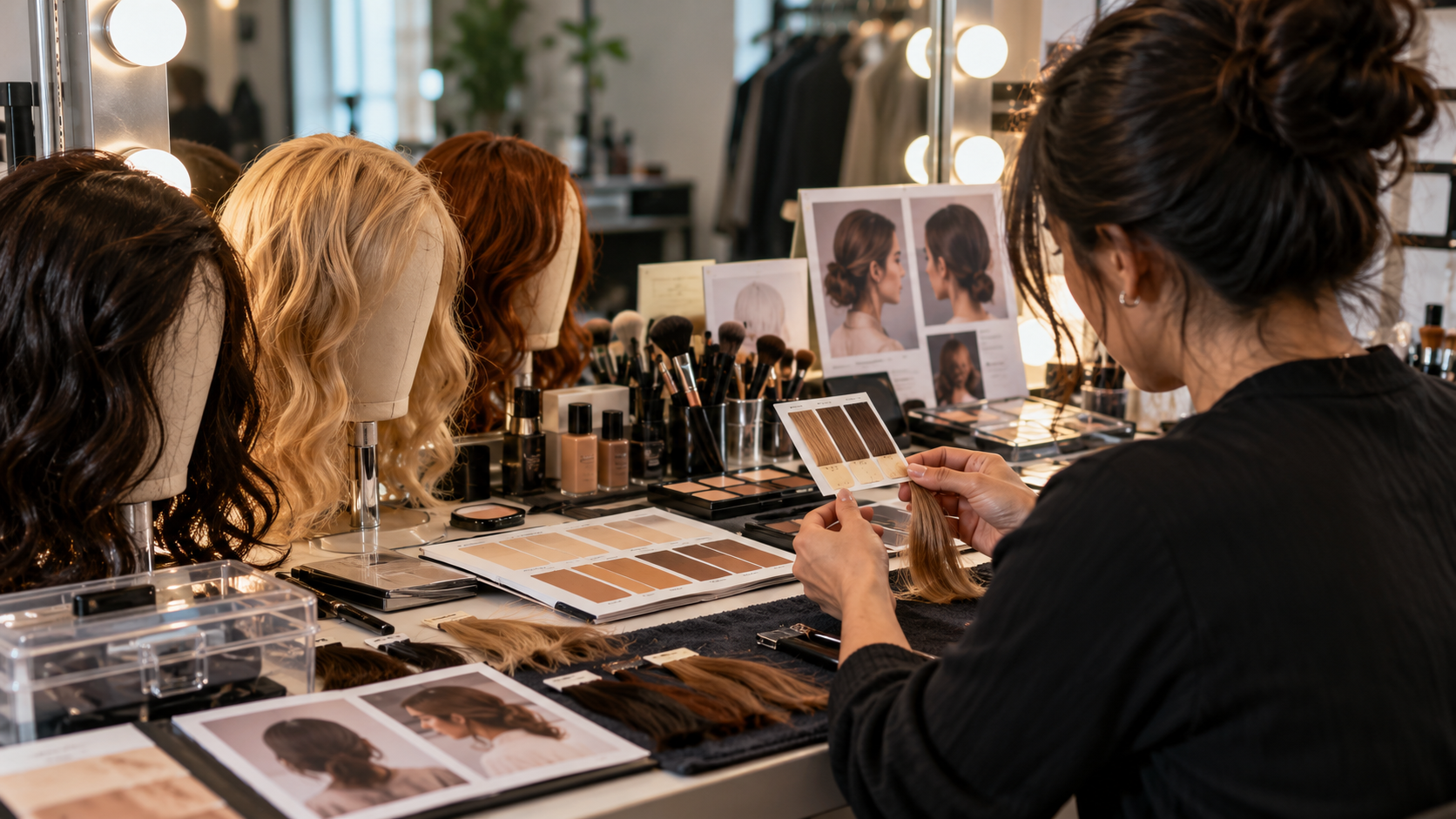
Hair and Makeup Design Explainer
Hair and makeup design creates and supervises the visible appearance of performers for film and television. The designer interprets the script, director's approach, production design, costumes, period, and character history, then plans looks that can be applied, photographed, maintained, and repeated. On some productions hair and makeup are separate departments; on others one designer leads both. Prosthetics and special makeup effects may involve additional specialists.
Research can include historical grooming, social conventions, aging, injury, weather, occupation, and how a character changes over the story. Designers prepare references, test colors and materials, source wigs and products, estimate application times, and hire a team. Camera tests are important because lenses, lighting, resolution, color pipelines, perspiration, and movement can reveal effects differently from a mirror. Costumes and performers also affect practical choices.
The shooting schedule determines when each look must be ready. Actors may move through hair, makeup, wardrobe, rehearsal, and set in a precise sequence coordinated with the assistant-director team. Complex work can begin hours before the call. Designers therefore balance artistic detail with application time, removal time, skin tolerance, cleanup, transport, staffing, and the number of performers. Crowd days require systems that create variety without losing period or story consistency.
Continuity teams record products, mixtures, wig settings, placement, photographs, and changes between scenes. A bruise may need several story stages, while a haircut seen across out-of-order filming must remain consistent. Hygiene, allergies, patch tests, ventilation, consent, cultural knowledge, and performer comfort are professional concerns rather than cosmetic extras. Close contact requires clear communication and appropriately trained artists, especially for sensitive or specialized work. Effective design supports performance instead of drawing attention to technique for its own sake. A nearly invisible correction can matter as much as an elaborate transformation. The finished look must belong to the character, survive the conditions of production, and remain coherent across shots recorded weeks apart. That combination of visual storytelling, material science, scheduling, and care explains why hair and makeup are design departments, not simply finishing services. A practical way to read or discuss Hair and Makeup Design is to begin with the basic definition and then identify the choices made in a particular example. Hair and makeup designers translate story and character into appearances that can be applied and repeated for camera. Next, ask who sets the relevant rules, who performs the work, and which results follow from creative judgment, law, contracts, technology, budget, or production limits. Similar-looking examples can operate differently because their audience, market, format, timing, and agreements are different. Continuity records track exact products, placement, photographs, and story-stage changes during out-of-order filming. It also helps to distinguish a formal industry category from an informal critical label or one organization's current practice. That separation keeps a memorable anecdote from becoming a false universal rule. Dates and territories matter: tools, distribution systems, audience behavior, and standard agreements change, while older examples can preserve assumptions that no longer apply everywhere. Because the concept sits inside a larger workflow, examine what comes before and after it, which records move between stages, and where responsibility changes hands. This broader view prevents one visible task from being mistaken for the entire system. When a claim sounds absolute, compare it with a second kind of source and look for the conditions under which the claim is true. Then trace the process from the visible result back through the less visible decisions, handoffs, and quality checks that produced it. The strongest work supports character and performance while remaining durable under lighting, movement, and repeated takes. Finally, compare the example with a contrasting case and note which part of the definition still holds. This method keeps the explanation grounded, highlights the people and systems behind the outcome, and leaves room for reasonable disagreement about hybrid or borderline cases.
Hair and makeup designers translate story and character into appearances that can be applied and repeated for camera.
Research, concept references, product tests, wigs, prosthetics, and camera tests establish the design before shooting.
Application time must fit the call schedule and coordinate with wardrobe, rehearsal, transport, and set readiness.
Continuity records track exact products, placement, photographs, and story-stage changes during out-of-order filming.
Hygiene, allergies, consent, ventilation, cultural competence, and performer comfort shape professional practice.
The strongest work supports character and performance while remaining durable under lighting, movement, and repeated takes.
Explore more "Explainers"
Discover additional explainers across politics, science, business, technology, and other fields. Each explainer breaks down a complex idea into clear, everyday language—helping you better understand how major concepts, systems, and debates shape the world around us.